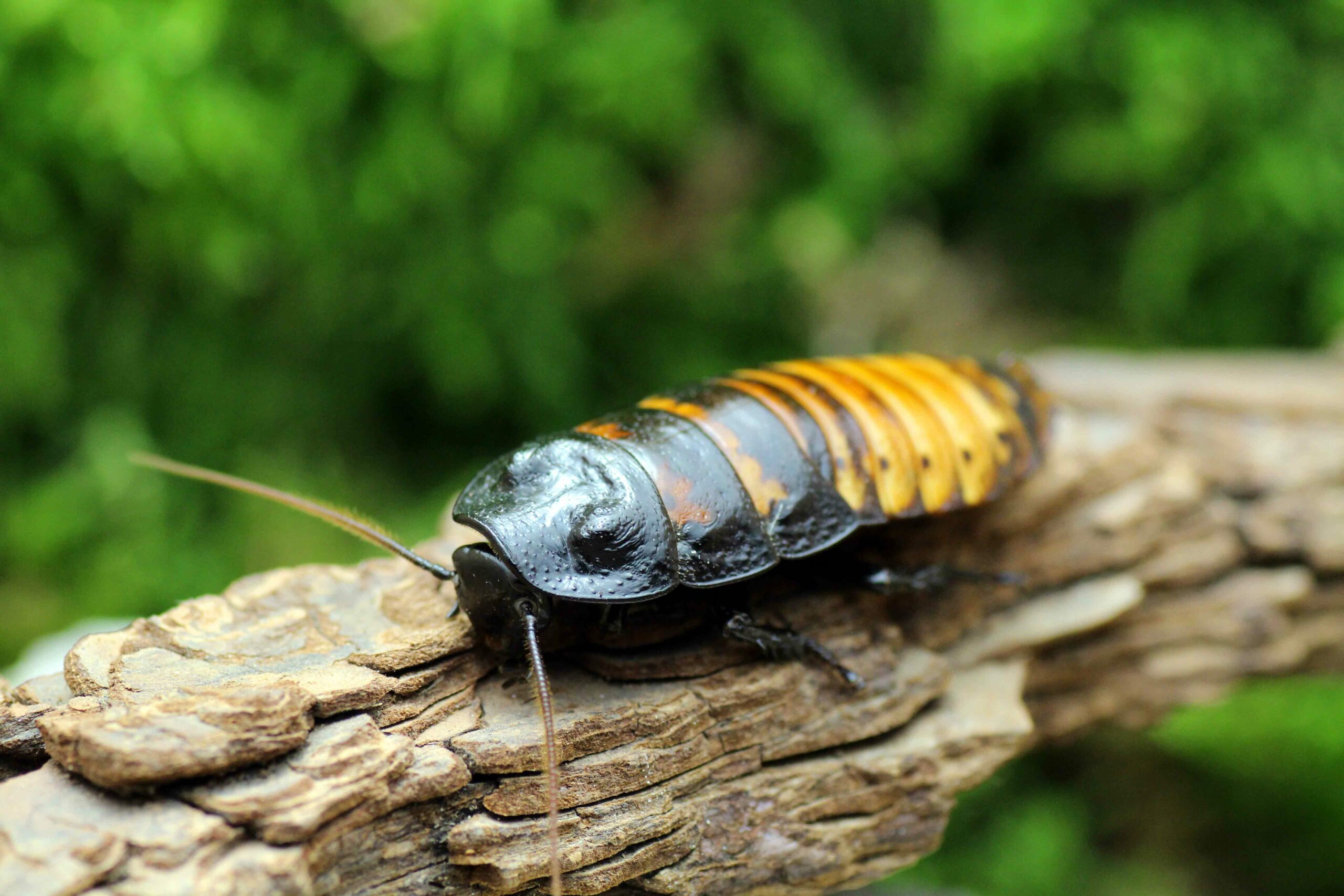


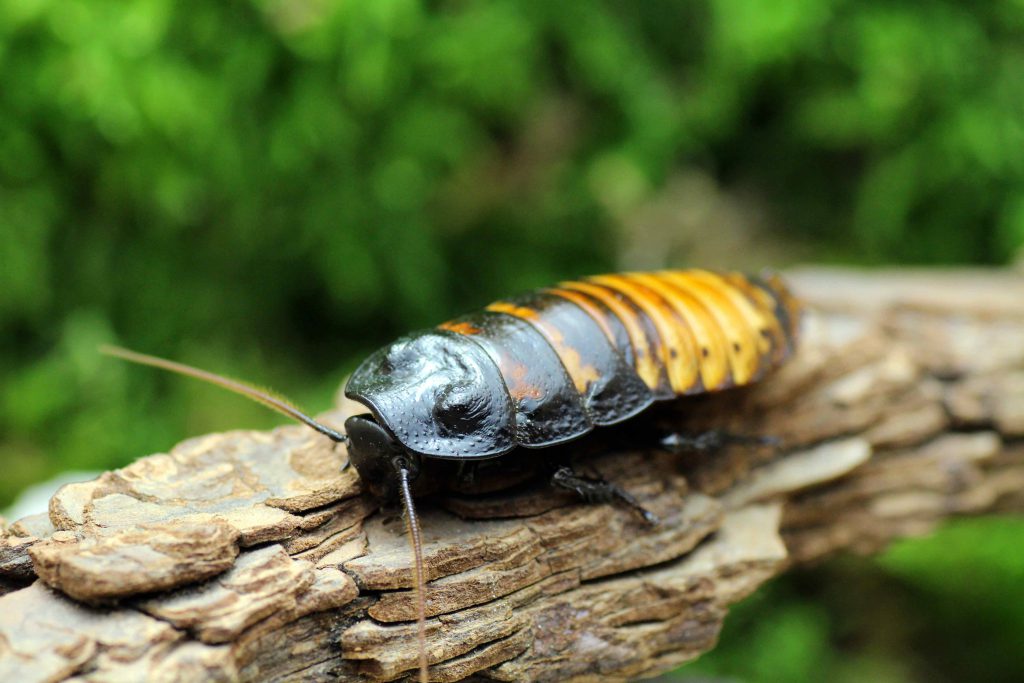
| Origin | Madagascar (east coast, dry forest) |
| Temperature | 25-30 °C |
| Size | ♂ 5.0 cm, ♀ 8.0 cm |
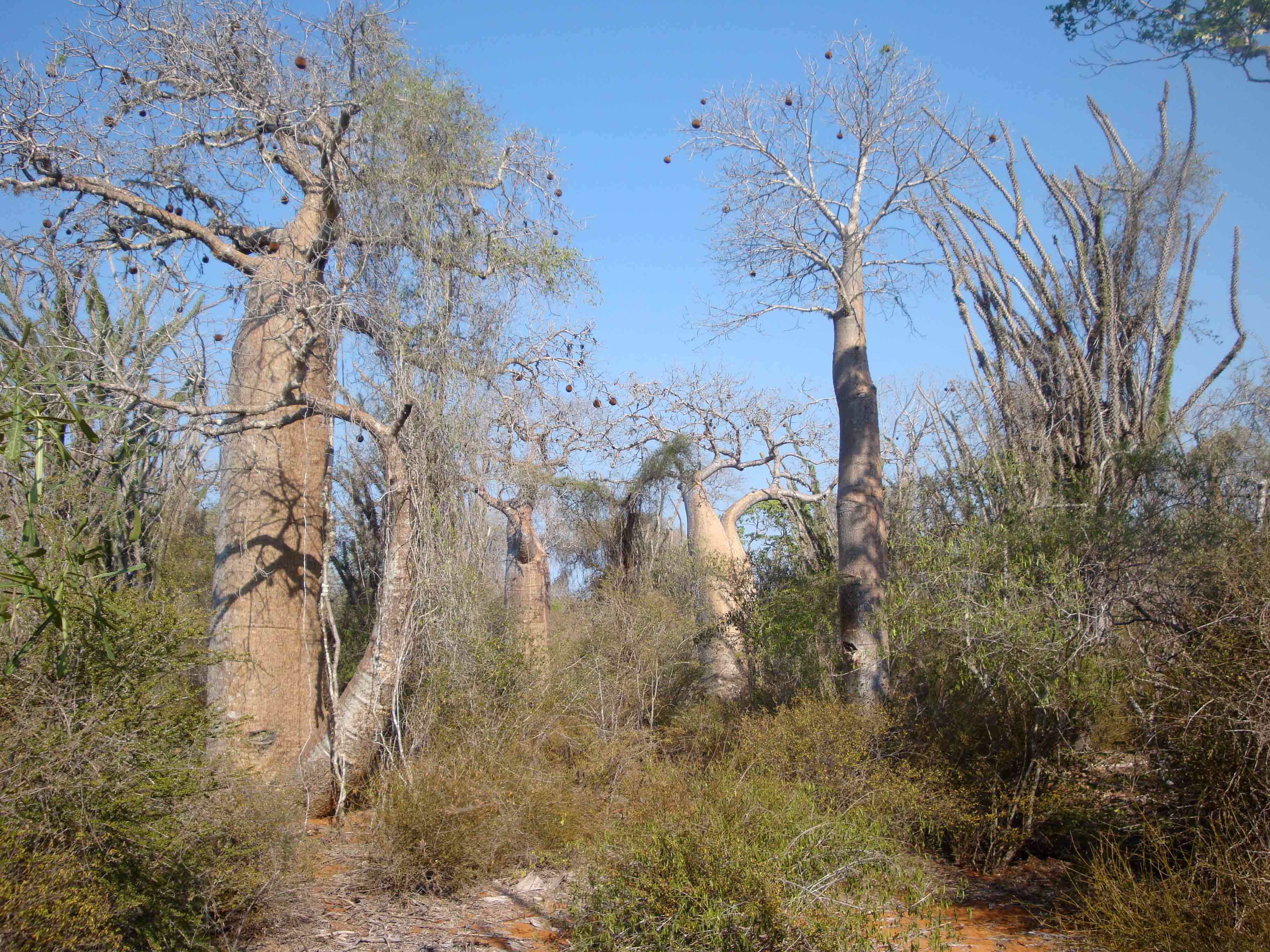
The Madagascar hissing cockroach is a prime example of how you can be misled by the husbandry parameters based on the country of origin. Compared to a panther chameleon, which also originates from Madagascar, they have completely different requirements. There are long dry seasons on the east coast of Madagascar. During this time, the trees shed their leaves. This is essential for survival in order to save water resources. This is where our hissing cockroaches come into play. They need little water and use the foliage to protect themselves from the sun and predators.
They owe their name to the fact that they can force air through their tracheae at high pressure, producing a loud hissing sound. Sometimes you are really surprised how loudly such a small insect can make itself heard. This is a decisive advantage when they are in danger, but they also like to hiss to communicate with other members of their species.
You can listen to the hissing here:
The behavioral patterns of Madagascar hissing cockroaches are not only interesting but also frequently observed. The crepuscular and nocturnal animals are very clean and clean themselves at every opportunity. The male hissing cockroaches like to test their strength and fight over the coveted females. However, nobody gets hurt and you can observe these situations in a relaxed manner.
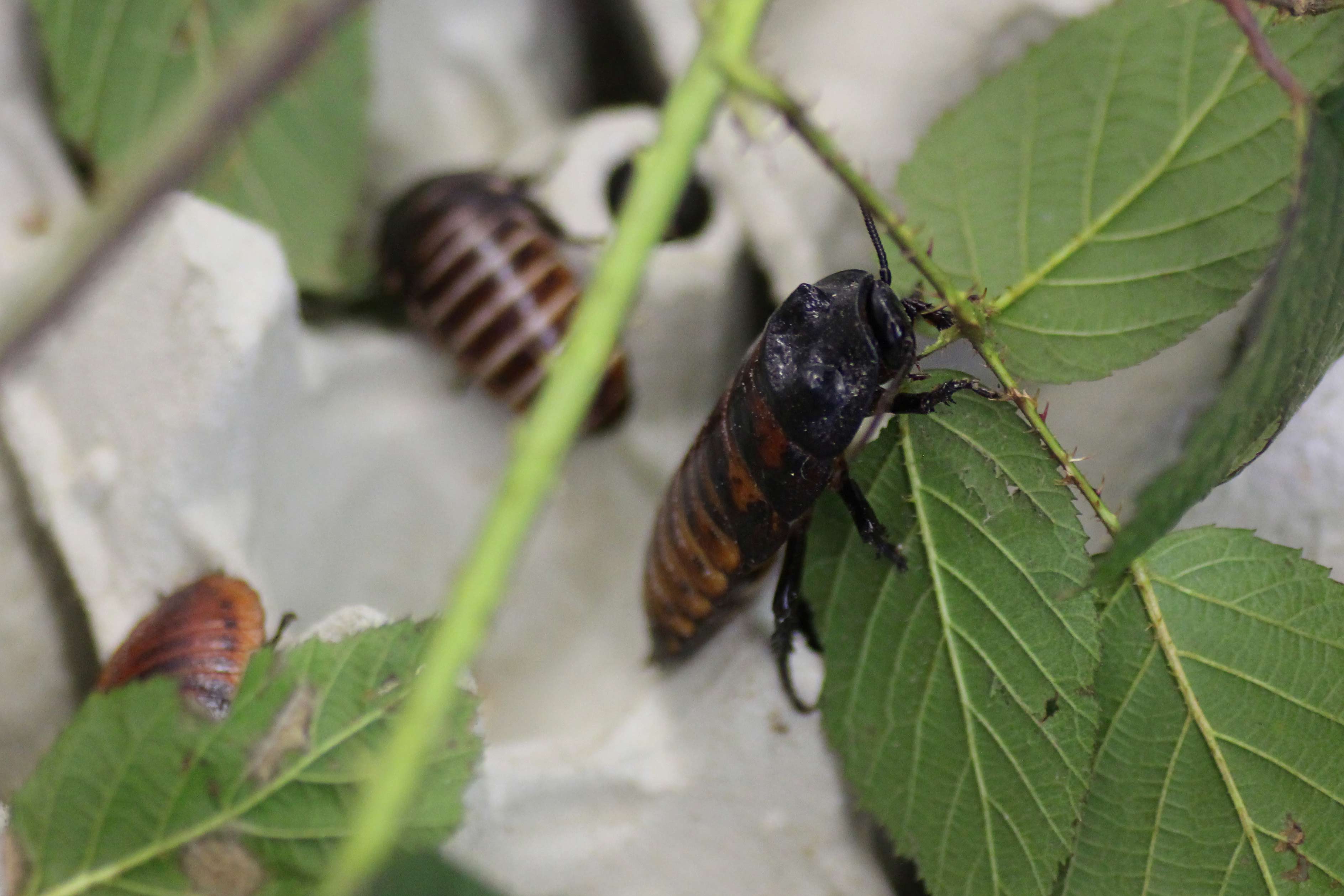
As they like to eat leaves from the trees during the rainy season, they are excellent climbers. It’s amazing how they can effortlessly carry their weight up smooth panes of glass. You can attach a branch with leaves there as a reward. I like to use the evergreen blackberry vines. They are not sprayed and are always available everywhere.
Container:
A plastic box or an aquarium are best suited for housing.
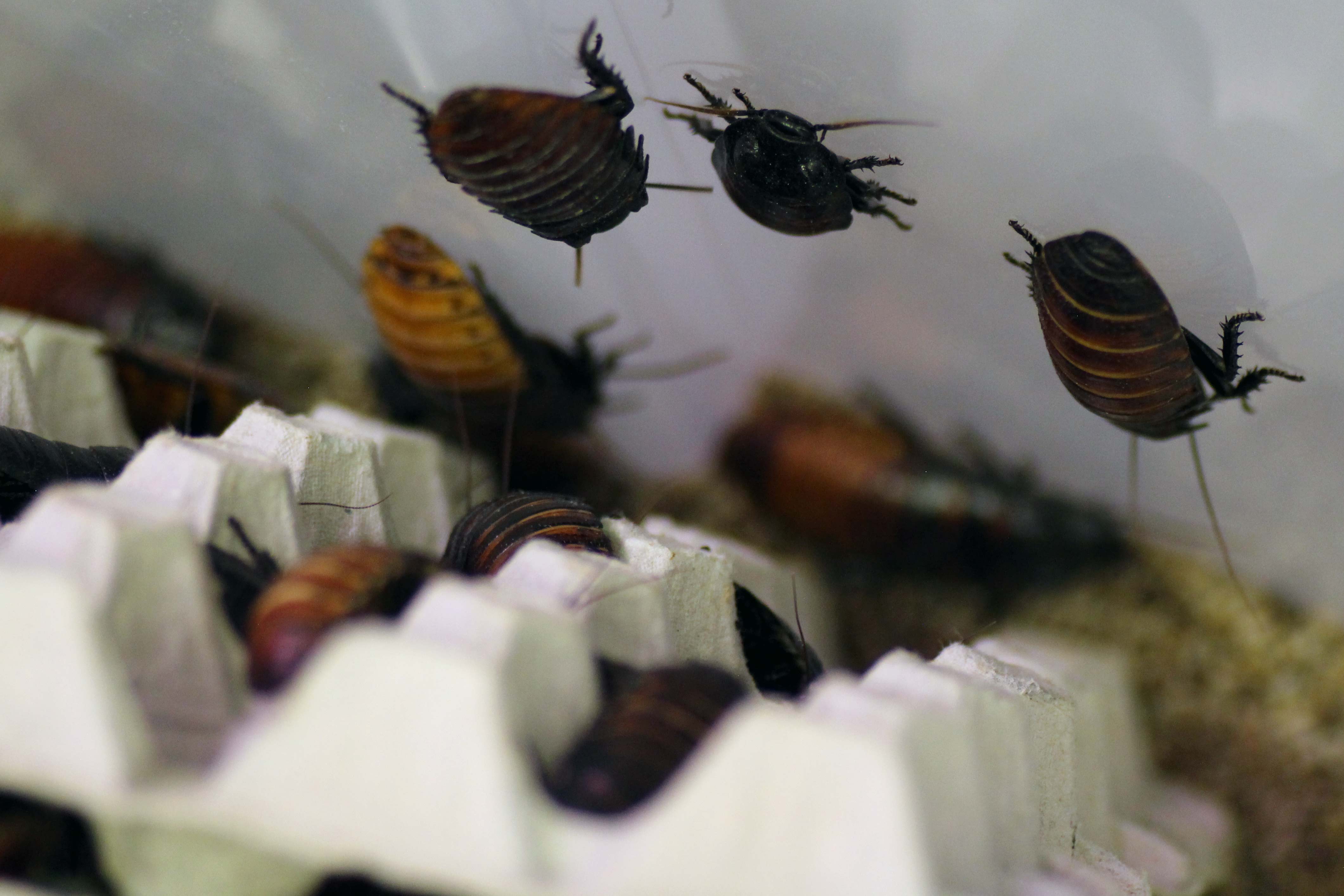
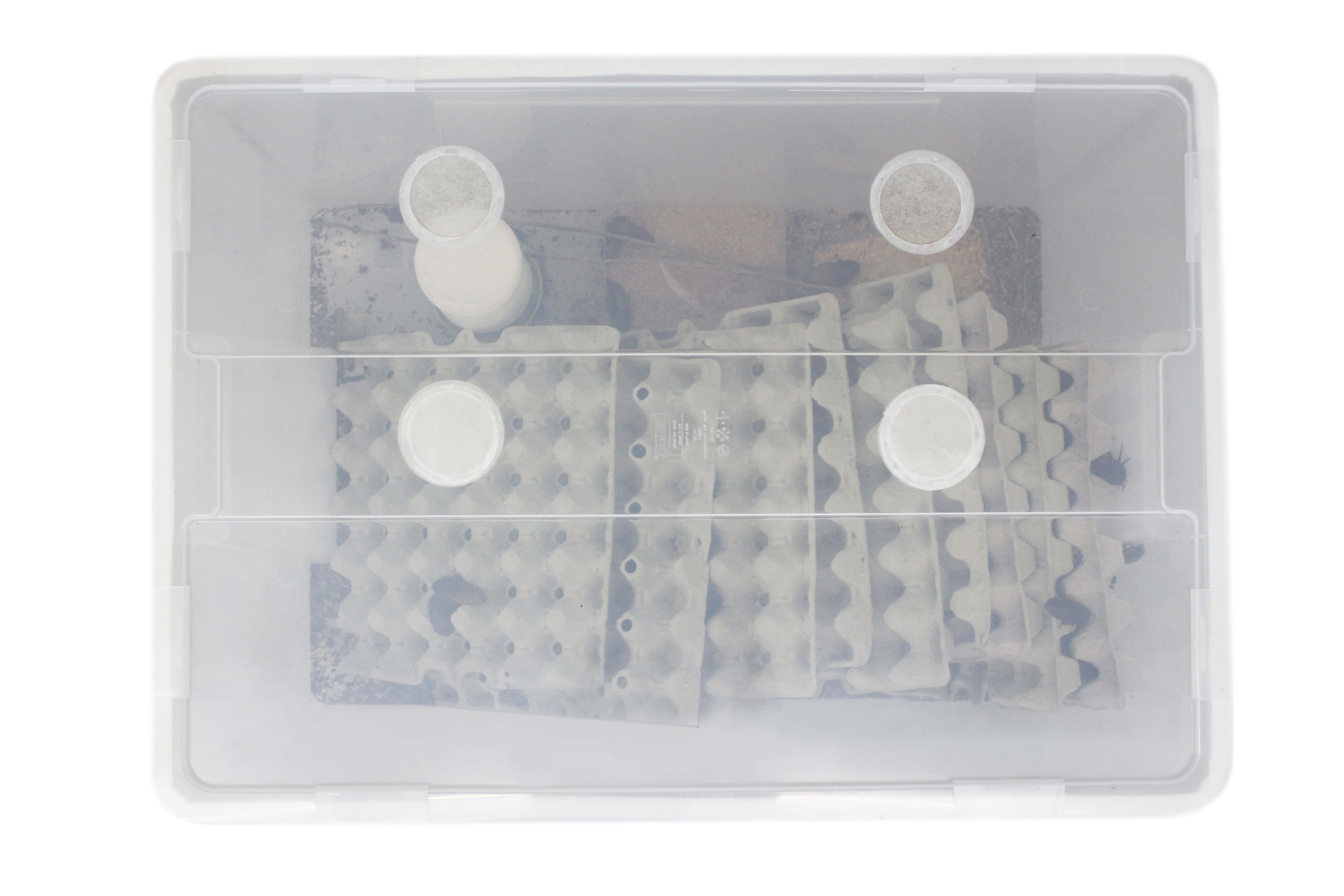
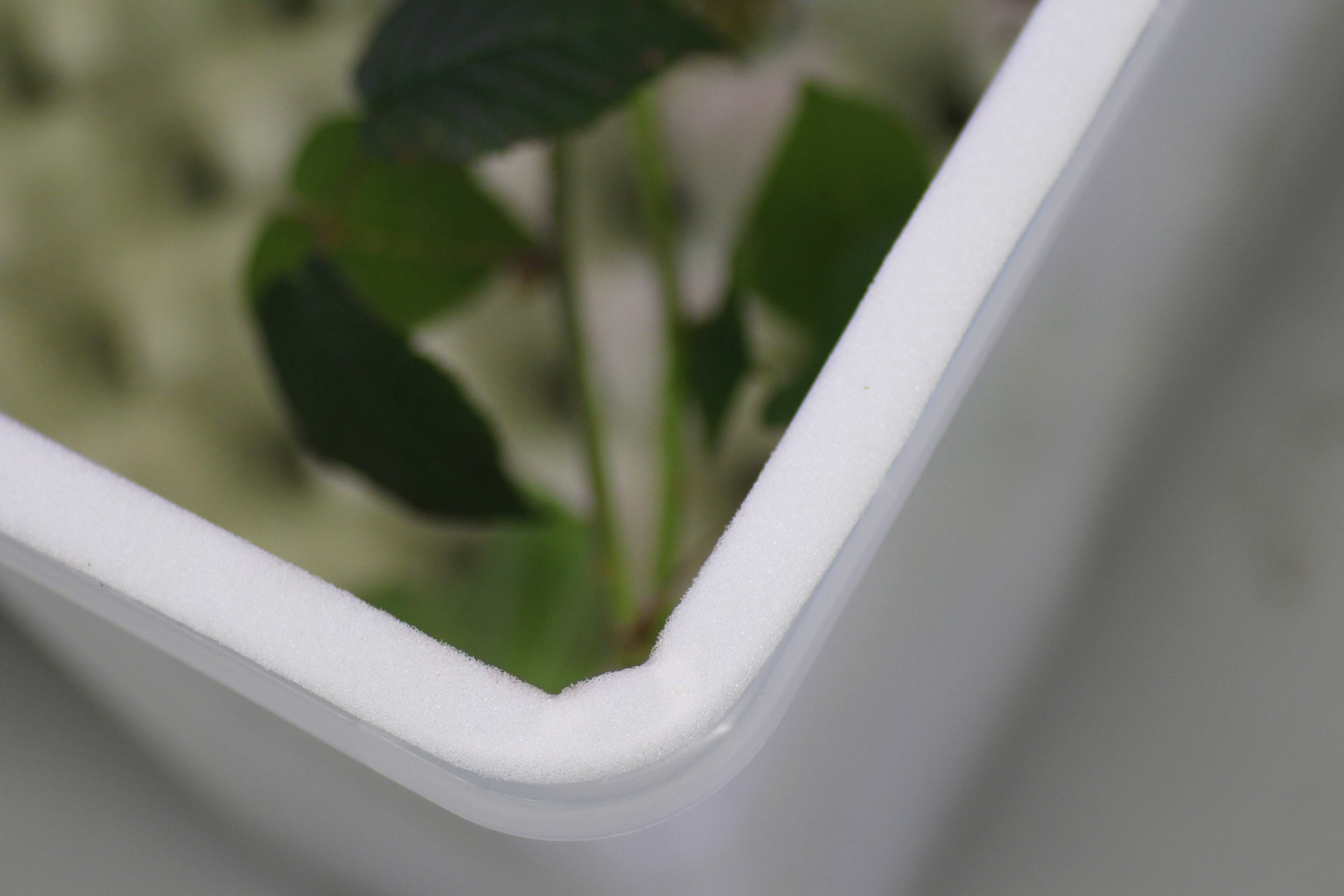
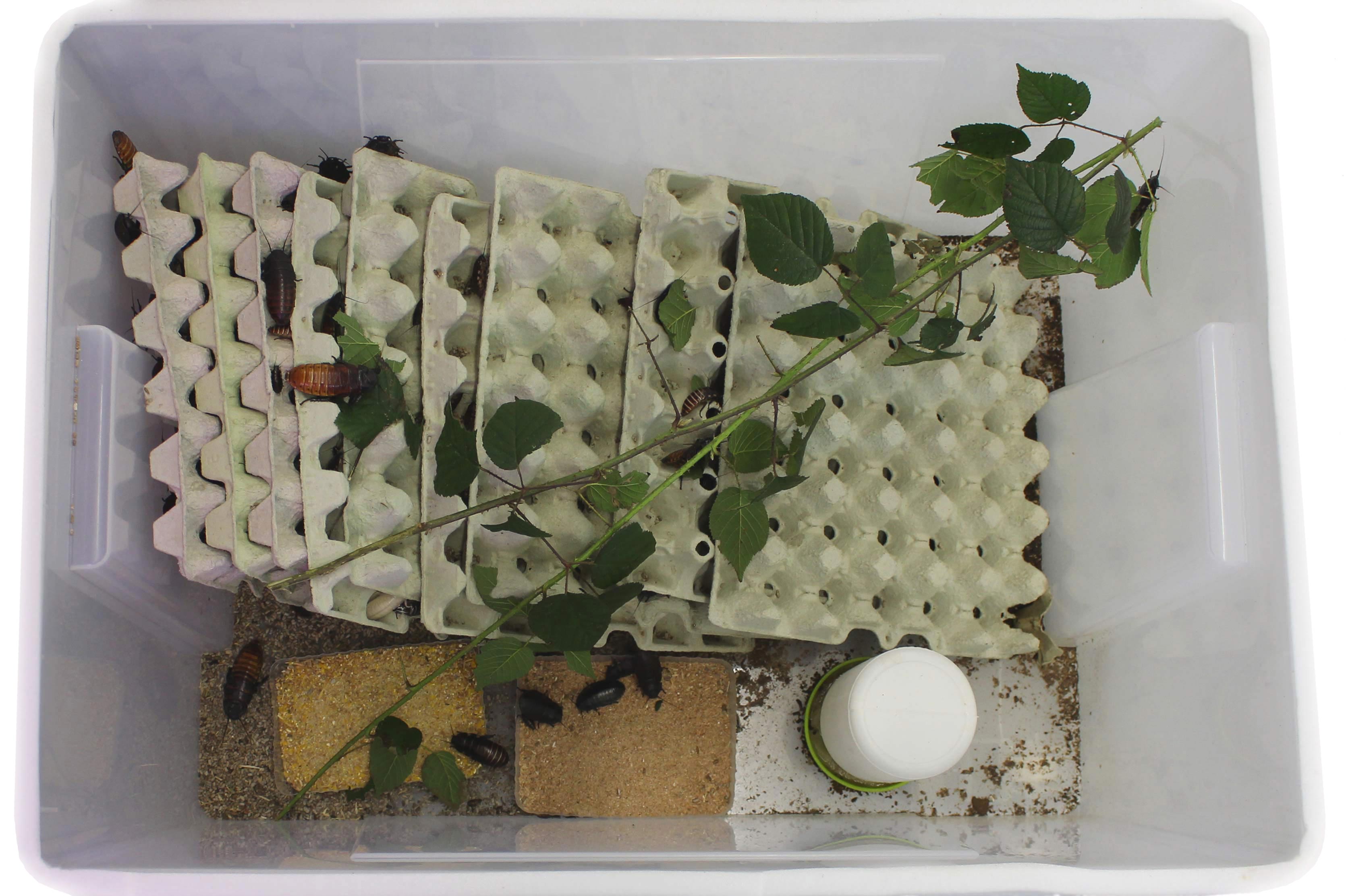
The container should be at least 30 x 30 x 30 cm in size. One to two males and three to four females can be kept together. The size of the container should be adapted to the respective breeding group. We use 130L boxes measuring 78 x 56 x 44 cm. The ventilation area should be large enough to prevent moisture or condensation from forming in the box. A fine gauze or organza is best suited as a ventilation grid. This has the advantage that it does not let any fruit flies or black flies through, as these can become a real nuisance in the breeding container. We attach a foam seal for windows to the top edge of the breeding container. It was intended as an escape protection, as the small hissing cockroaches often sat in the crack between the box and the lid. Surprisingly, the hissing cockroaches completely stopped climbing onto the edge of the lid, which is a great advantage in terms of handling. The animals probably love to crawl into small cracks to hide there.
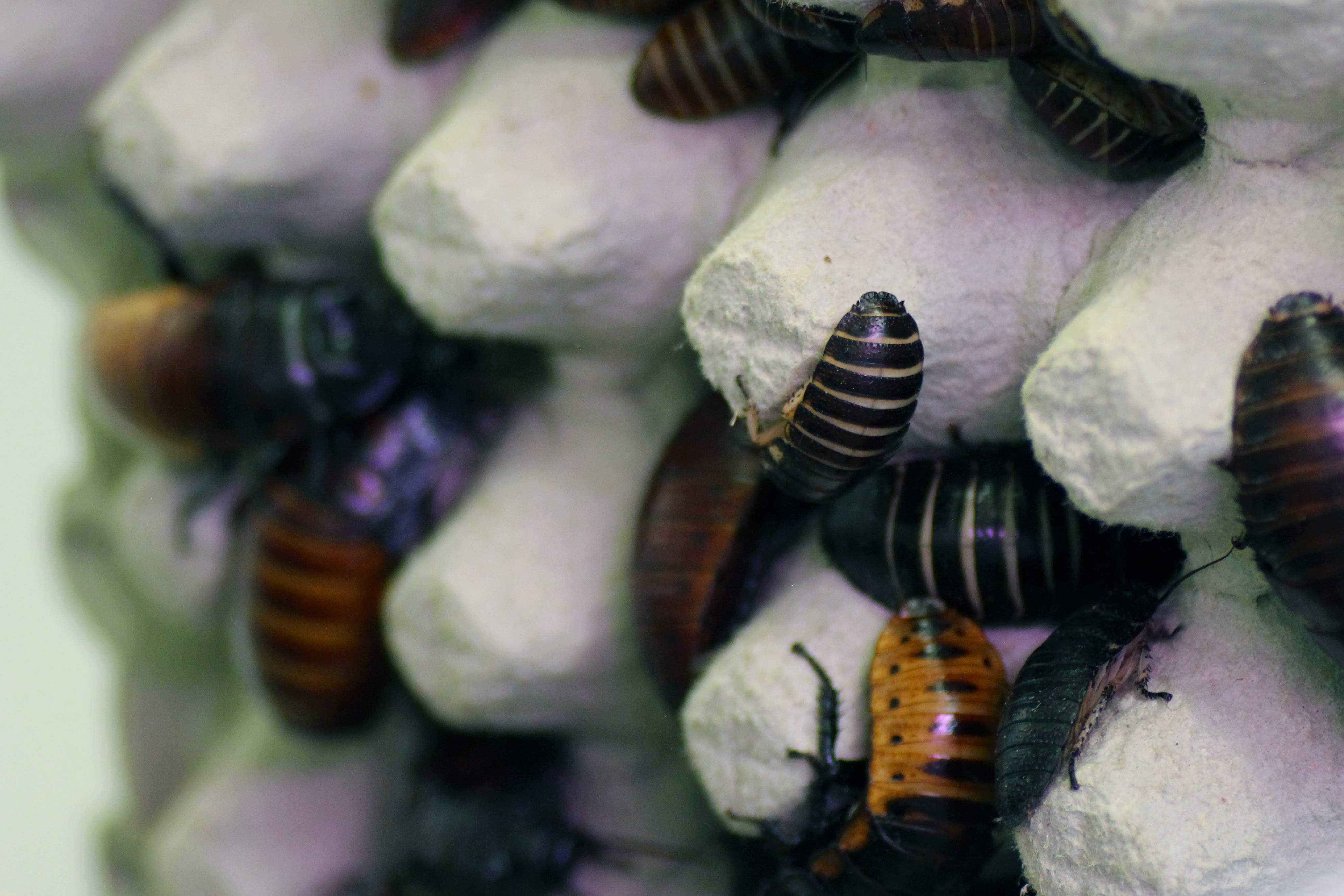
To enable them to continue this behavior, we offer the animals egg cartons. These increase the walking surface and provide the hissing cockroaches with sufficient dark hiding places and cracks. The territory-forming males thus have more areas to call their own and can be replaced quickly and inexpensively.
A heating mat can be stuck to the side of the box so that temperatures of 25-30°C prevail. This creates a temperature gradient from left to right and the animals have different temperature zones that they can visit depending on how they feel.
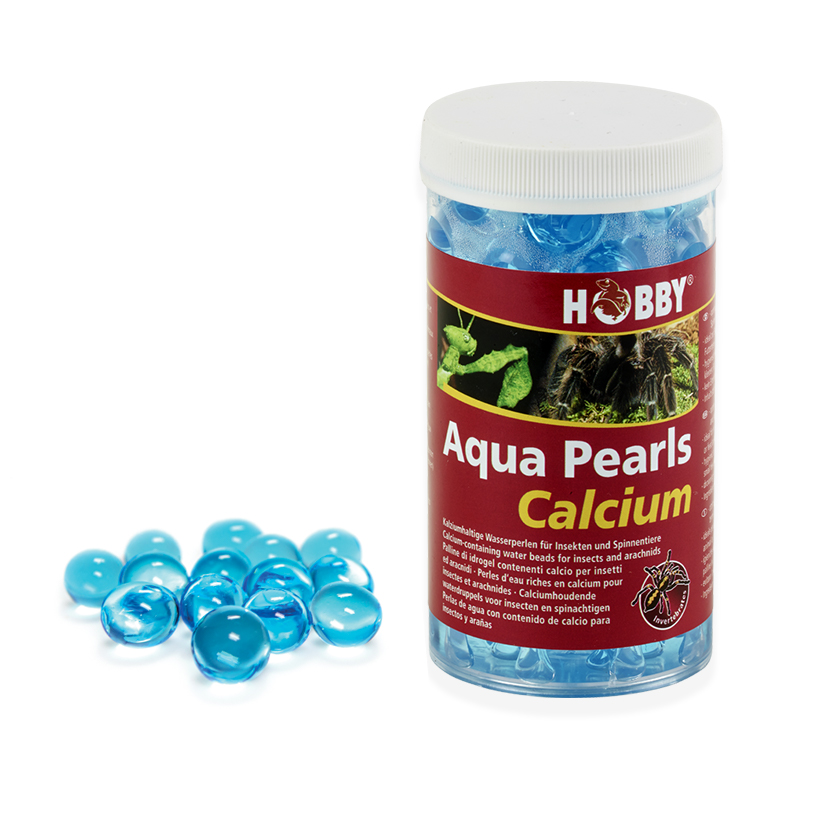
Some owners spread food as floor litter. However, we advise against this as it can cause mites and mold to form. As a source of water, we use chick drinkers that we prepare with kitchen paper on the water bowl. This means that no animals drown and no dirt gets into the drinking water. A commercially available bird drinker is also perfectly adequate for smaller breeding approaches.
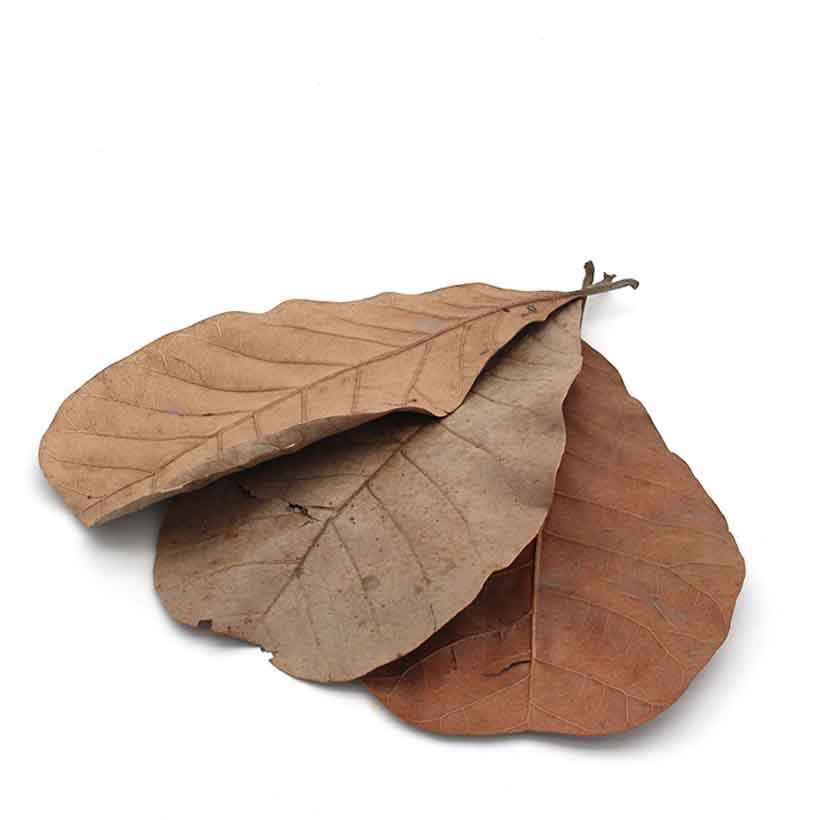
In a display terrarium, you can simply use 5 cm of forest humus as a substrate. Place a thick layer of leaves on top and provide a few branches for climbing.
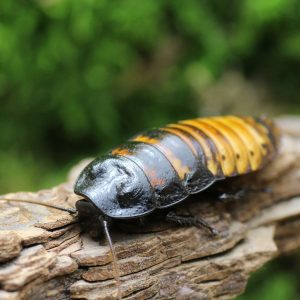
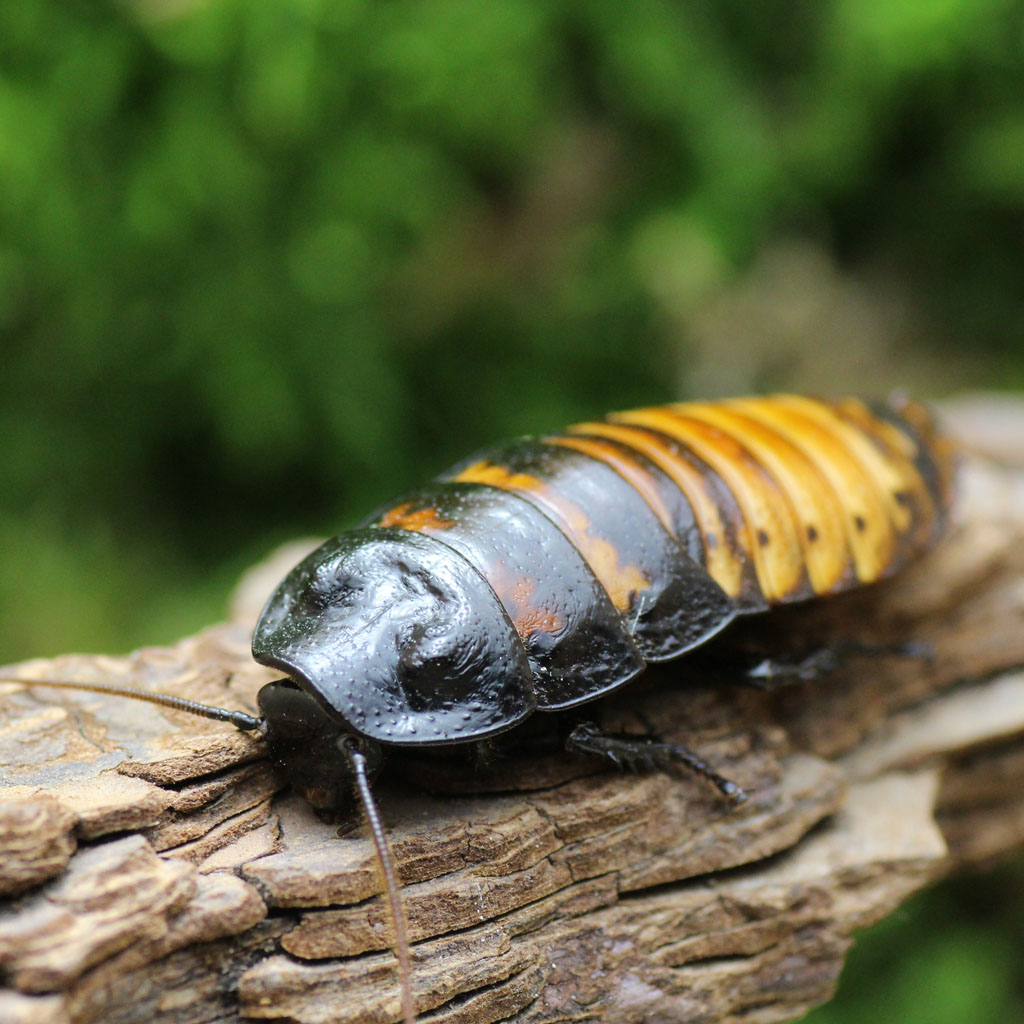
Gromphadorhina portentosa “Madagascar hissing cockroach”
Hissing cockroaches are among the largest and most beautiful cockroach species of all.
Breeding:
Breeding Madagascar hissing cockroaches is not a problem if you follow the instructions given. The animals go through 6 moulting stages which last 6 months under good conditions.
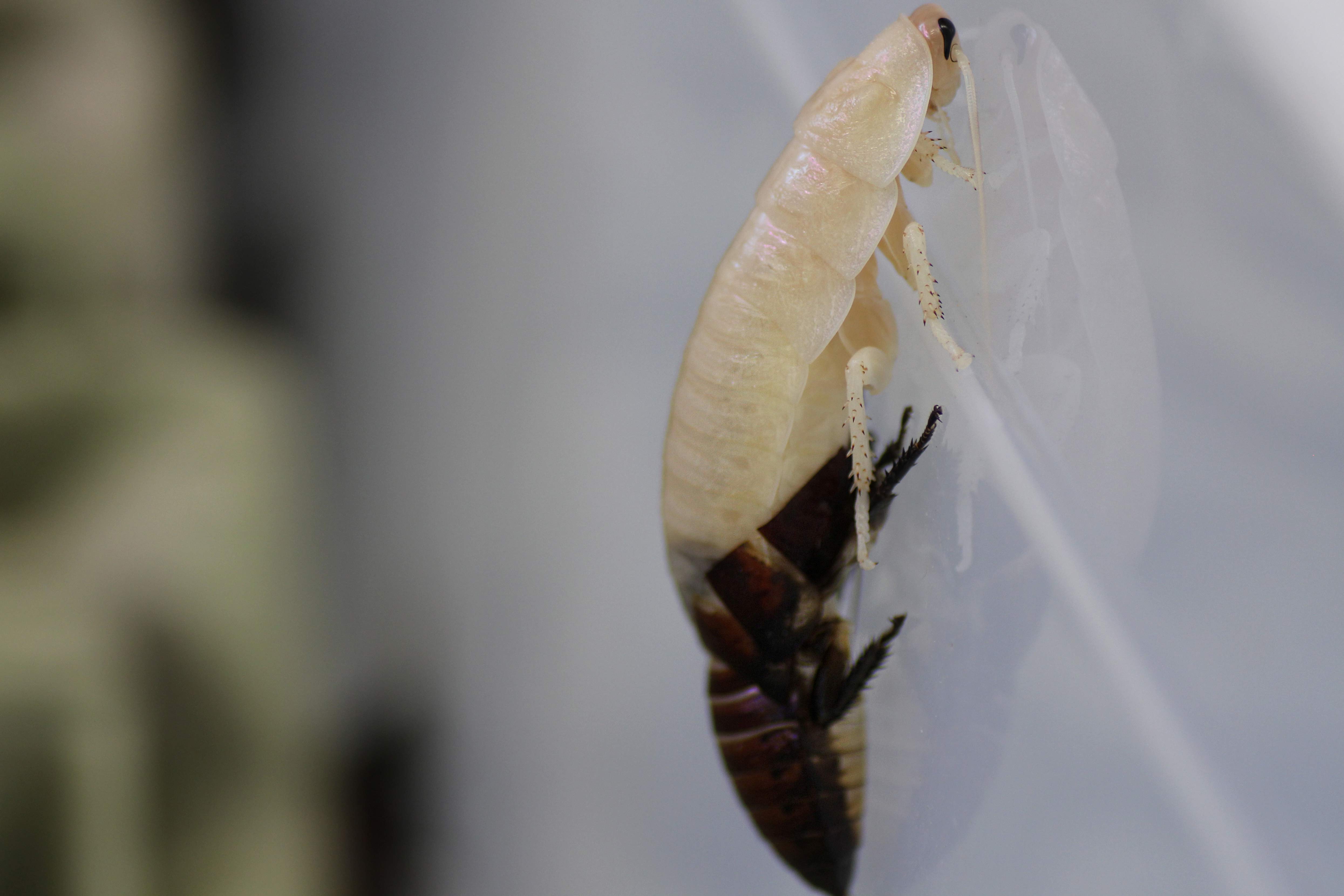
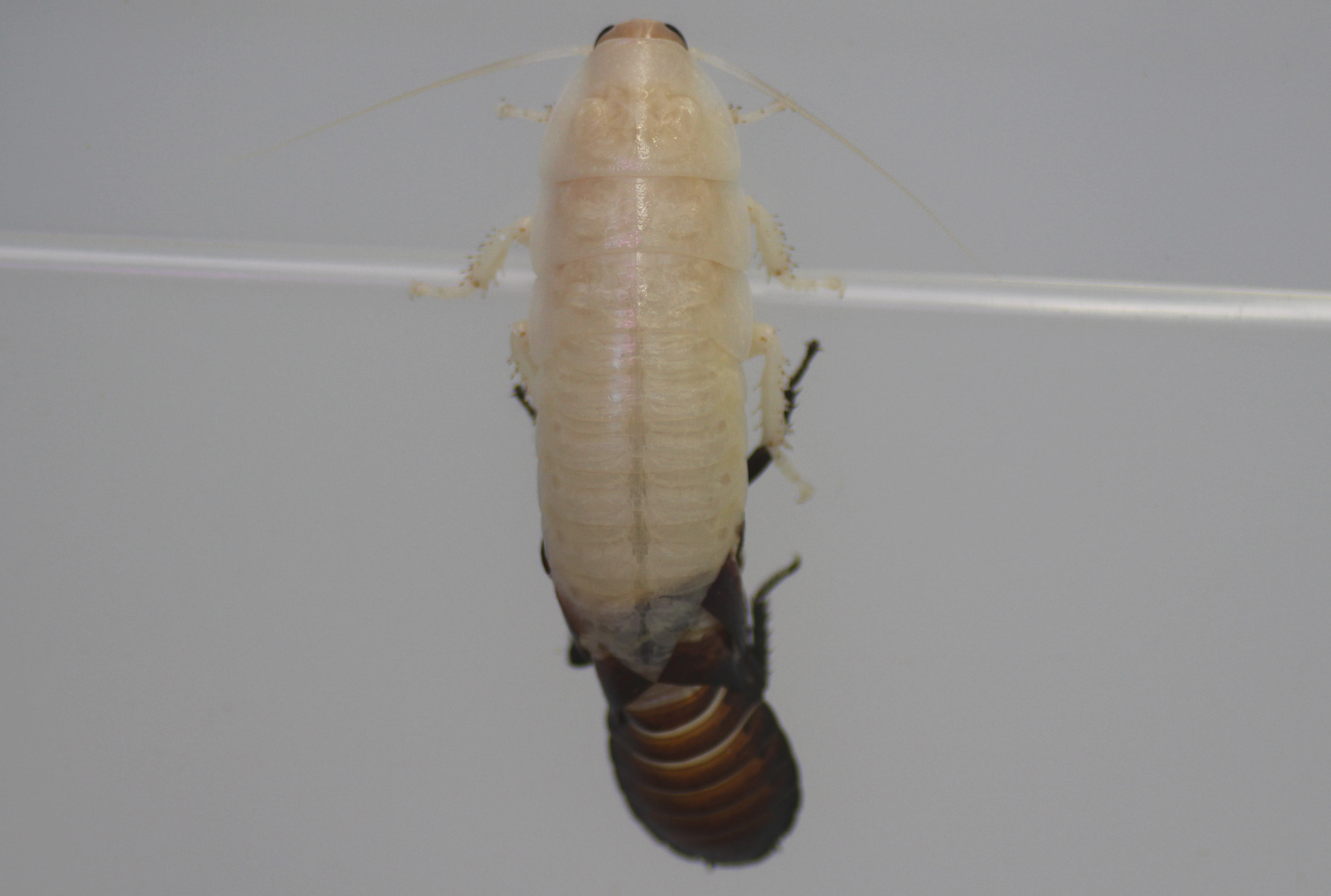
The moulting of Madagascar hissing cockroaches is an absolute highlight! The animals look for a raised area or simply attach themselves to the edge of the box. Once there, they shed their old skin and reappear as a creamy white cockroach. During this phase, the animals are very soft and the chitinous shell must first dry and harden. It is therefore best not to handle the animals during this time and to leave them alone. However, it is great to watch how the animals dry and return to their normal color.
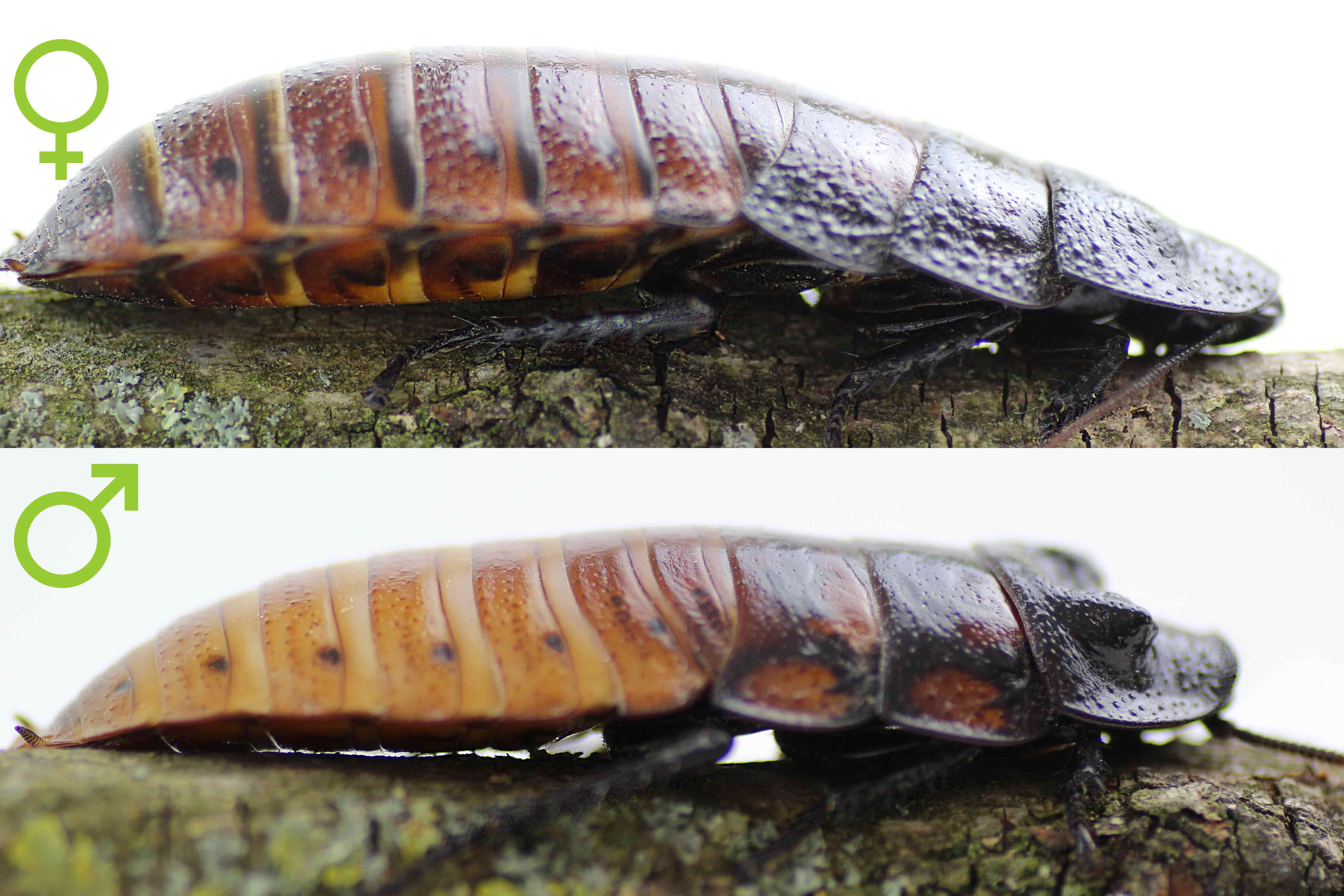
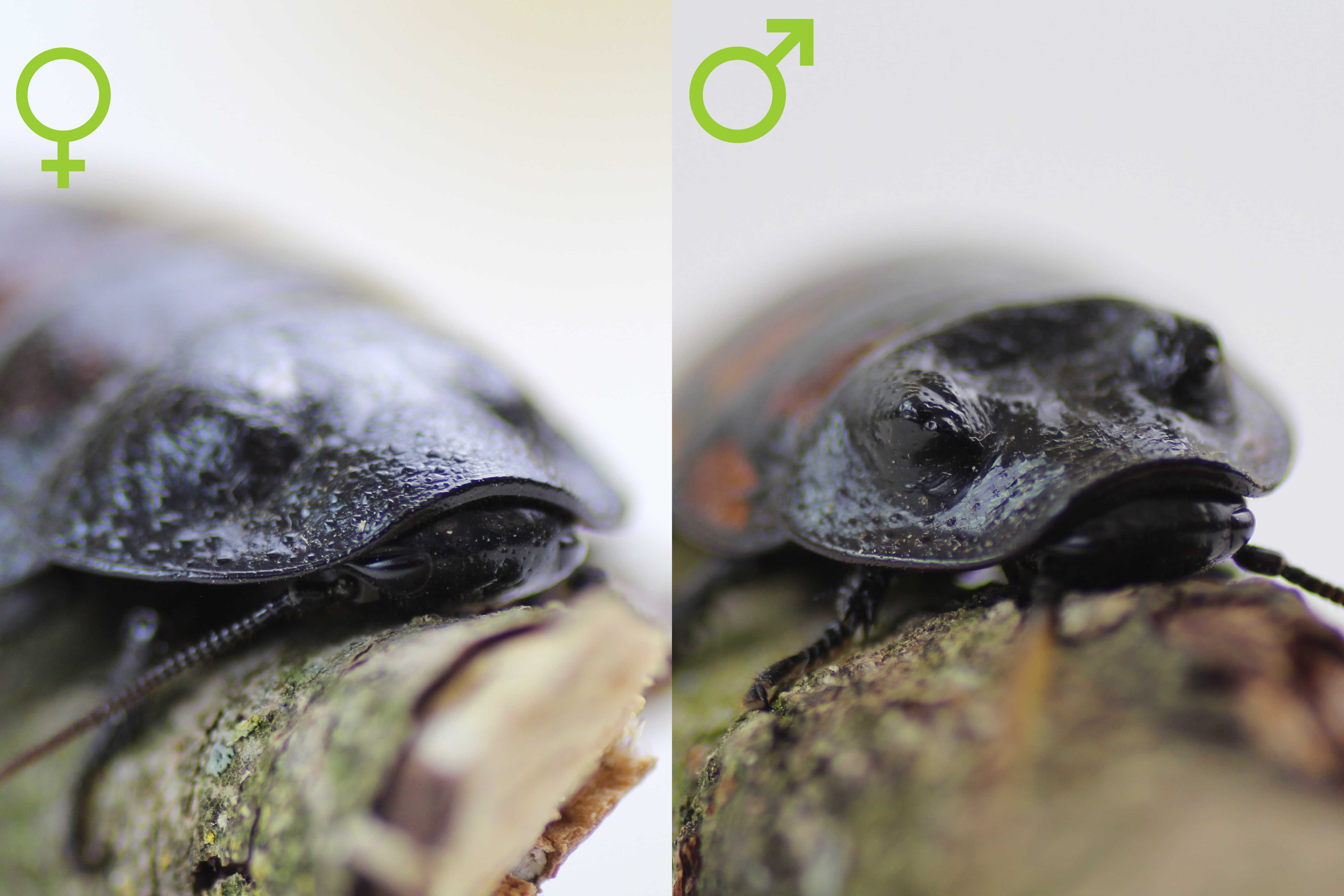
First of all, you should make sure that both sexes of the Madagascar hissing cockroach are present in the breeding container. The difference between the sexes can be seen with the naked eye in adult animals. Males have two clearly visible horns on the pronotum.
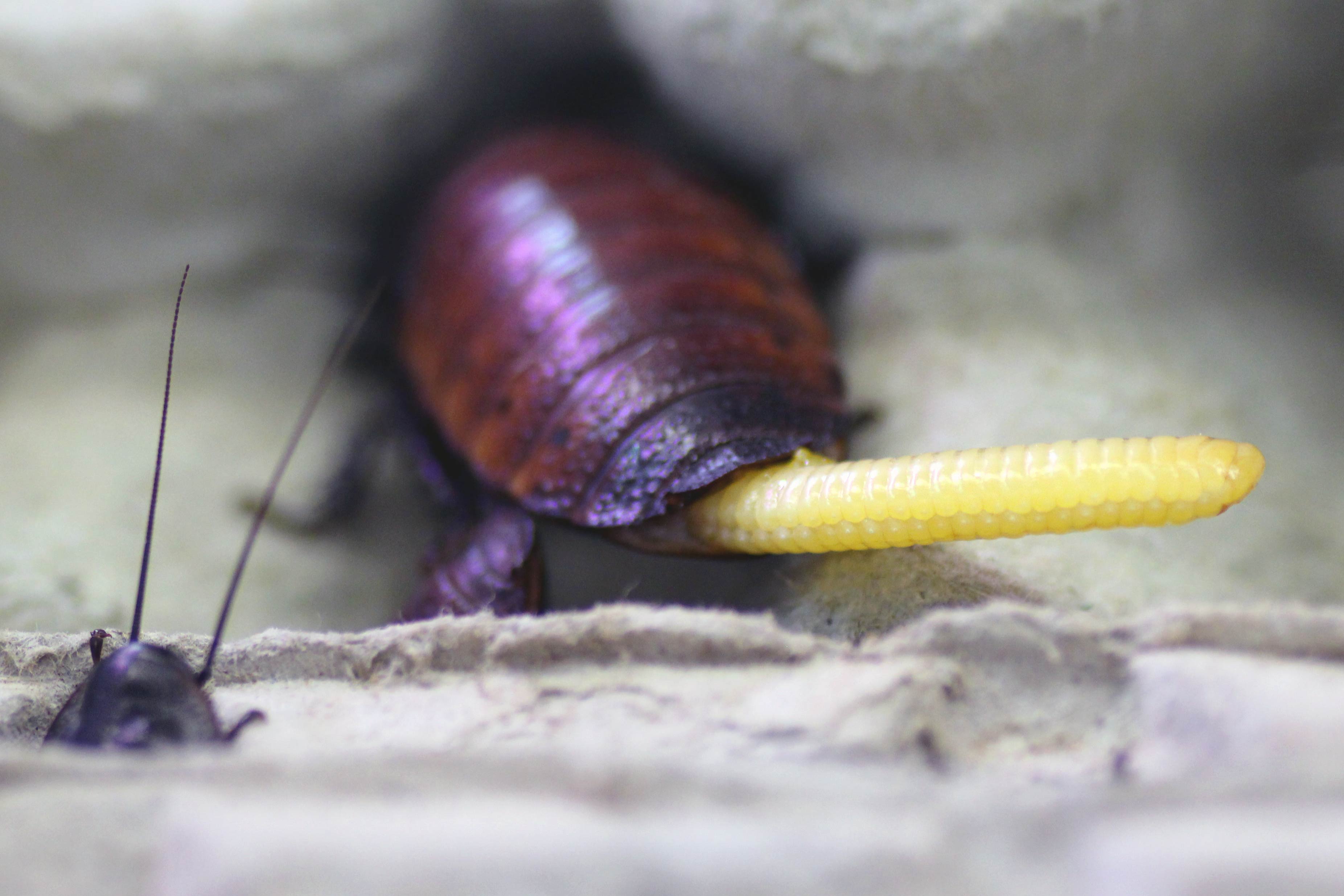
During mating, the female expels an ootheca, which is then fertilized by the male. This egg package is then retracted into the female’s breast sac and incubated there.
The incubation period is about two months until about 40 larvae hatch. Mass reproduction as with other cockroach species is therefore not possible. However, if too many animals have developed in the breeding batch, you can simply regulate the development times by lowering the temperature.
The life expectancy of the animals is one to three years, depending on how they are kept and the food supply.
Care and nutrition:
Madagascar hissing cockroaches do not have high requirements in terms of housing or nutrition. We do not spray any water at all into the breeding boxes and achieve a humidity of 65% with the evaporation from the water trough and the relatively low ventilation. This is completely sufficient for their well-being and for upcoming molts.
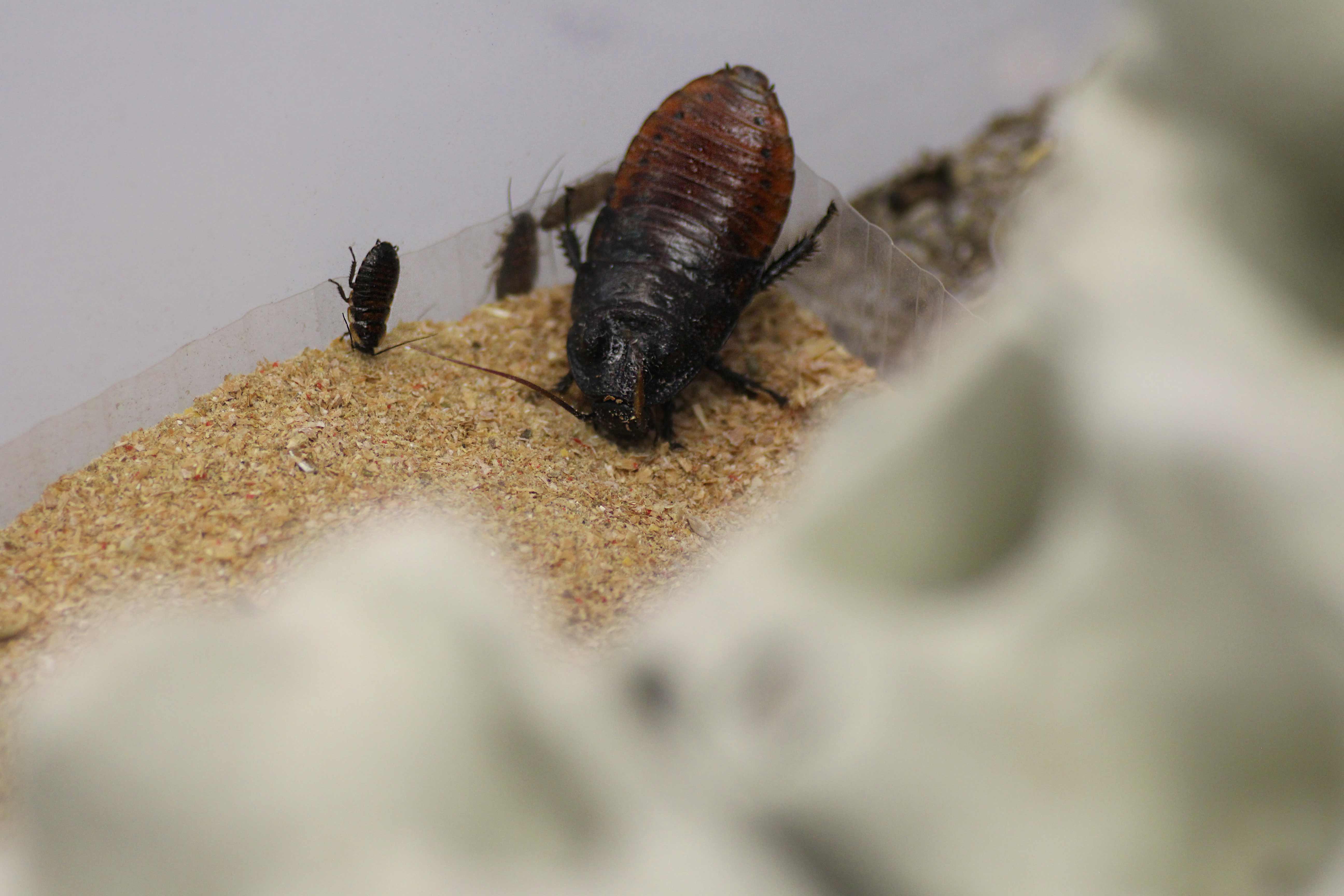
Our dry food consists of a mix of wheat bran, protein in the form of fish feed and laying meal for chickens. We always provide this in feeding bowls so that the feed can be changed easily and hygienically and the feeding bowls can also be washed out if necessary. We offer the dry food permanently and it should never run out.
Once a week, fresh greens are offered in the form of blackberry vines, vegetables (Chinese cabbage, carrots, zucchinis or potatoes). Bananas and other sweet fruits are also very popular. Fruit should only be offered as much as the animals can eat completely in 3-4 hours. Otherwise mold can develop or fruit flies can form in the containers.
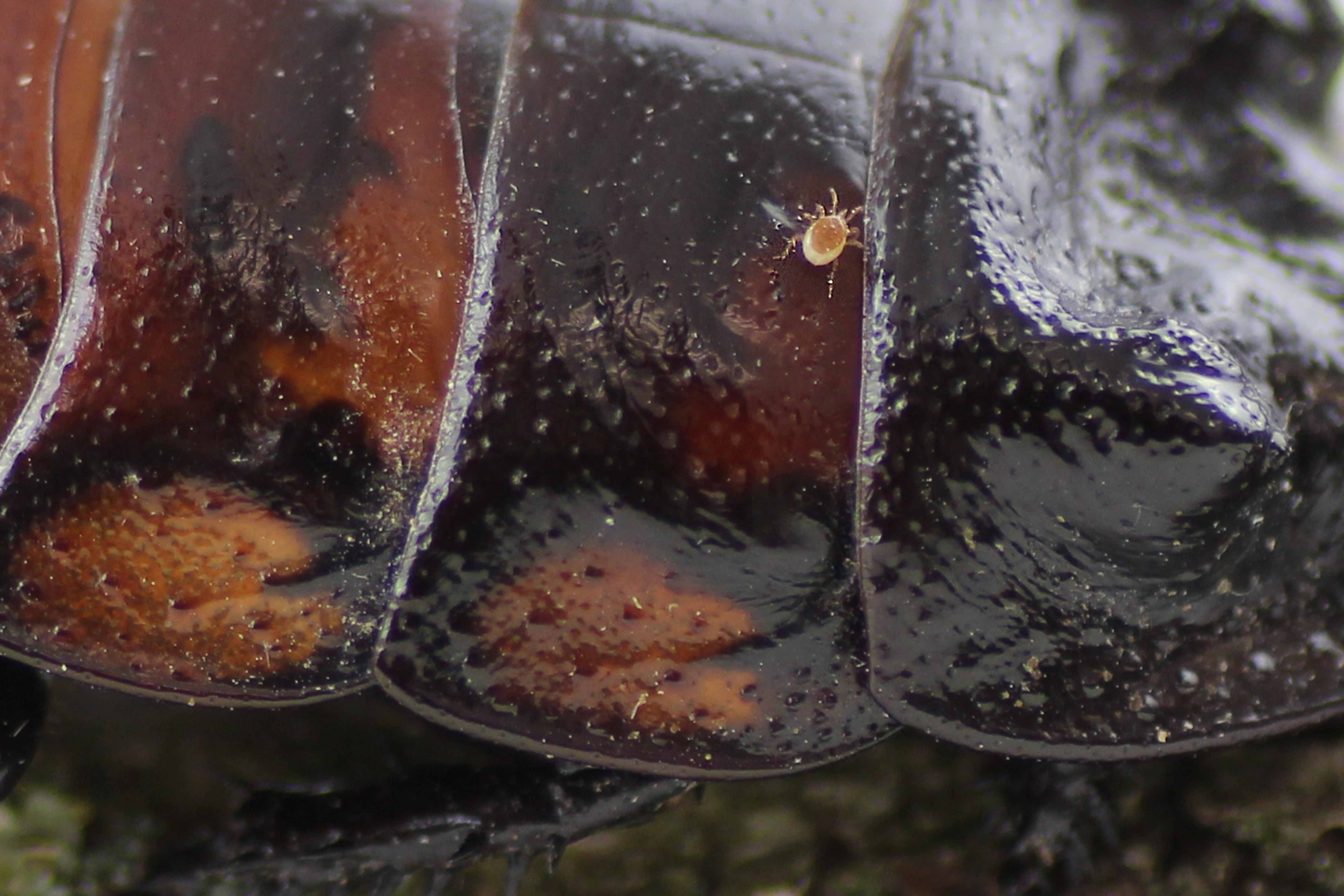
Hissing cockroaches are very clean animals that often clean themselves thoroughly. However, there are places on their body that they cannot reach. Similar to the crocodile, which has its teeth cleaned by a bird (crocodile guard), the hissing cockroach lives in symbiosis with a type of mite. These small mites often live on the cockroach’s neck and legs and remove food scraps from them. Practical for the cockroach and harmless for all other animals. This mite species dies as soon as its host is no longer alive and does not suck blood from other animals as is often assumed.
Fun Fact:
Back in the 1990s, London Zoo recommended that children and young people should be given hissing cockroaches as pets instead of hairy mammals, which are often kept in captivity in an inappropriate way or cause allergies.