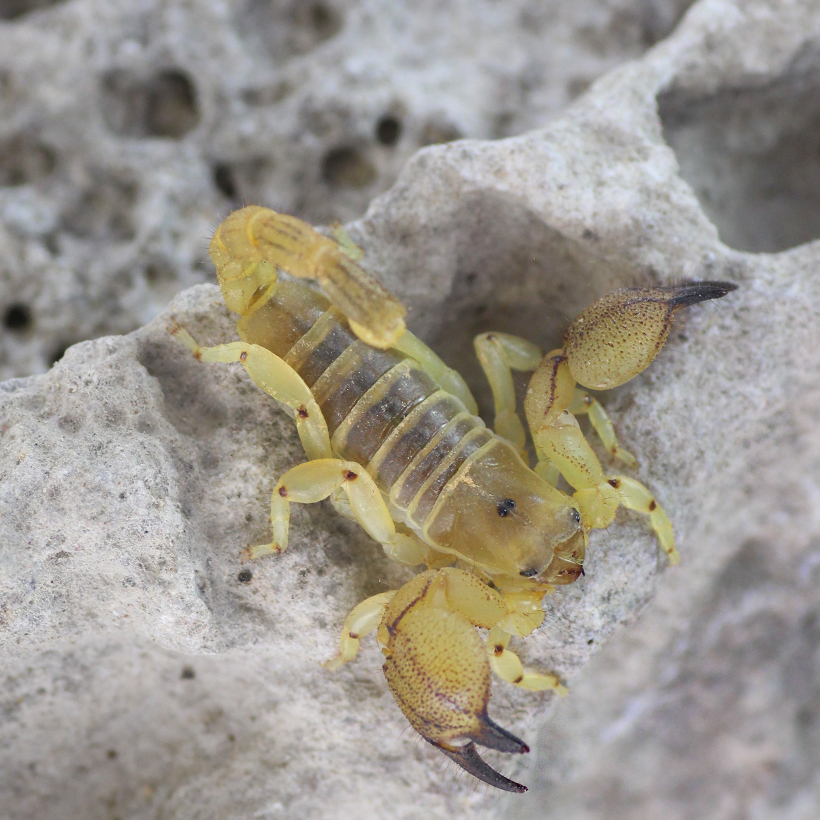
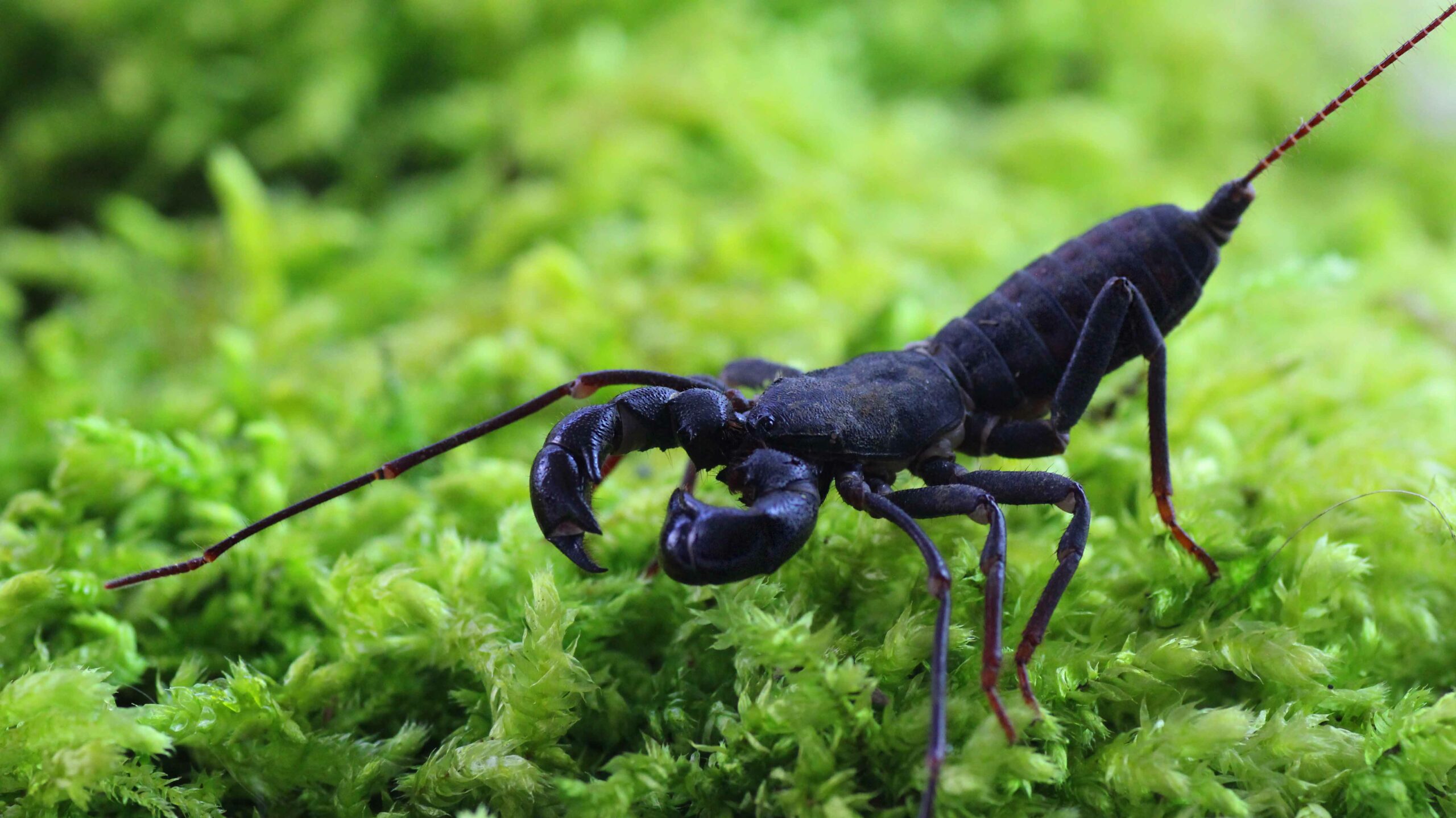
Typopeltis spec. Java “flagellate scorpion”

Medium

Indonesia

< 71 mm

26°C – 28°C
Vinegar smell instead of poison – The fascinating Typopeltis spec. java “scourge scorpion”
Typopeltis spec. Java – better known as the flagellate scorpion – is a fascinating phenomenon from the mysterious world of Amblypygi. These animals belong to the arachnid family, but are neither true scorpions nor spiders. With their flat bodies, impressively long tentacles and unique way of moving, they seem to be from another time – almost extraterrestrial. The animals originate from the Indonesian island of Java, where they live in damp, dark habitats such as caves, under tree bark or between layers of leaves. Accordingly, they also require a warm and humid microclimate with plenty of hiding places in the terrarium.
Typopeltis spec. Java “flagellate scorpion” are crepuscular and nocturnal. During the day they like to hide in narrow crevices, pieces of cork or under foliage, while at night they go in search of food. Their preferred prey consists of small insects such as crickets or cockroaches. Despite their fearsome appearance, flagellate scorpions are absolutely harmless – they have neither venom glands nor stingers and are completely harmless to humans. However, when threatened, they can release a secretion that smells slightly of vinegar from a gland on their abdomen. This contains acetic acid, among other things, and serves as a deterrent to predators – it is harmless to humans, but certainly perceptible.
The attitude of Typopeltis spec. Java “flagellate scorpion” is also possible for ambitious beginners in the world of Amblypygi, as long as you pay attention to their requirements. A terrarium from 30×30×30 cm is sufficient for a single animal, but should offer vertical structures for climbing. The humidity should be kept constantly high, ideally between 75 and 90 %, with temperatures between 22 and 26 °C. Moist humus is suitable as a substrate, supplemented with moss, cork tubes and pieces of bark.
Anyone looking for an unusual, mysterious terrarium inhabitant will enjoy Typopeltis spec. java. Their elegant movement, interesting social behavior during mating, primeval appearance and special defense strategy make them a real eye-catcher – an exciting enrichment for lovers of rare arachnids.