Phidippus audax
Price range: 28,00 € through 60,00 € incl. VAT, plus shipping

Simple

North America
< 18 mm
26°C – 28°C
Brief description:
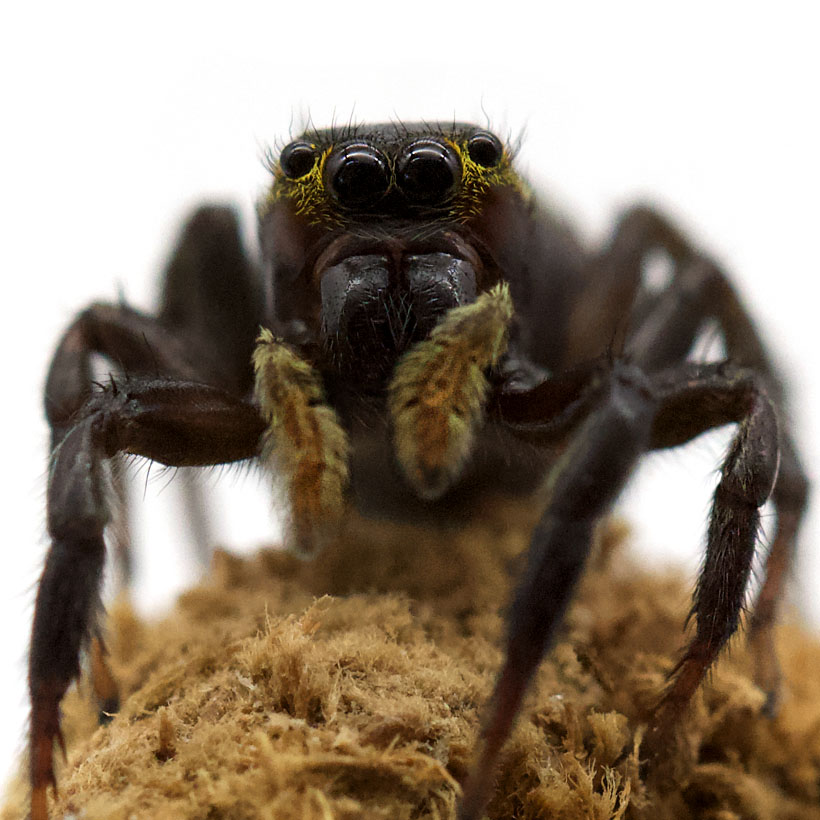
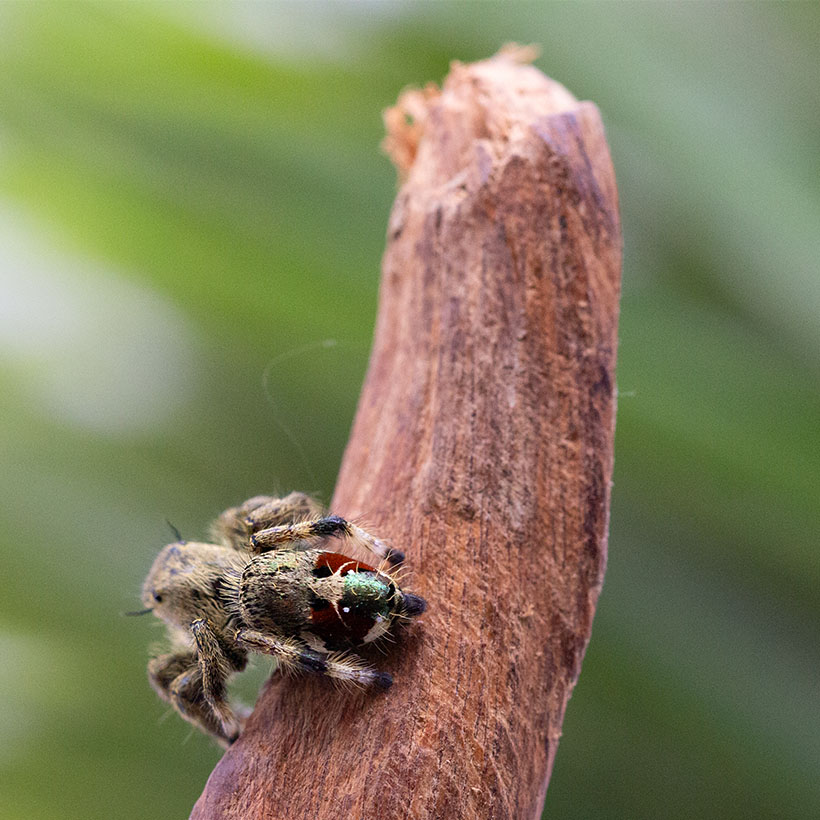
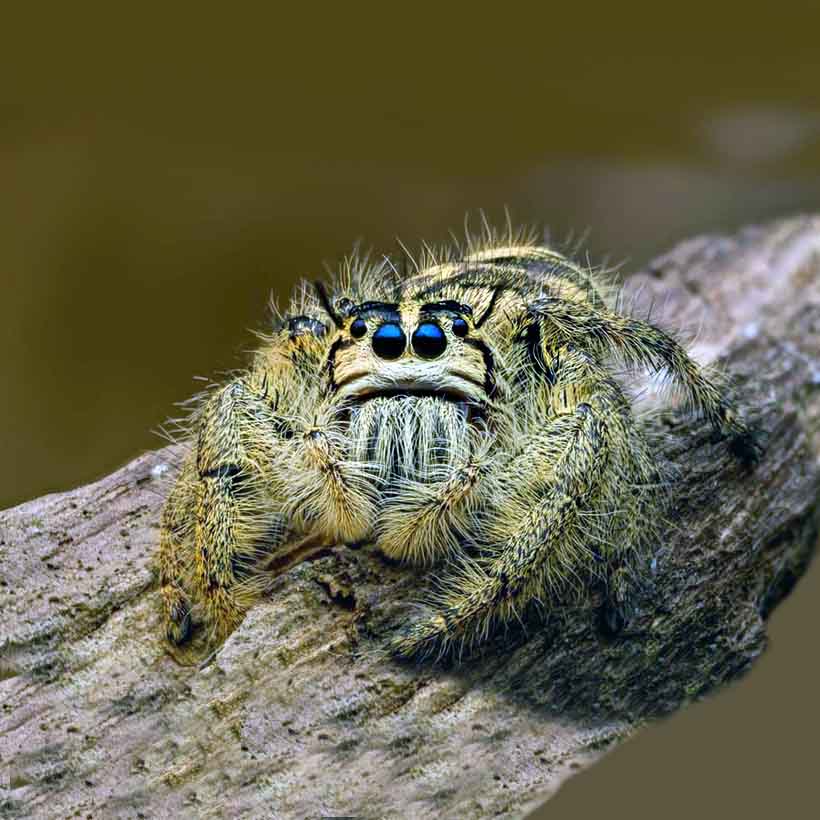
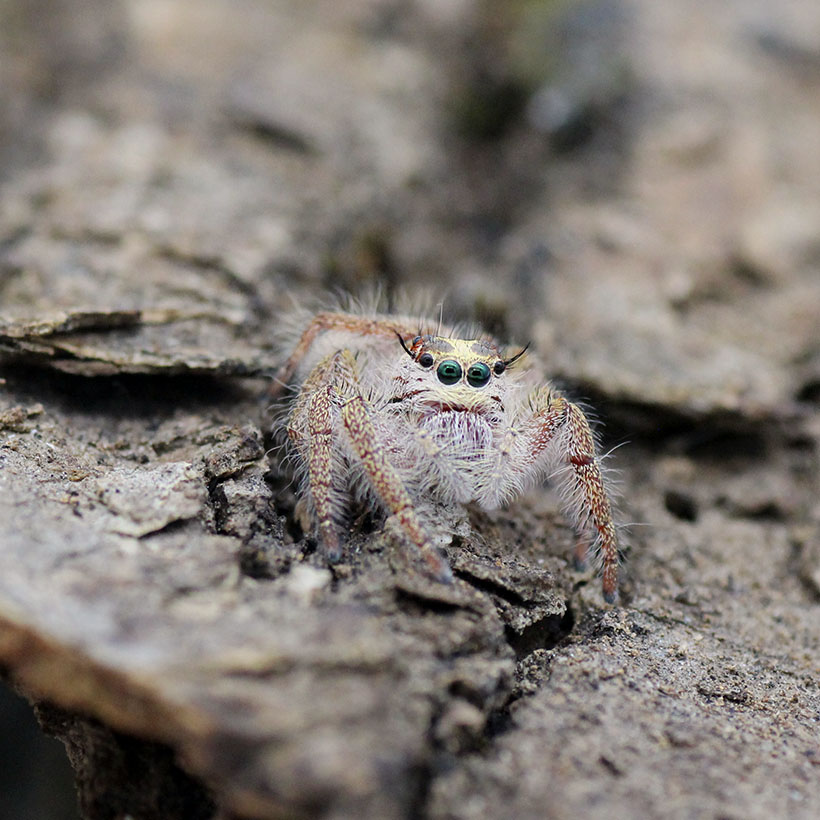
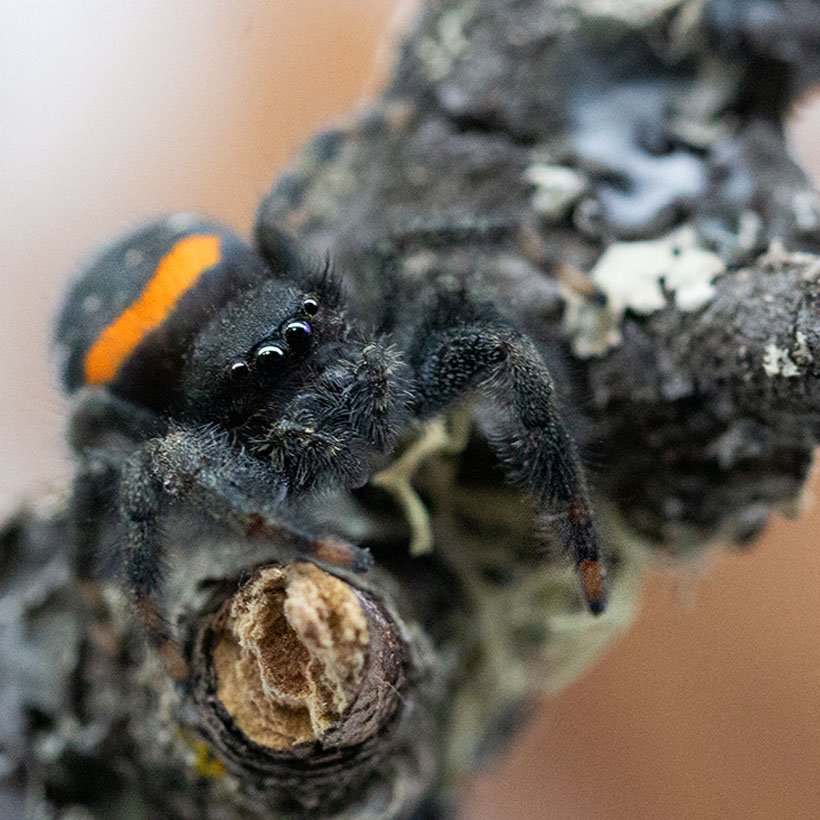
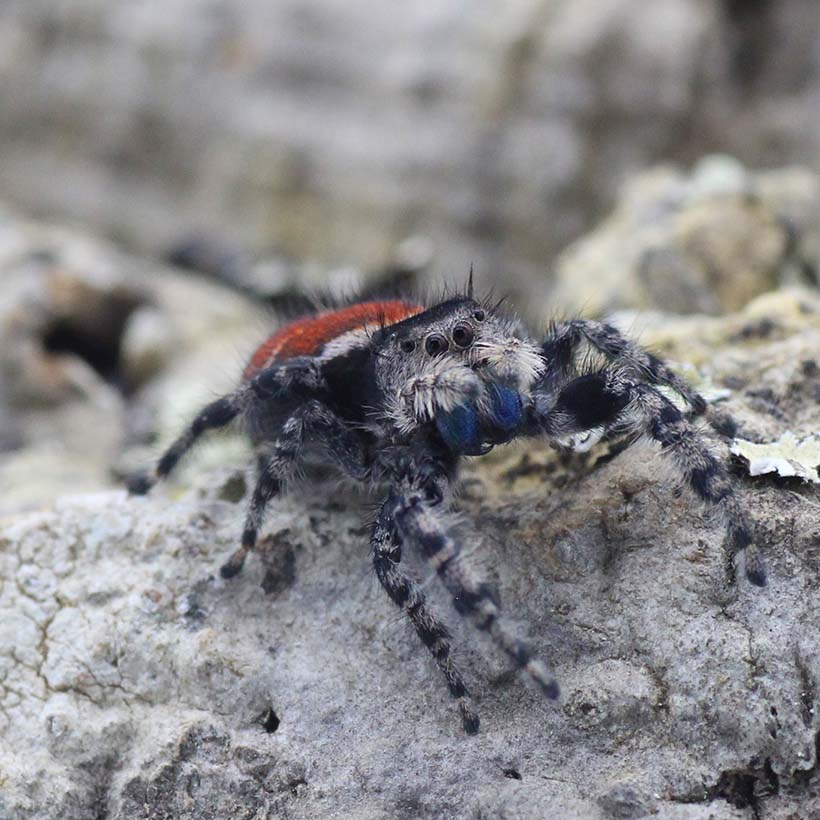
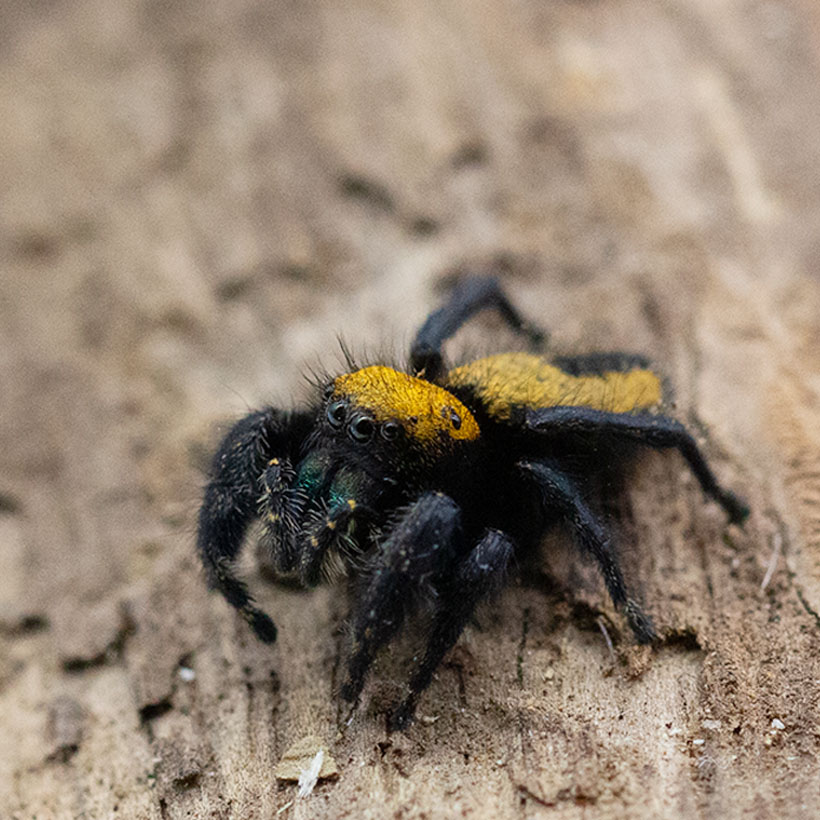
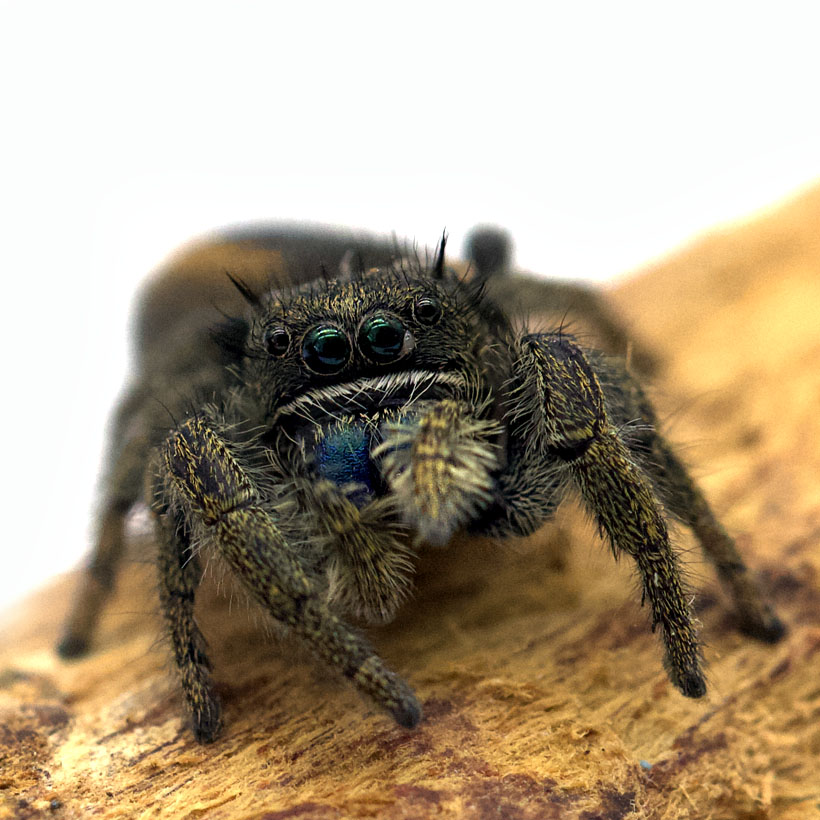
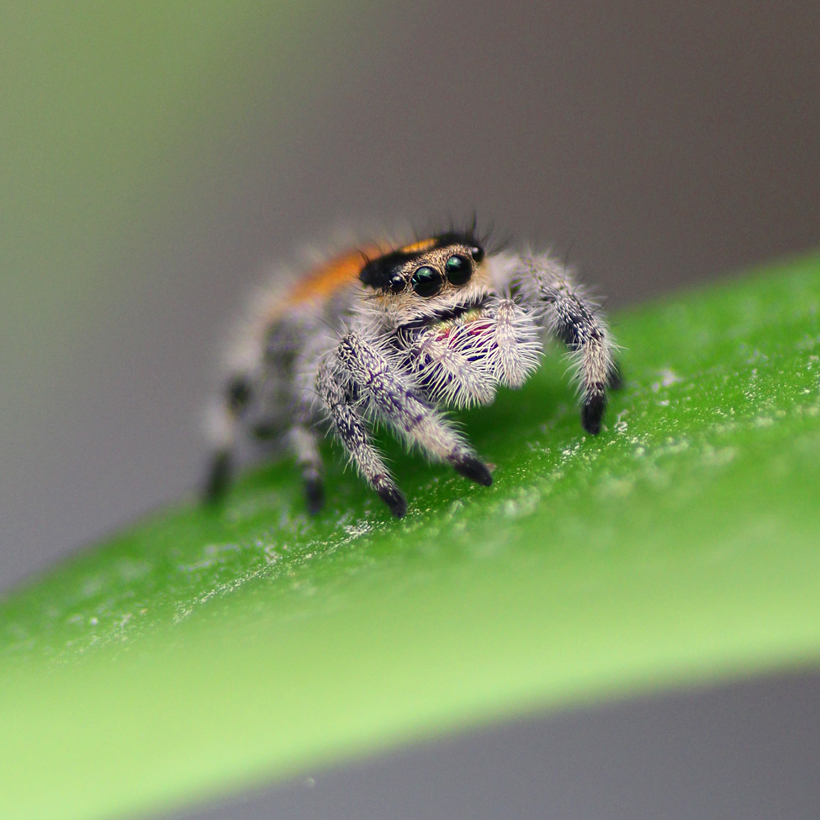
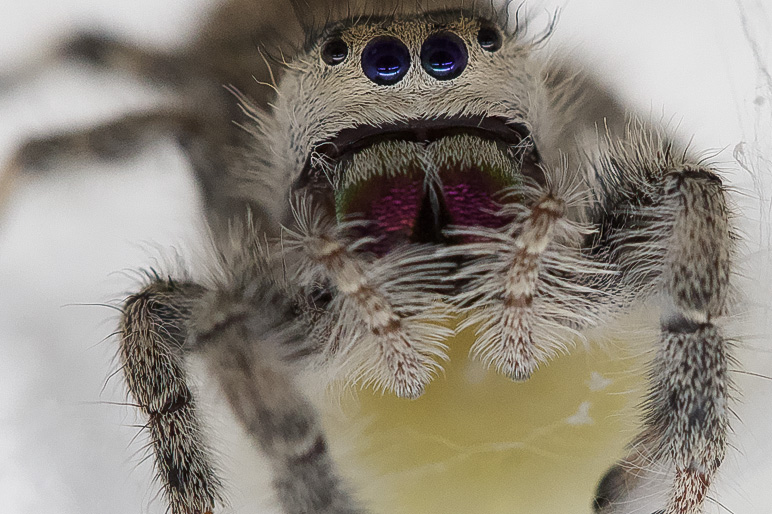
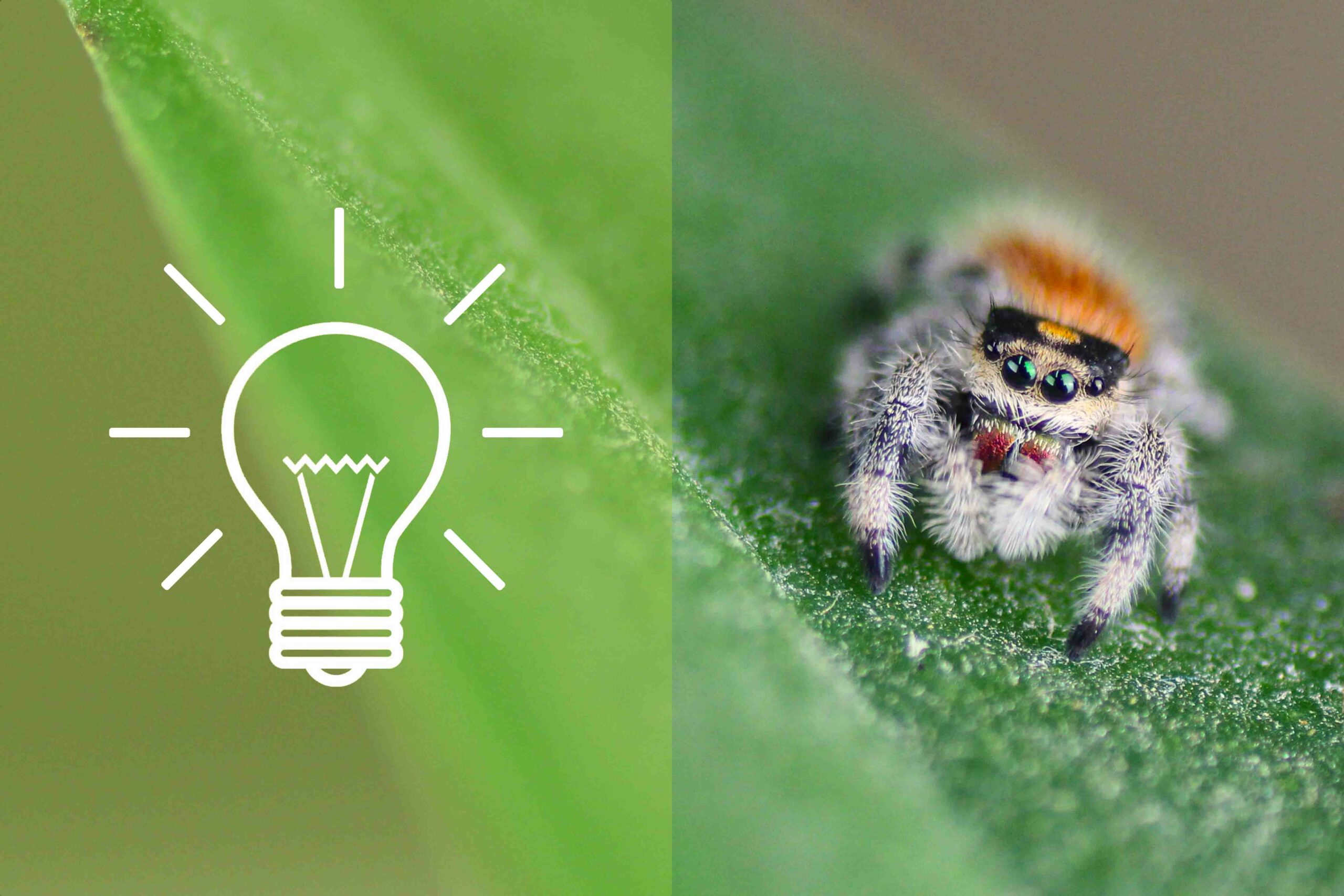
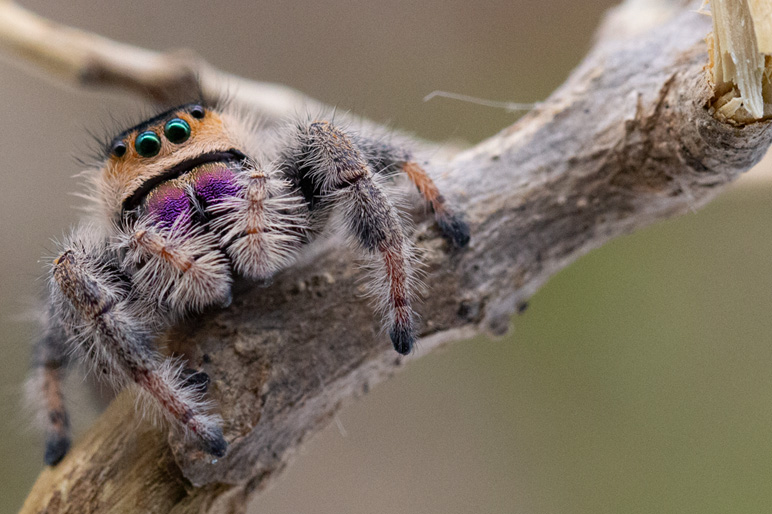
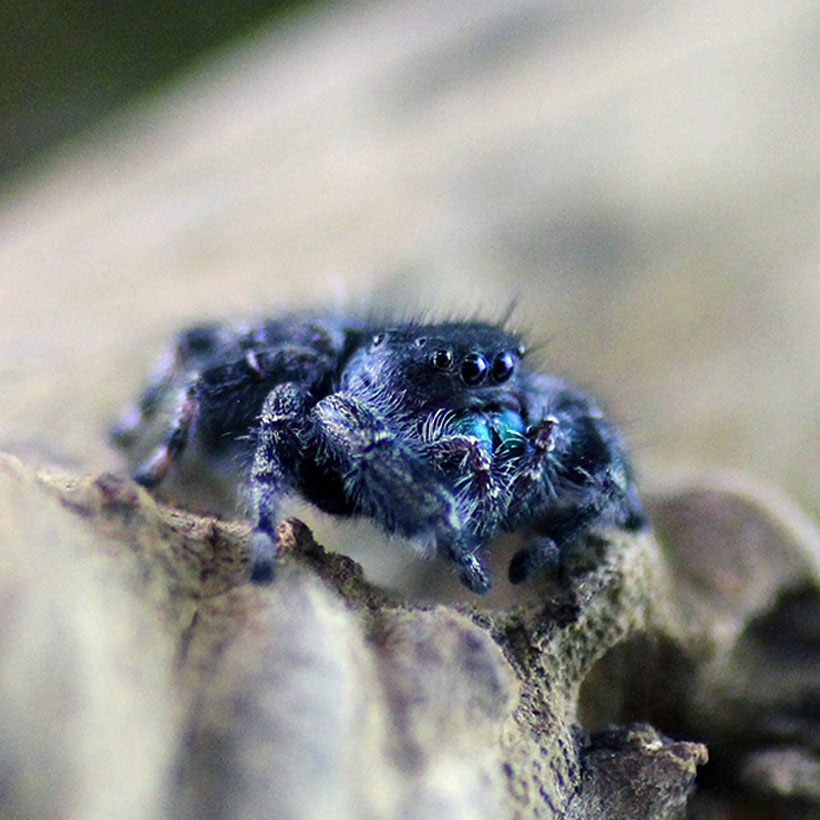
Phidippus audax are very hairy. The head segment (cephalon) and the thoracic segment (thorax) and the abdomen have a black base coloration, which is lightened with small white hairs. The abdomen has clearly defined markings. In the middle of the abdomen there is a large, triangular white spot with two smaller spots behind and to the side of the large spot. The large spot can also be orange in juveniles and the spot pattern varies within the species, but is always white, yellow or orange. In some specimens there are two oblique lateral stripes. The chelicerae are iridescent green. At 1.3 cm, the males are slightly smaller than the females, have a more contrasting pattern and more pronounced iridescence on the chelicerae.
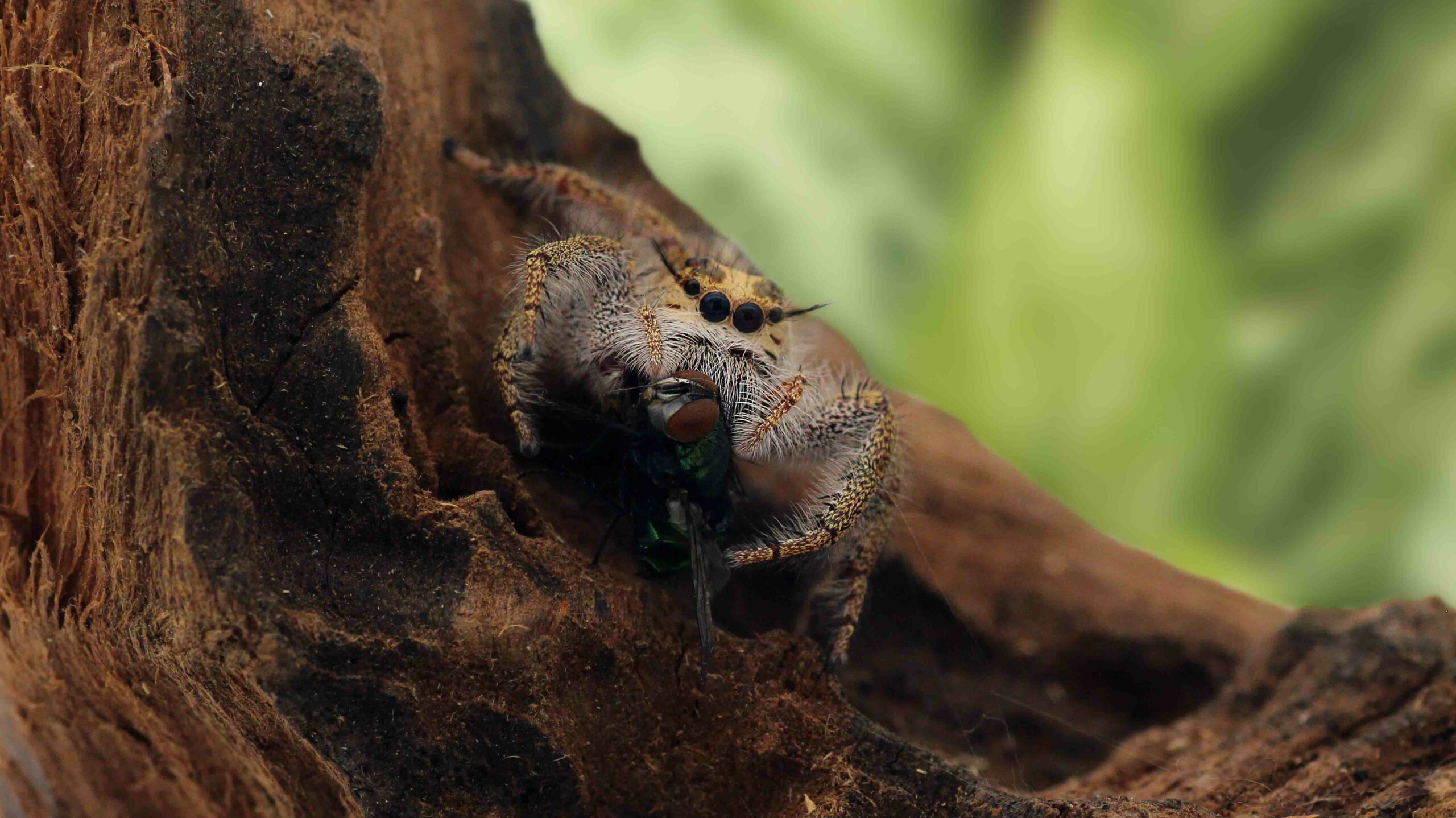
Like most jumping spiders, Phidippus audax also hunts during the day. Phidippus audax actively observes its prey with its sharp eyes. Then it sneaks up on its prey and pounces on the food animal. When jumping spiders jump, they spin a series of threads for safety. This ensures that in the event of an unsuccessful jump, the spider is caught by a safety line before it falls. Jumping spiders have much better eyesight than other spiders and are always on the lookout for prey and predators. This gives the impression when observing the animals that they are very alert and observe their surroundings extensively.
A female can produce up to 6 clutches of 30-170 eggs each. The average total clutch size is around 200 eggs per female. Later clutches are usually smaller than earlier clutches.