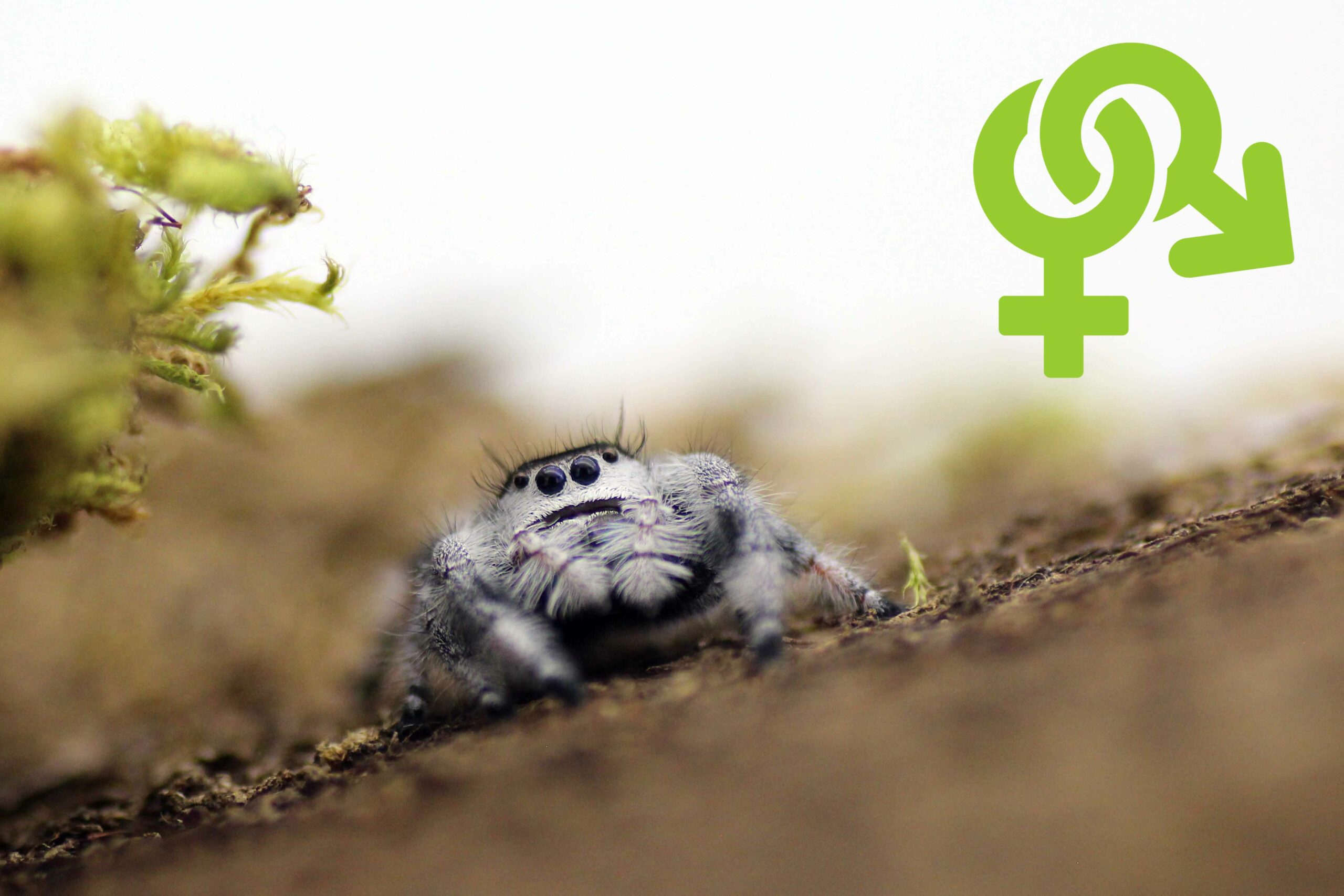


Sexing jumping spiders is one of the key issues in keeping jumping spiders. This question should not only be answered when selecting breeding animals at an early stage. Even when keeping just one animal, you want to know which sex it is. First of all, sexing jumping spiders is not rocket science. Nevertheless, you are probably unsure in this area at the beginning. But with a little practice and routine, nothing stands in the way of correct sexing.
The safe method of sex determination
When determining the sex of jumping spiders, it is important to know that there is basically only one way to determine the sex of your jumping spider with 100% certainty. This involves looking at the morphological sexual characteristics, i.e. the sexual characteristics recognizable from the external appearance of the spider. If your spider has clearly visible, comma-shaped thickenings at the end of its pedipalps, i.e. on its palps, it is 100% male.

If your spider has a clearly visible epigyne between its book lungs, i.e. on the underside of the spider, it is 100% female. The epigyne is the female sexual opening in jumping spiders and resembles a black, shiny dot.
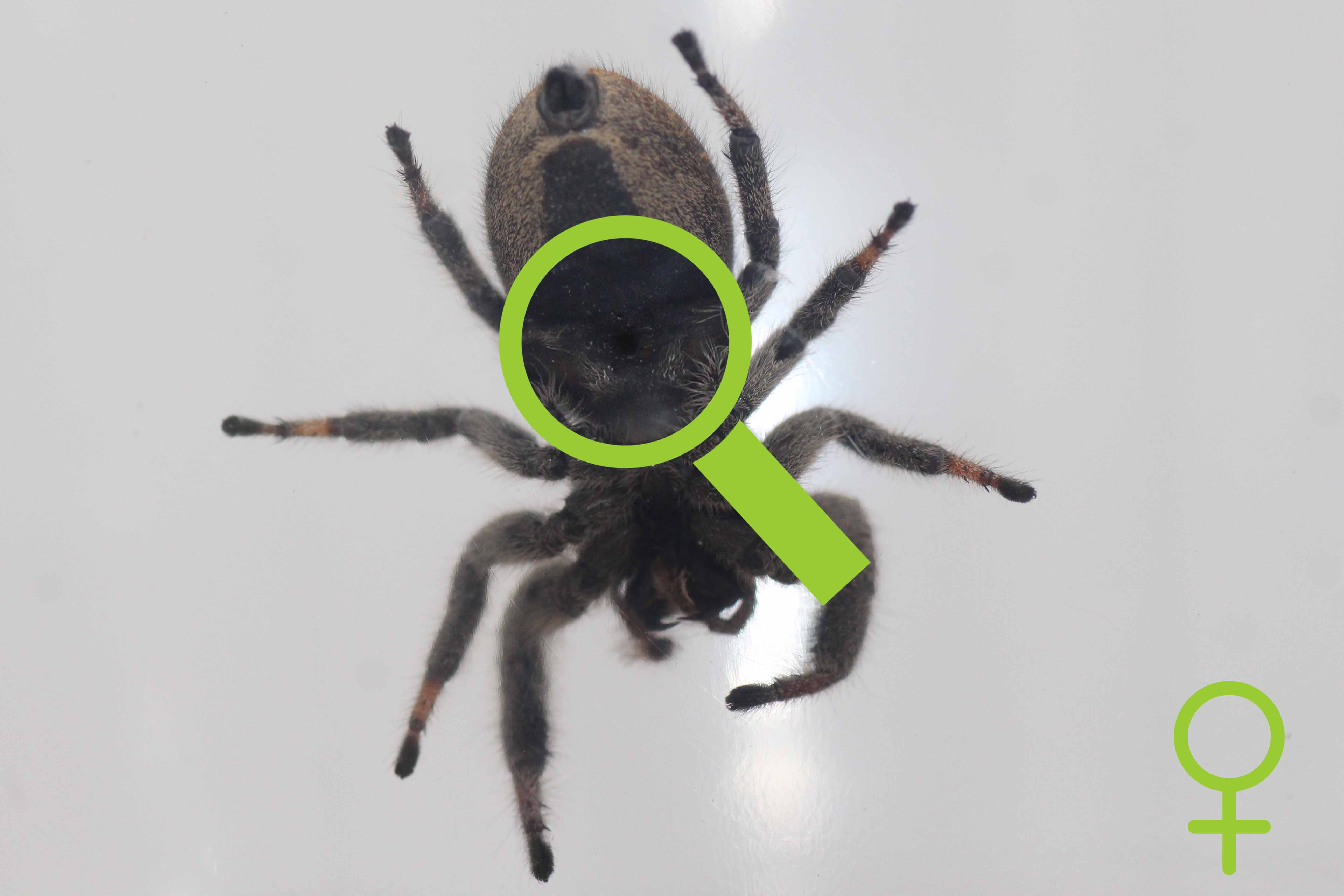
It is advisable to use reading glasses or a magnifying glass for both variants. It is also often helpful to take a photo with your smartphone, which you can then simply enlarge.
Only this method of sexing jumping spiders is valid for all different species, whether Phidippus regius, Phidippus audax, Phidippus adumbratus, etc. In many jumping spider species, the bulbs, as the thickenings on the pedipalps are called, and the epigyne can only be recognized after many moults. In some species, these features only become apparent in the (sub-)adult stage, i.e. when the animals are almost fully grown. For this reason, you should refrain from making hasty sex determinations, e.g. based on color or size.
Special features of the sex determination of Phidippus regius
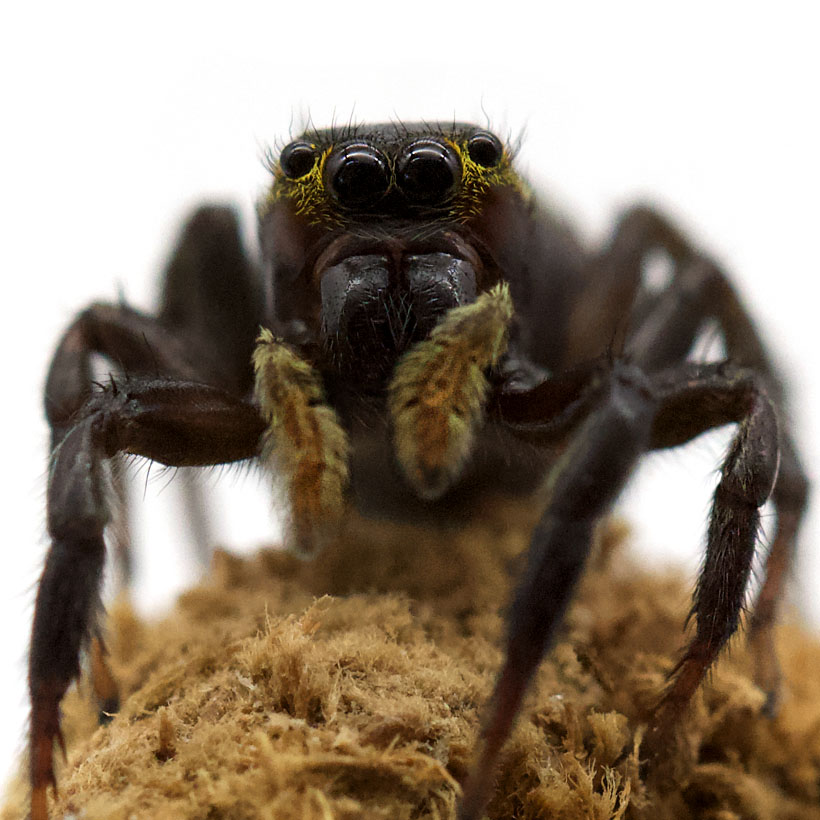
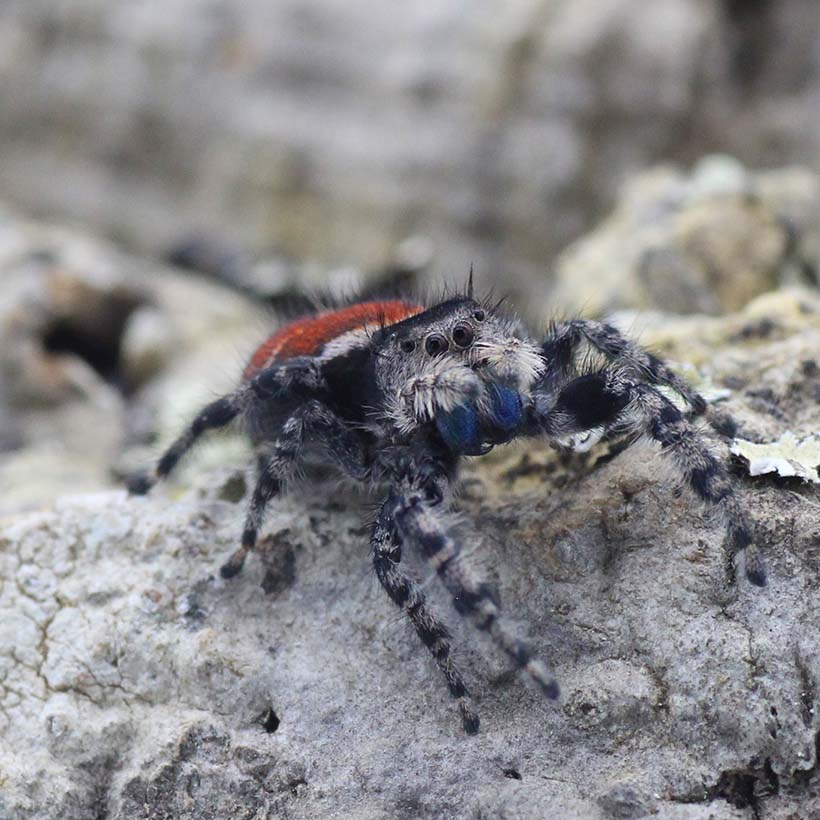
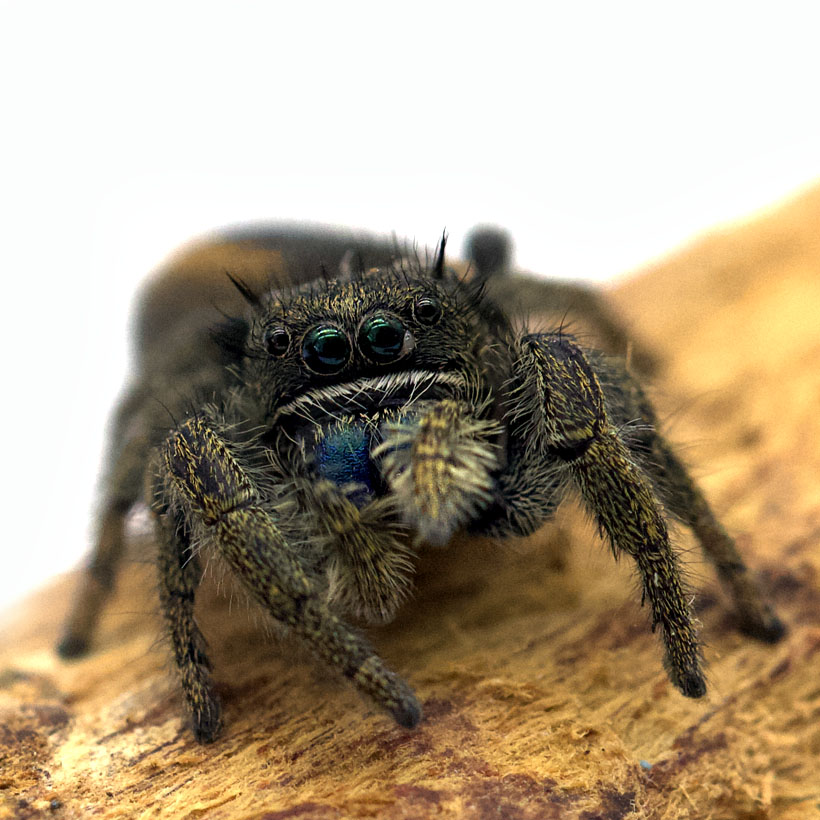
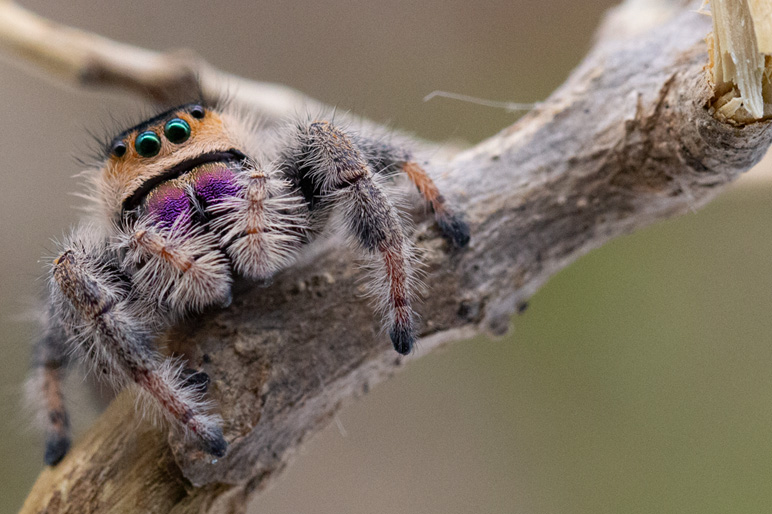
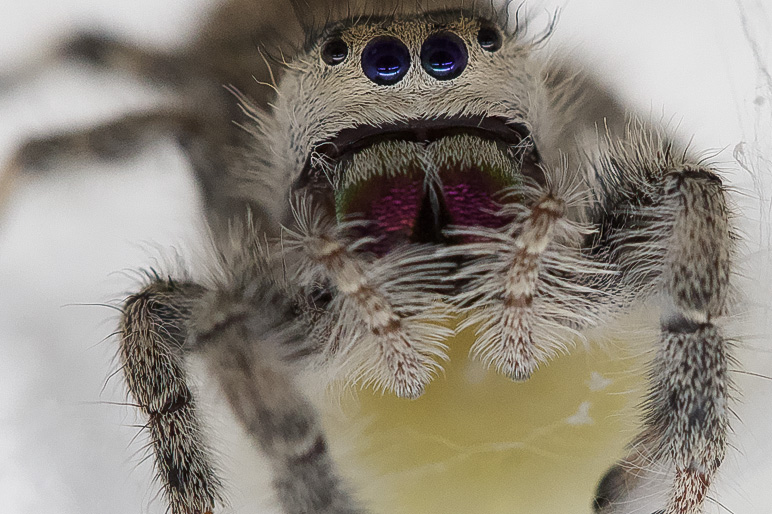
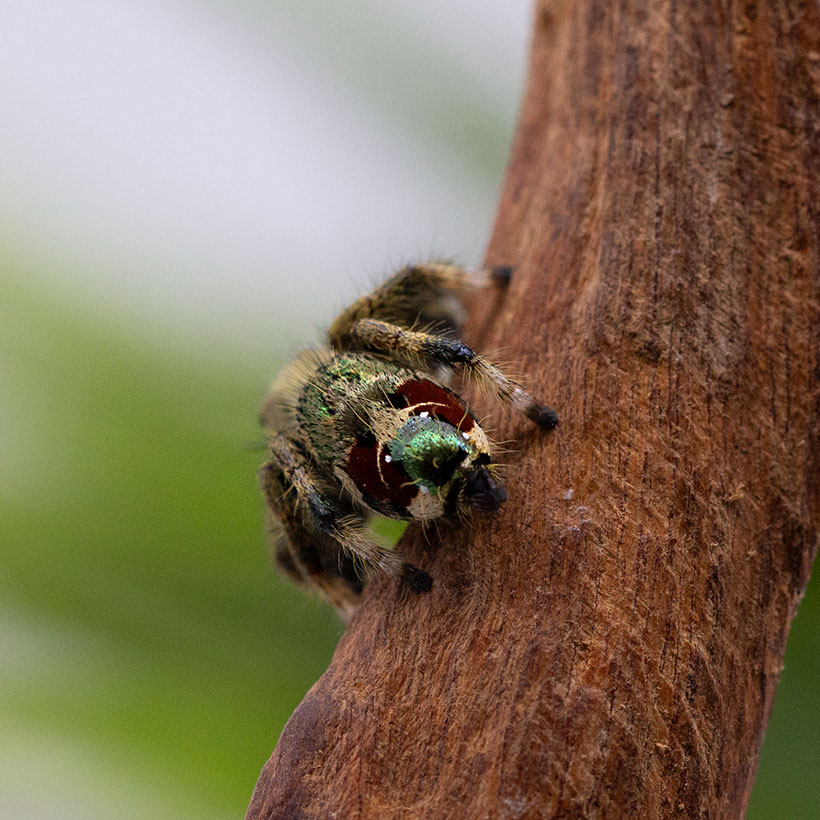
As Phidippus regius is the most widespread jumping spider species in the terrarium hobby, we will dedicate a separate section to the sexing of this species. The sex determination of Phidippus regius is very easy and early compared to other jumping spider species. The color of the chelicerae, i.e. the teeth of your spider, changes at around FH4. The fangs of the males change color to a green-blue tone, whereas the fangs of the females become pinkish-pink. The easiest way to recognize the color of the chelicerae is to shine a flashlight into the spider’s face. If the pedipalps, i.e. the palps, cover the fangs too much, it helps to feed the spider. If the jumping spider has food between its fangs, their color is usually easier to see. If you have any questions about what to feed your jumping spider, our article ” Jumping spider food – The right diet!” continue!

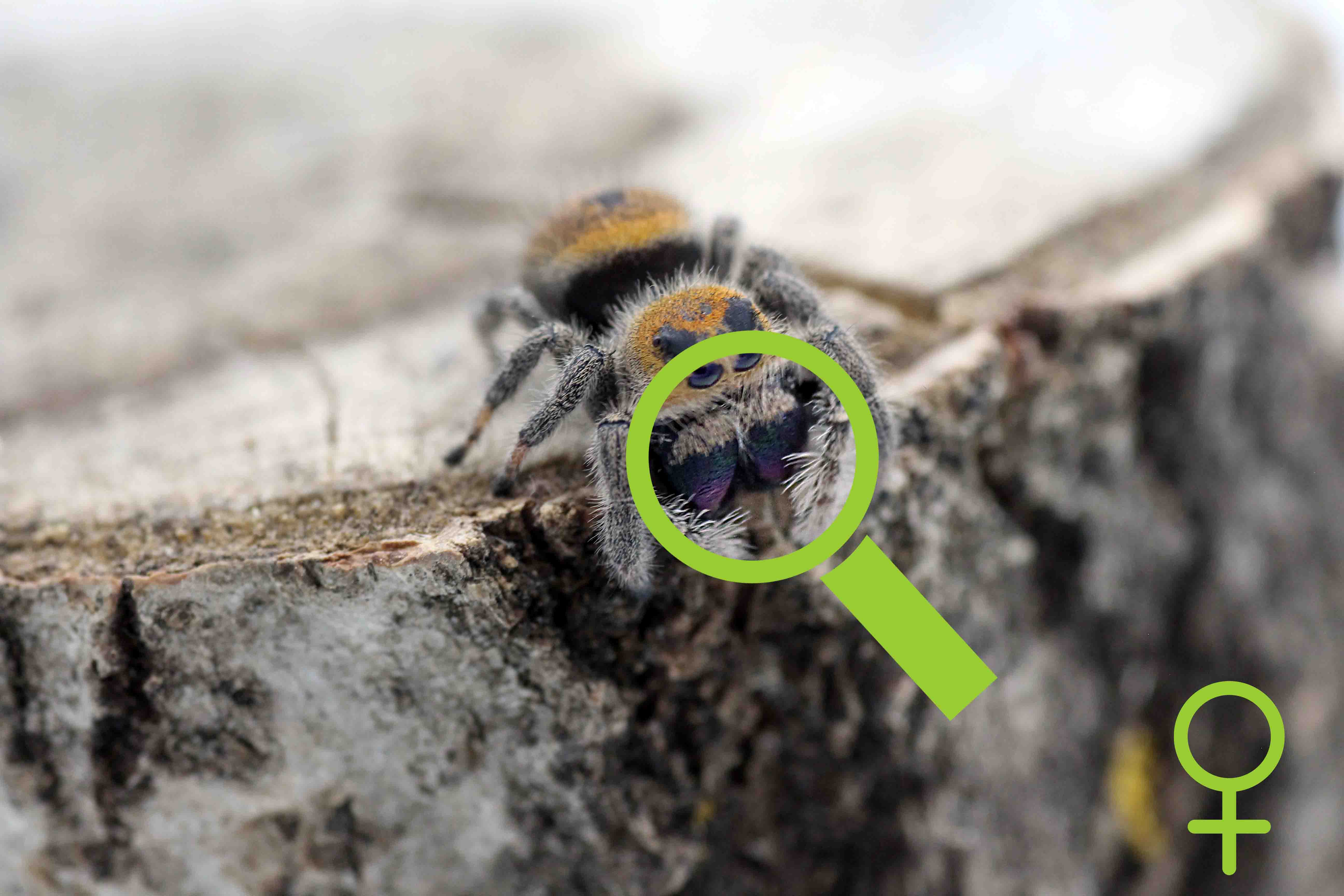
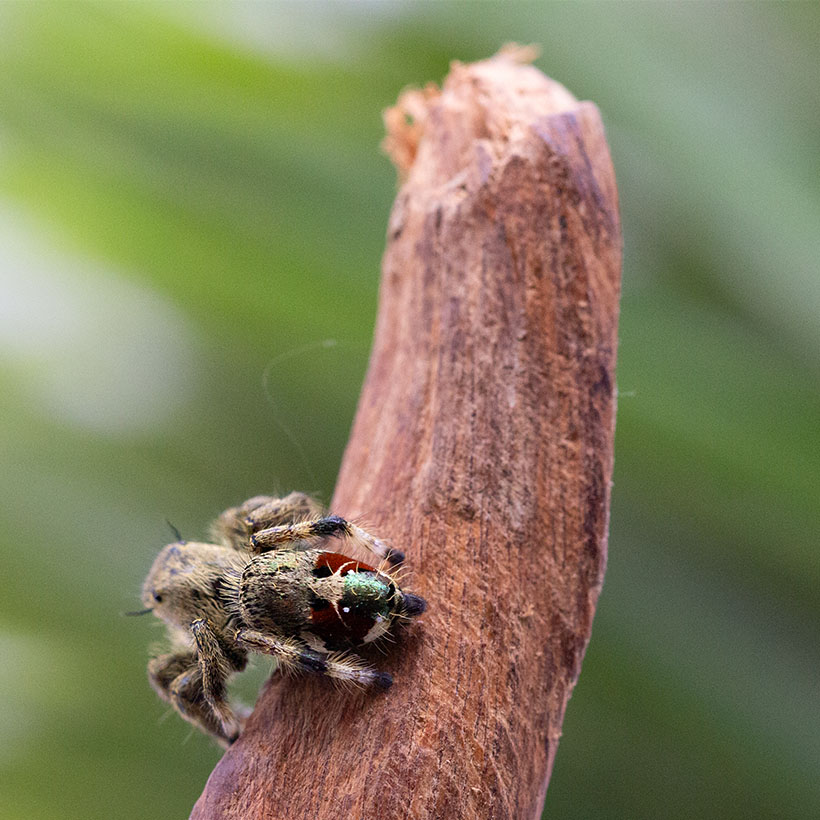
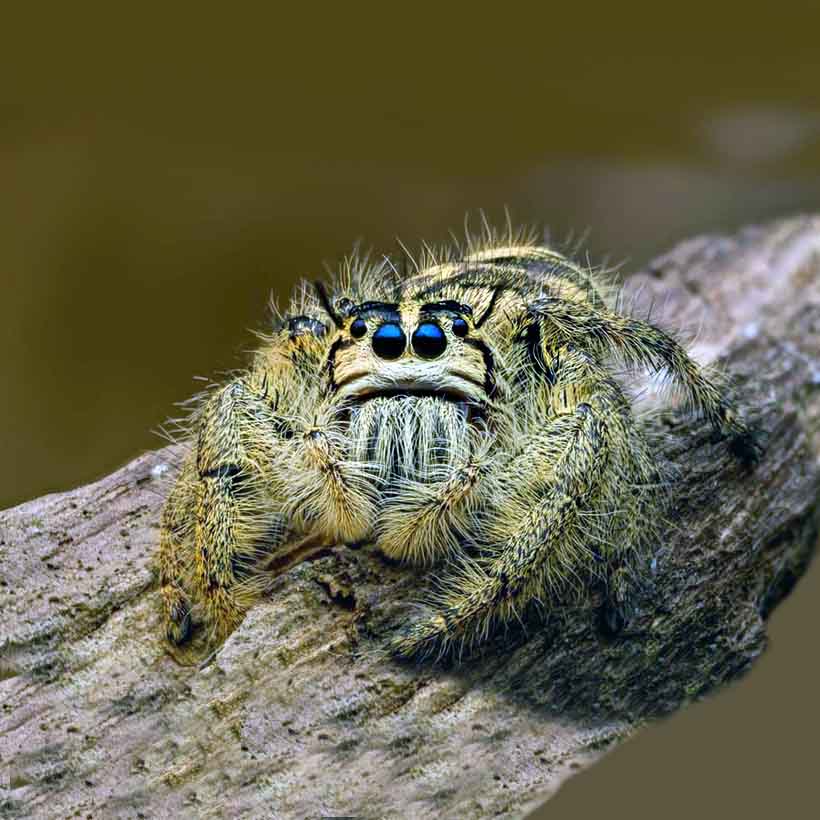
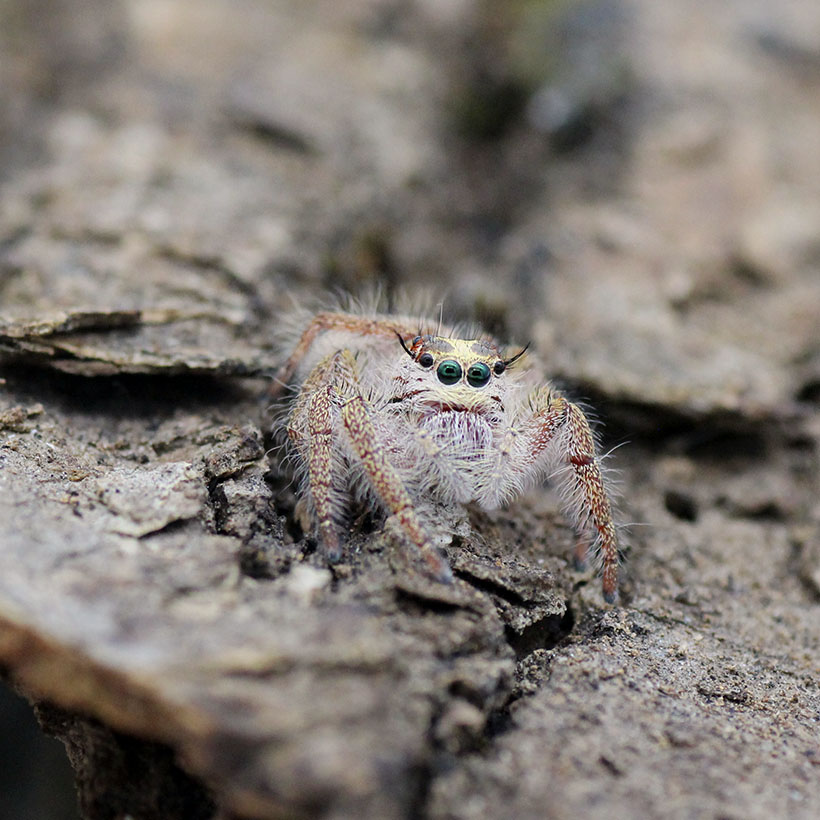
However, it is not only the color of the teeth that changes at around FH4, but also the general appearance of your spider. From this point on, the males usually remain exclusively black and white in color, whereas the females turn orange, red, brown, gray or white depending on the local form. Although the above characteristics are all good indicators of the sex of your jumping spider, only the external sexual characteristics listed above offer 100% certainty.

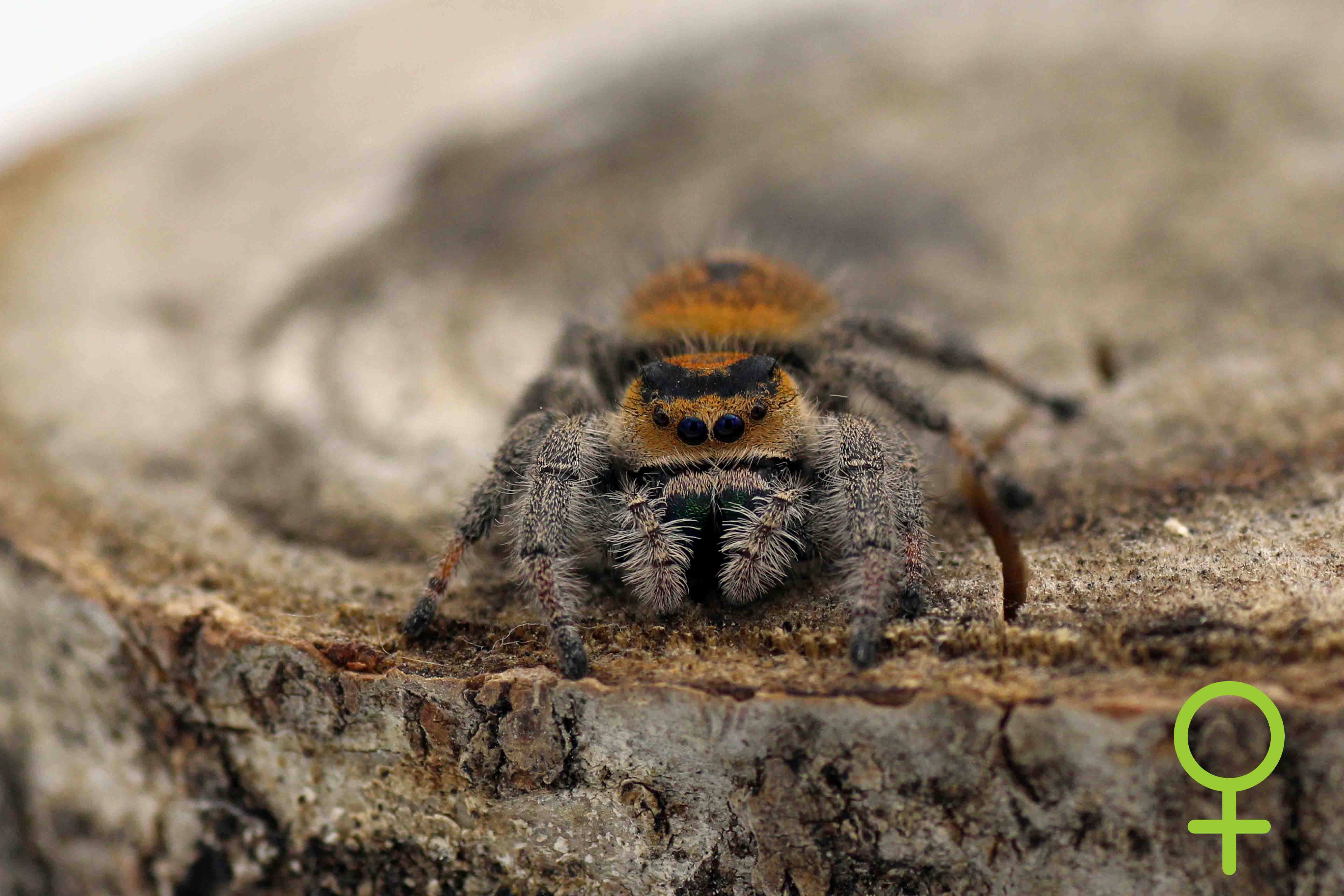
Sexing jumping spiders is therefore not that difficult. When sexing Phidippus regius, please make sure that all characteristics match. This increases the hit rate and provides additional certainty. In addition, check the sex determination again after each moult. Sometimes the characteristics change or they were not clear in the previous attempt.
If you have any further questions, please leave them in the comments below the article.
Leave a Reply
You must be logged in to post a comment.