

General information:
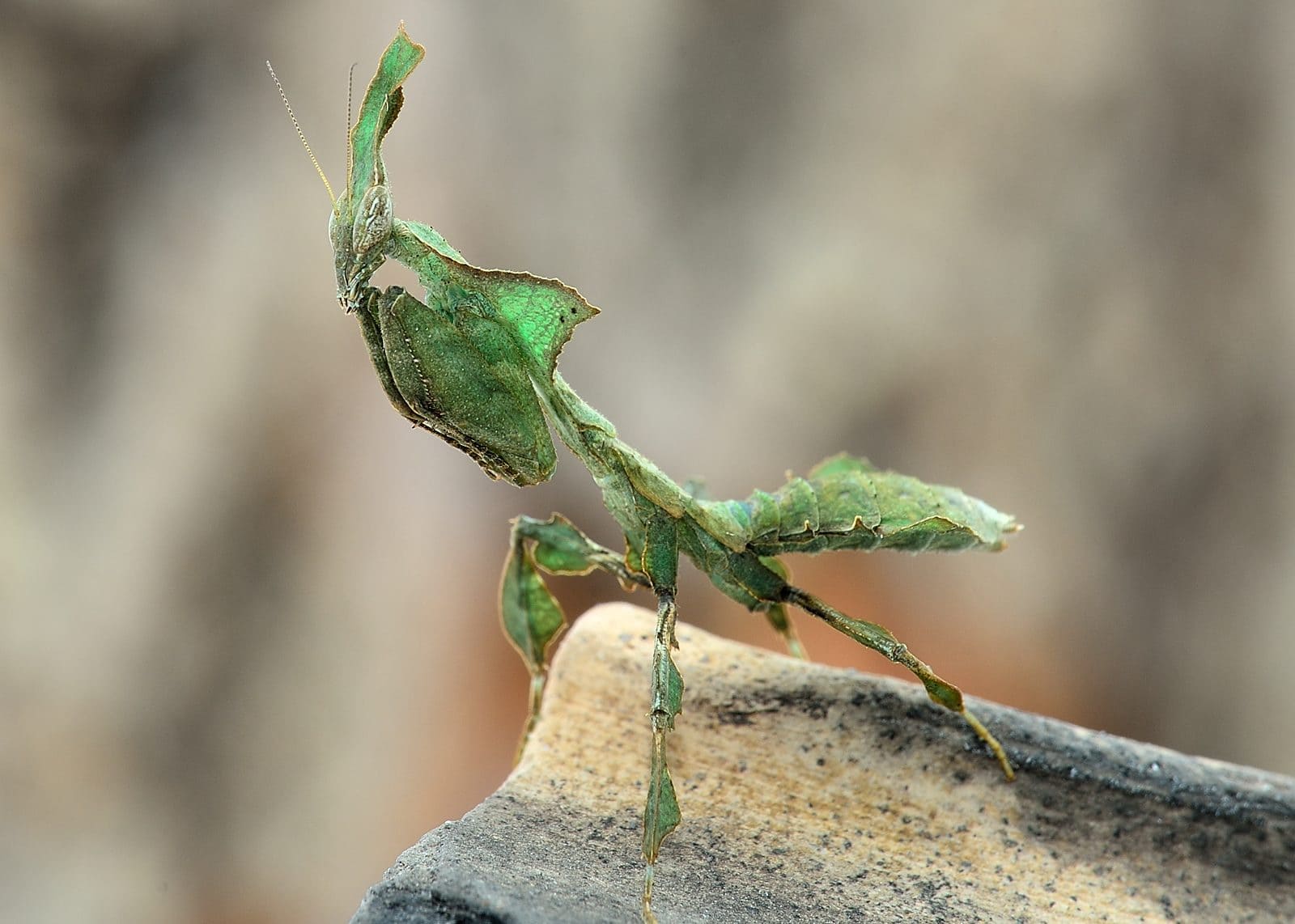
If you like quirky and special things, you can’t go past Phyllocrania paradoxa. The high crown and also its appearance in shape and color perfectly camouflages the ghost mantis as a withered leaf. I always catch myself looking over the animals when I look into the terrarium, as they blend in almost perfectly with their surroundings.
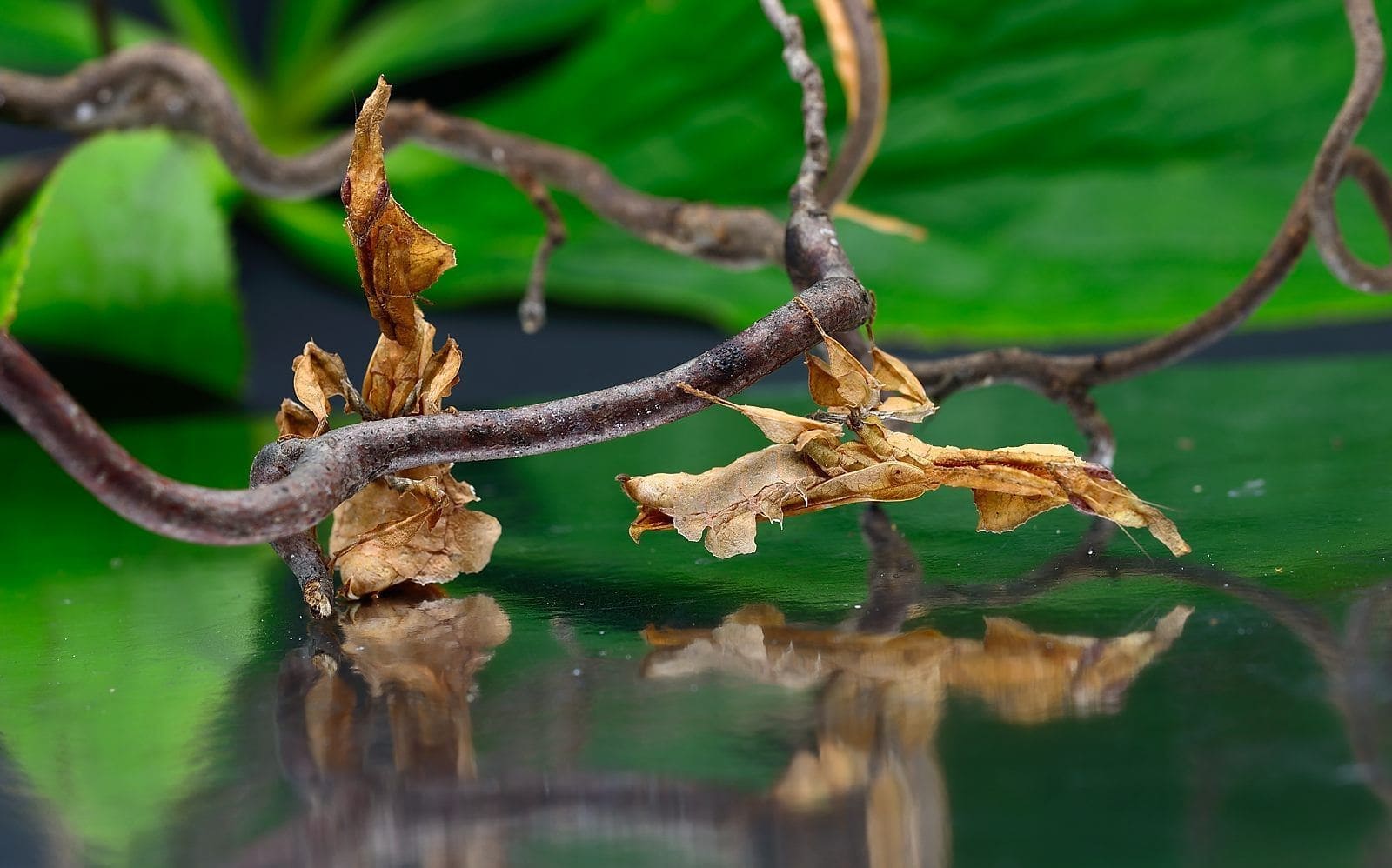
They also offer more than other mantids in terms of color. From brown to beige to green Phyllocrania paradoxa are available, providing welcome variety in the terrarium. The fact that they can be kept in groups is another positive attribute that increases the interest of mantis keepers.
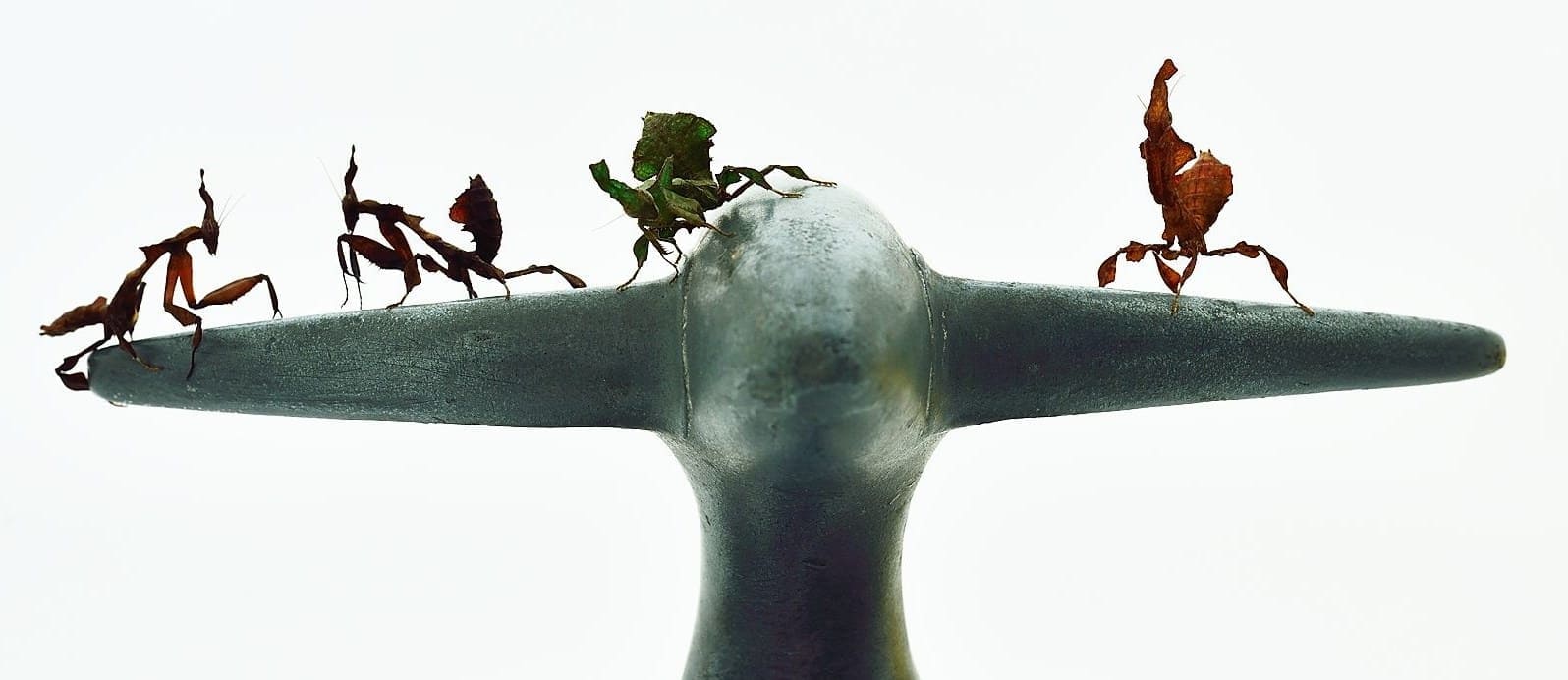
The coloration has nothing to do with the genetics of the parent animals, but rather small differences in climatic conditions within a terrarium play a role. Phyllocrania paradoxa forgives every beginner the one or other mistake that you are sure to make at the beginning and is almost perfect for every beginner! Due to the relatively undemanding and dry keeping conditions, you can slowly feel your way into the hobby of keeping mantids and experience several positive experiences right at the beginning that may motivate you to try a more demanding species later on.
Size / life expectancy / molts:
Male: 5.0 cm / total 7.5 months (5.5 months to adult + 2 months as adult) / approx. 6 moults
Female: 5.0 cm / total 12 months (6 months to adult + 6 months as adult) / approx. 7 moults
Food:
L1/L2: Springtails Collembola / Small fruit flies Drosophila melanogaster
L3/L4: Large fruit flies Drosophila hydei
L5/L6: Gold flies Lucilia sericata
L7/adult: Blowflies Calliphora sp.
Habitat:
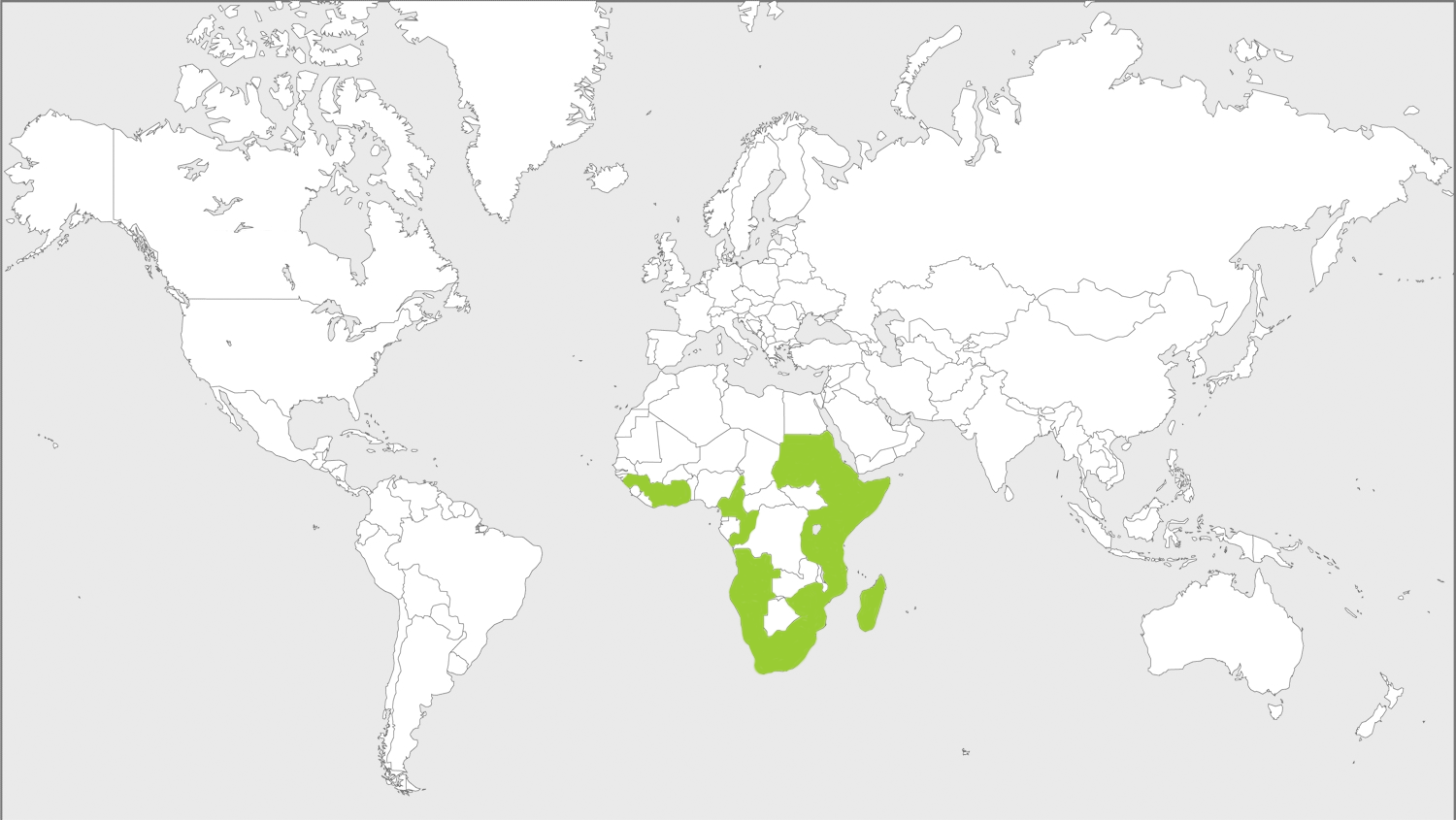
The ghost mantis can be found on highly branched shrubs, bushes, trees and in open areas. It has a relatively large catchment area that extends south of the Sahara to Madagascar. They colonize relatively dry areas and have little to no requirements in terms of humidity. The daytime temperature there is usually between 25- 30°C and 20°C at night. The large catchment area is a further indication that the ghost mantis is not particularly susceptible to minor fluctuations.
Keeping in the insectarium:
L1/L2:
At this stage, I keep them in groups in a 500 g/ml packaging cup. Of course, you can also incubate them directly in a BraPlast box and raise them there too. I cut out an opening in the lid and used organza with hot glue as a ventilation grid. I also added a vent on the side for safety. To start with, I use untreated wood wool as a climbing surface and kitchen towels as a substrate. There must always be twice the size of the mantids at the bottom so that moulting can proceed smoothly. I spray the substrate a little every 3-4 days. When spraying, it is better to start a little more cautiously and work your way up slowly. Waterlogging is more dangerous for your animal than slightly lower humidity. There should always be enough Drosophilas in the container to provide food. I change the kitchen towel at least once a week, depending on how high the population density is.
from L3/L4:
I use BraPlast boxes with the dimensions 18.5×18.5×19.0 cm. There should be enough branches or climbing possibilities in the upper area.
If you take branches from the wild, place them in the microwave for 20 seconds or in the oven at 100°C for 15 minutes beforehand. This will kill all the mites and other parasites that you have brought with you that could cause you problems later on. Here too, the motto is less is more. Praying mantises are lurking hunters, so you shouldn’t pack it full. Leave space for moulting, as this is the most dangerous time in your guest’s life. I go into more detail on the subject of terrarium size and group housing in the article “Terrarium size and ventilation”. You are also welcome to watch the video accompanying the article.
Reproduction:
Sex determination:
The sex can be reliably determined from L4/ L5. The females have a broad, relatively straight crown, whereas the males have a longer, thin, curved crown. The antennae of the males are longer and thicker than those of the females, and the female’s abdomen, pronotum and entire abdomen are wider than those of the male. If you are unsure, you are welcome to send me photos by e-mail and I will then determine the gender for you.
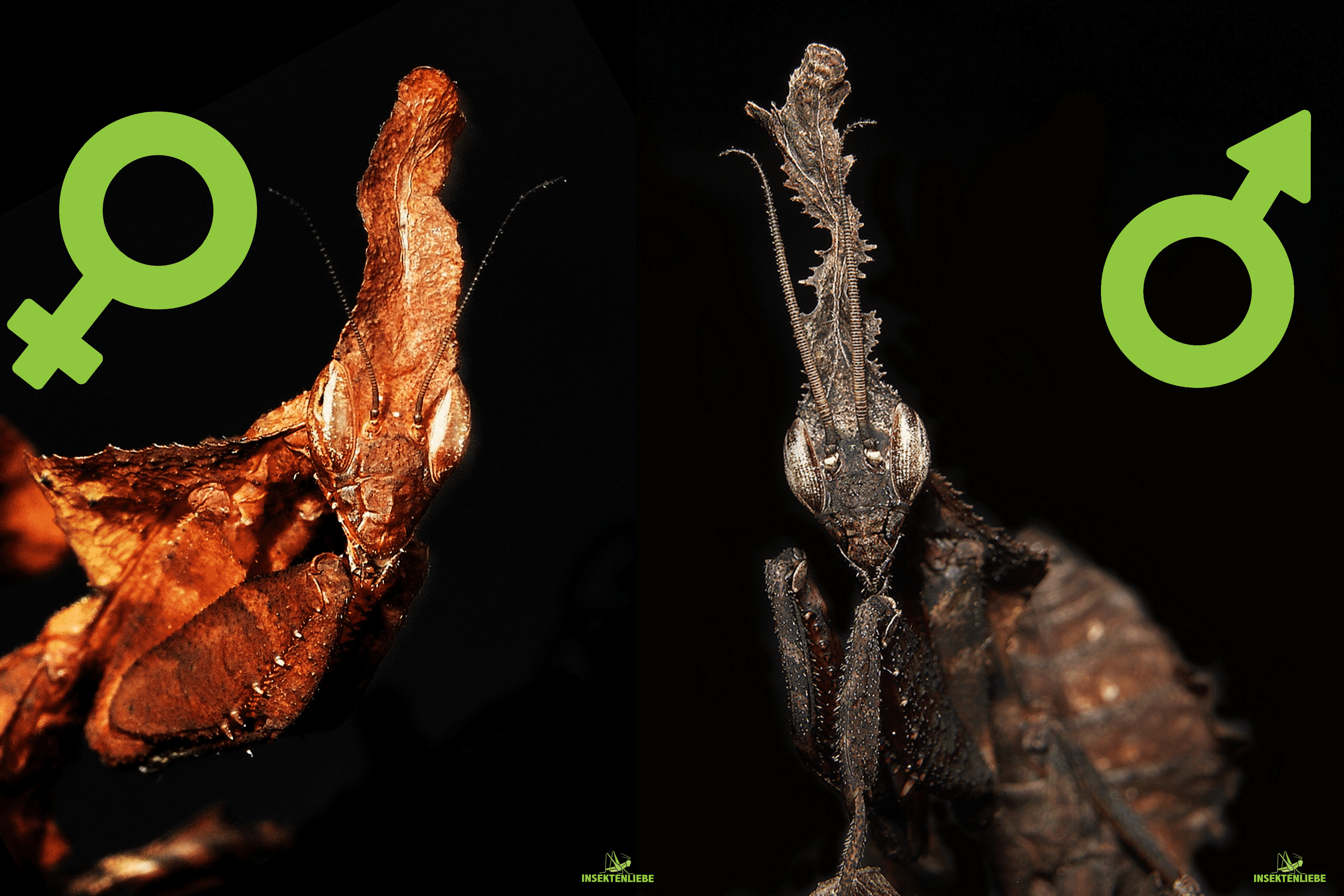
If you would like to know more about sex determination, you can read more about it in the article Sex determination of a praying mantis.
If you are unsure, you are welcome to send me photos by e-mail and I will then determine the gender for you
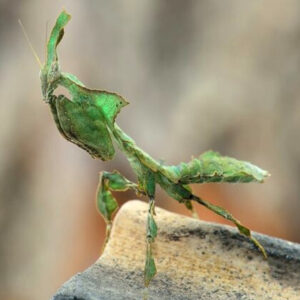
Phyllocrania paradoxa “ghost mantis”
Due to their low aggressiveness, ghost mantids can also be kept together in groups if there is sufficient food available.
Sexual maturity:
The females become adults after approx. 7 moults, i.e. in L8. Male Phyllocrania paradoxa after 6 moults, i.e. in L7. The females need another 2 weeks after the mature moult until they are ready to mate. Males only 1 week.
This means that the males become sexually mature one moult and one week before. This is a fairly unproblematic period, as the males live for around 2 months after moulting.
The difference between the sexes can be recognized from L4 at the latest. This means you can keep the males slightly cooler than the females as a preventative measure. Please remember not to keep them below 20 °C.
So about 2 weeks after moulting the animals are ready to mate.
Mating:
Breeding is relatively simple, about two weeks after the adult moult you put male and female together and wait, the females should as always be well fed. If you keep them in groups, there is no need to do this and fertilization is an inevitable by-product of keeping them together.
Often the male just sits there without copulating after jumping on the female. It can take several hours before the male makes his first attempt at copulation. Mating can therefore last several days. The female will then glue several clutches of eggs to branches or side walls within several weeks. The clutches and young are kept under the same conditions as the adults. Even with the larvae, the humidity should not rise excessively and I only spray the insectarium briefly every 3-4 days.
Oothek shelf:
The ootheca can contain up to 50 eggs, but the average is 10-40 eggs. In contrast to the free oothecae of cockroaches, mantis insects stick their roundish, elongated, shield-like, drop-shaped or packet-like oothecae to various substrates. They are often attached to the climbing facilities or to the gauze cover. To do this, they first apply a protein-containing secretion to the substrate. More of this foamy secretion is then released with spiral movements of the abdomen, and the eggs are deposited one after the other in the same substrate in such a way that they are arranged in a certain order and each occupy a compartment of the ootheca. Finally, the secretion is drawn out in a more or less long thread before it hardens into a sponge-like, very firm cocoon. Along the surface is the thinnest part from which the nymphs hatch. It can usually be recognized as a large-pored, seam- or comb-like strip. You can find out more about the ootheca here.
Incubation:
Hatching is strongly linked to the temperature, at 29° C the nymphs hatch after approx. 4 weeks. It is advisable to offer the newly hatched Phyllocrania paradoxa nymphs their first food straight away.