

| Origin | Congo, Guinea, Senegal, Angola, Cameroon, Kenya, Sudan |
| Temperature | 22-28 °C |
| Size | 2.0 to 2.5 cm |
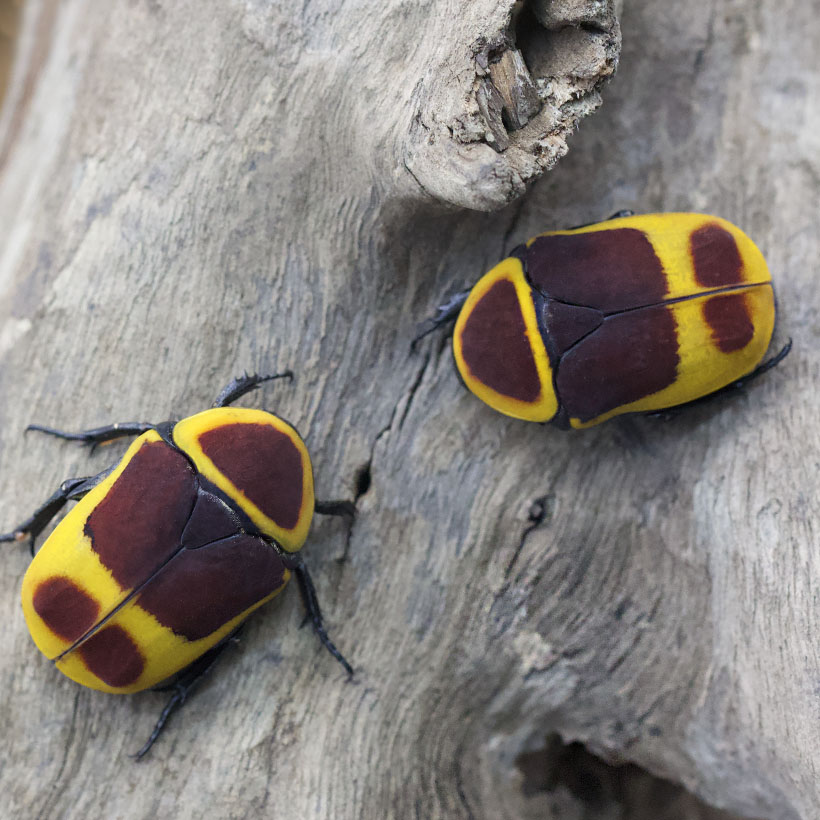
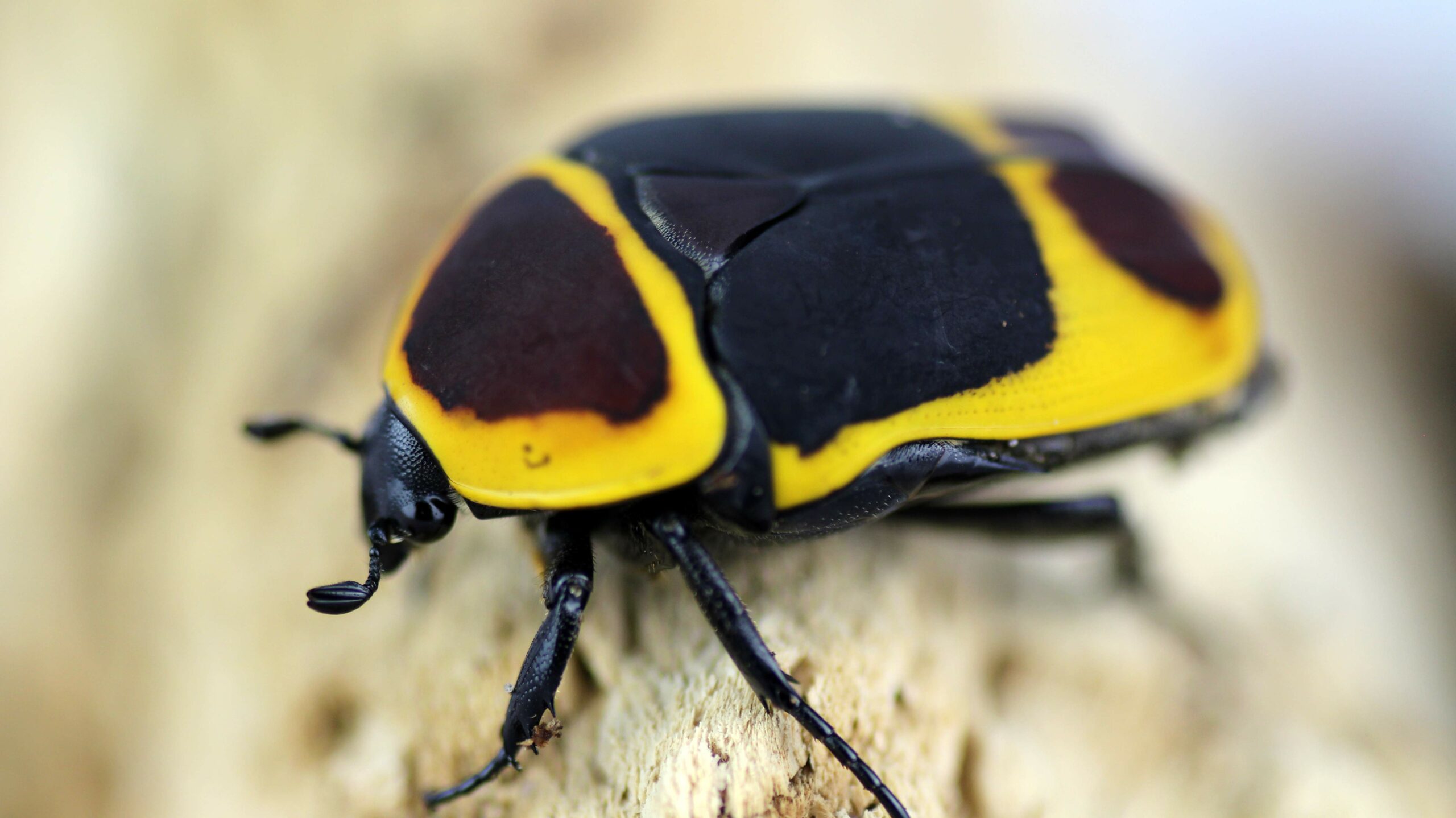
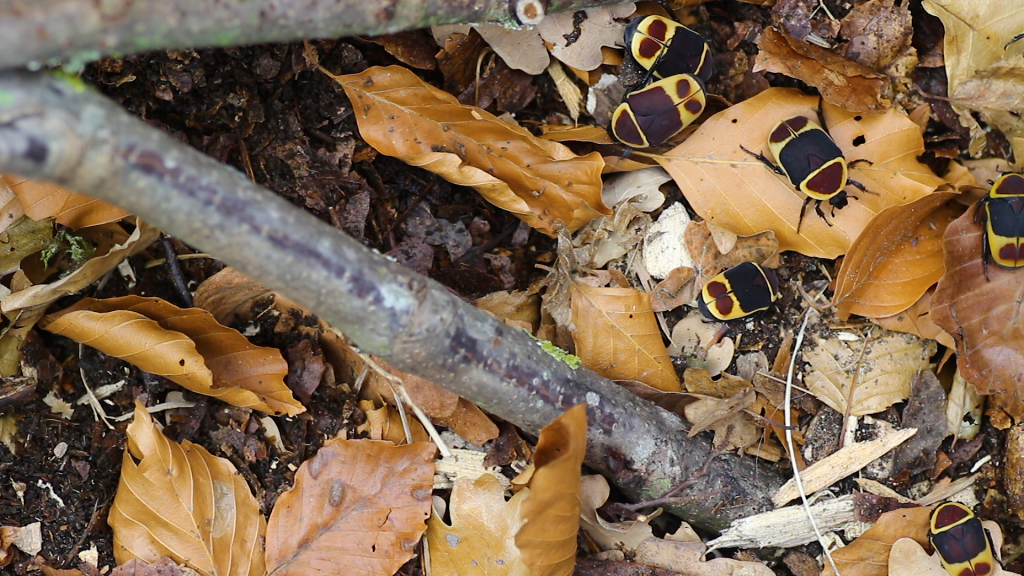
The Congo rose chafer is a diurnal and extremely agile rose chafer that is perfect for any beginner. In Africa, they live mainly on trees and bushes and feed on fruit, flower petals and tree sap. This is why they have the urge to climb up and explore all the climbing opportunities offered to them. Their flying skills are a very special spectacle and make observers smile. The Congo rose chafer turns around its own axis several times, drumming with its front legs and humming on the ground with a loud roar.
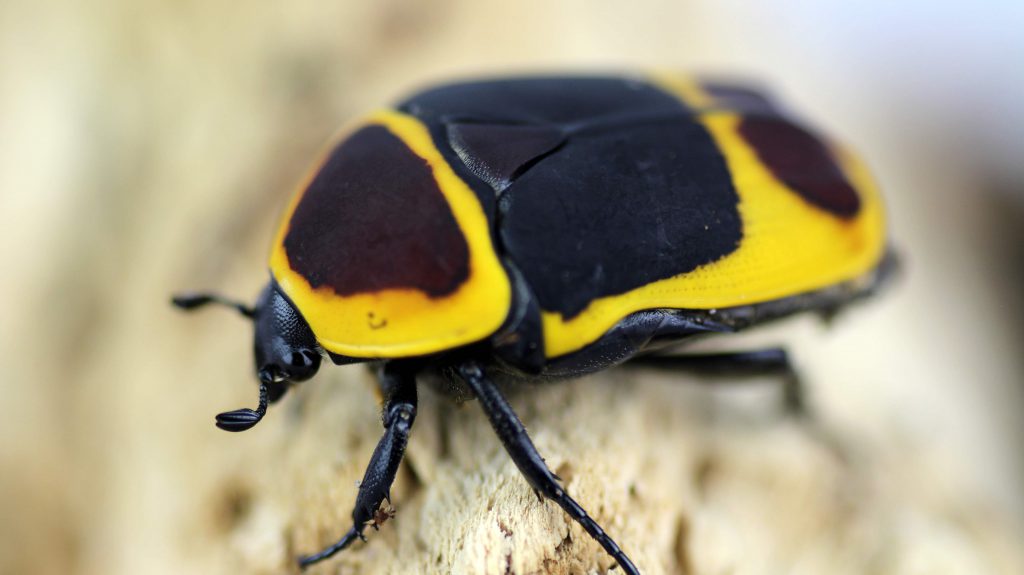
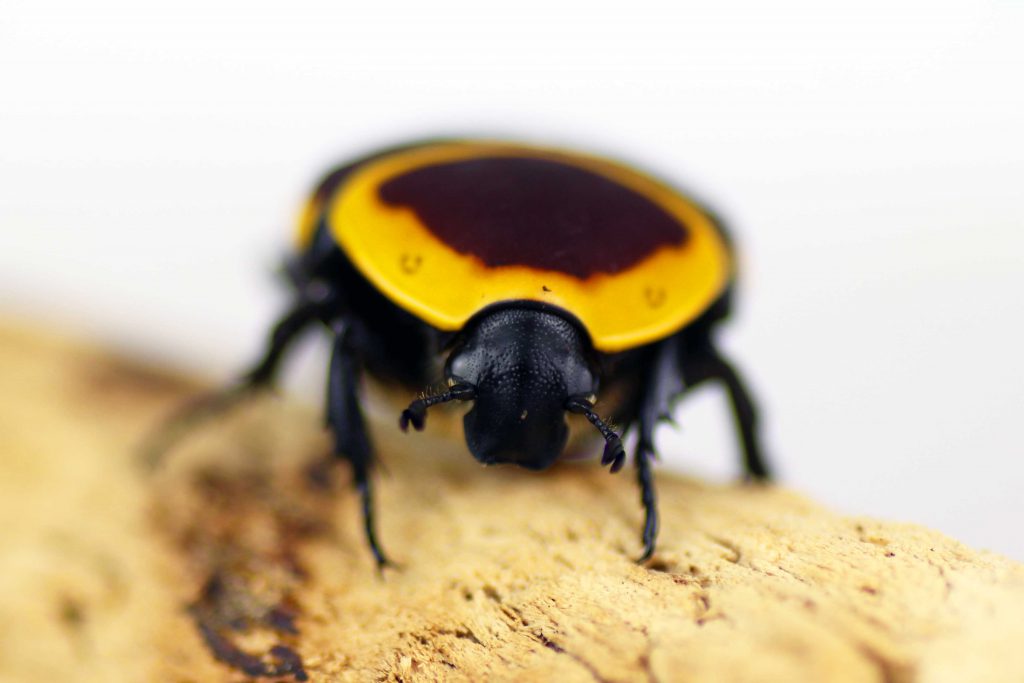
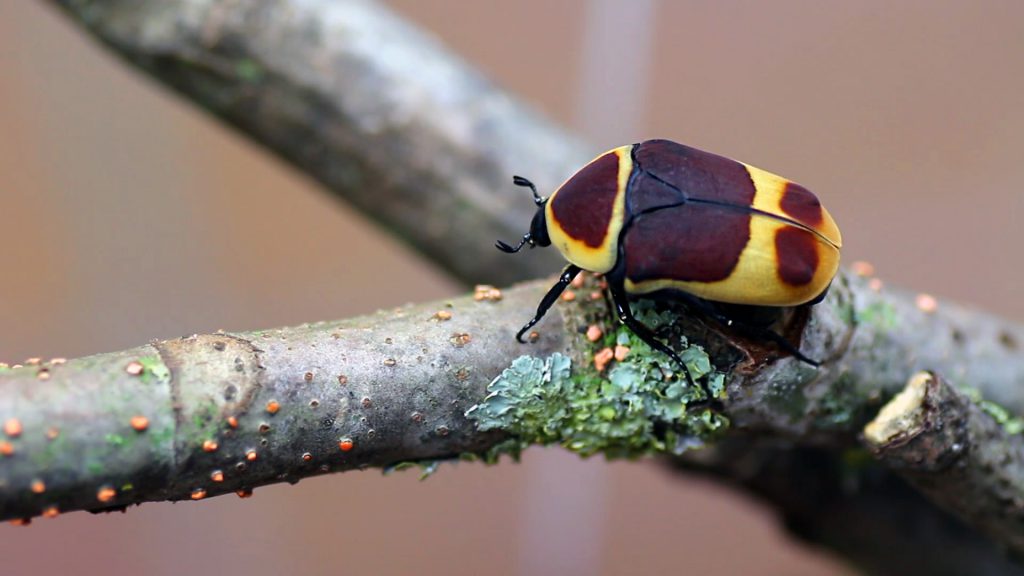
Once on the ground, they search the surface for all kinds of usable food. As a result, there is always something for the observer to watch and new behavioral patterns are constantly being discovered. Although the external appearance does not have the metallic effects of other rose chafer beetles, it is certainly pretty and eye-catching. The ventral side, head and legs are black-brown in color. The entire upper side is matt velvety and stands out with its yellow signal color.
Container:
A plastic box or an aquarium is best suited for housing, not a terrarium. As the larvae live in the substrate and this should have a substrate height of 10-20 cm, there are hardly any terrariums in which you can move such a substrate height without the ventilation grille or the front windows getting in the way.
The container should be at least 39 x 28 x 28 cm in size. A ventilation area on the lid is completely sufficient. A heat source with a 20 W spotlight placed outside the breeding box is very popular.
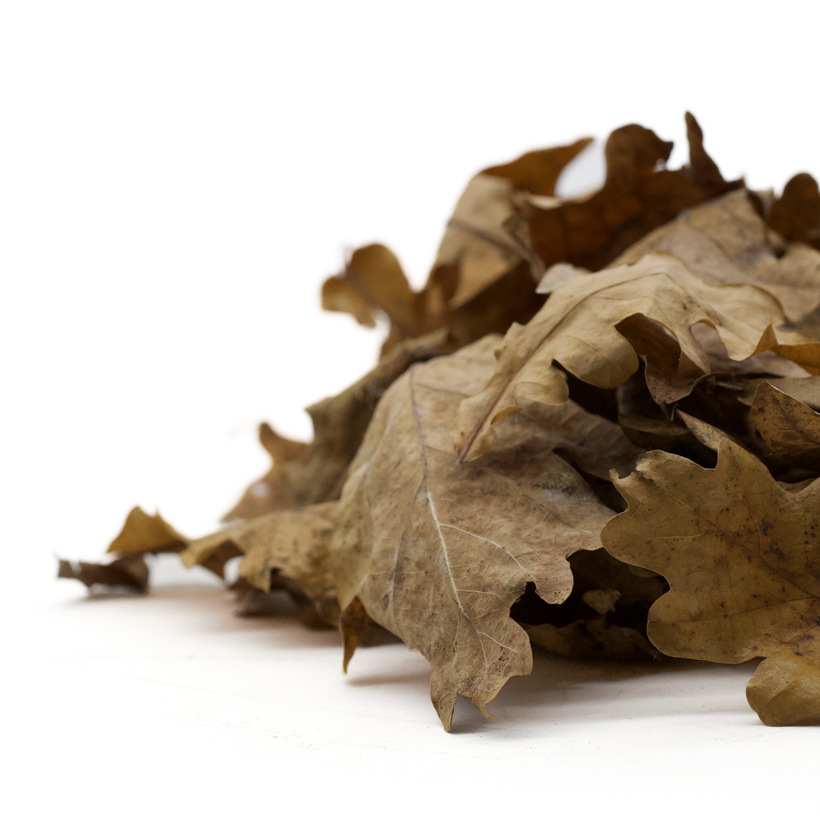
The most important building block for successful keeping and breeding is, as with all beetle species, the substrate. You cannot use coconut fiber humus, as is unfortunately often the case. This offers no nutritional value for the larvae and disrupts their digestive tract. We use forest humus and white rotten wood in a mixing ratio of 1:1 and cover the surface with leaves. On the one hand, the layer of leaves prevents the soil substrate from drying out quickly and, on the other, leaves are a natural food source for larvae and beetles.
It goes without saying that every Congo rose chafer container should contain sufficient branches for climbing. The branches should not simply be placed on the substrate. It can often happen that the larvae undermine the branches and they then topple over. Therefore, place them on the ground before adding the substrate to the container and then add the mixture to the box.
Pachnoda marginata peregrina “Congo rose chafer”
A very easy to keep starter animal, or also a great food animal supplier.
Breeding
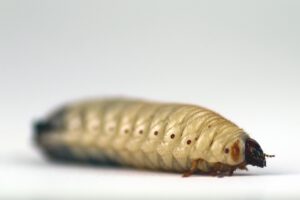
Pachnoda marginata peregrina “Congo rose chafer” is the most commonly kept species of rose chafer. This is mainly due to its rapid reproduction rate. The larvae grow up to 5 cm long and 1 cm thick and are ideal as food for reptiles. They provide a high protein content and are particularly suitable for females after laying eggs or reptiles awakening from hibernation. But they are also popular as fishing bait. In the angling scene, they are known as Congo larvae.
But how can the Congo rose chafer be successfully bred?
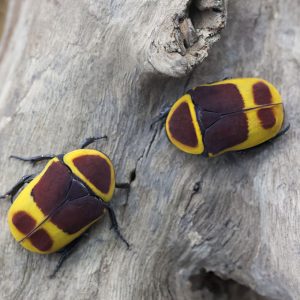
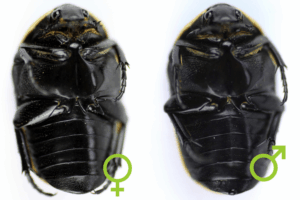
First of all, you should make sure that you have both sexes of the rose chafer in the breeding container. You can easily tell the difference between the sexes by looking at the underside of the abdomen of the beetle. The male has a clearly visible longitudinal groove, which the female lacks. This can be clearly seen in the photo. The female is on the left, the male on the right.
Mating takes place all year round. This means that you also have permanent offspring in different stages in the breeding container.
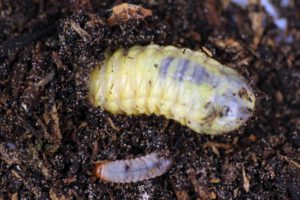
After mating, the female lays an egg pack with up to 180 eggs in the soil substrate. After 3 to 4 weeks, the approx. 3 mm long larvae hatch and undergo two moults in the soil substrate. There they prefer to eat the previously mixed white rotten wood and grow considerably. The development time is extremely fast for a beetle. At an optimum temperature and with a balanced food supply, development from egg to beetle takes only 5 months.
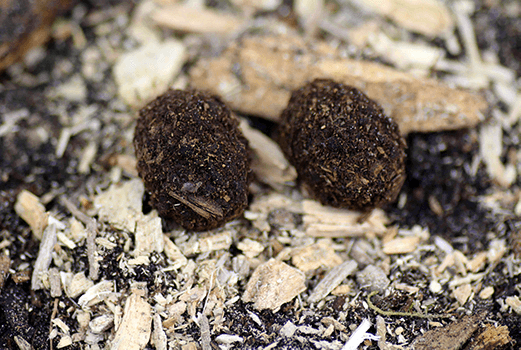
After approx. 3 months, the L3 larva pupates in a self-made cocoon made from the soil substrate and its body secretions. The beetle hatches after a further five to eight weeks and a few days later, as soon as the chitinous shell has completely hardened, it leaves the cocoon and burrows to the surface of the soil.
Care and nutrition:
The substrate should always have a certain basic moisture content and must never dry out. For this purpose, the substrate is briefly sprayed over once a week with a watering can. In my opinion, it is not enough to moisten the surface with a spray bottle. This does not reach the entire substrate and there is a risk of it becoming too dry. It takes a bit of practice and you should feel your way up slowly and carefully. It is better to add a little too little water than to submerge the container.
The larvae are already sufficiently supplied with food thanks to the prepared substrate. They also like to nibble on the foliage and fruit offered to the beetles from below. The beetles can be offered everything except citrus fruit. It is best to choose overripe fruit from the fruit and vegetable merchant. These have a high sugar content and are very readily accepted. In our experience, they like to eat bananas, mangoes, strawberries and pears.
But they also like to eat vegetables, lettuce and flowers and take them as a welcome change. When buying products, you should make sure that they are untreated organic products and that no pesticides get into the breeding container.
The beetles also like to eat Beetle Jelly. These have the advantage of not going moldy so quickly and can be stored in stock. Especially during the vacation season, it makes sense to provide the beetles with several Beetle Jellies while they are away.
Tip: You can start breeding with 1-2 breeding pairs.