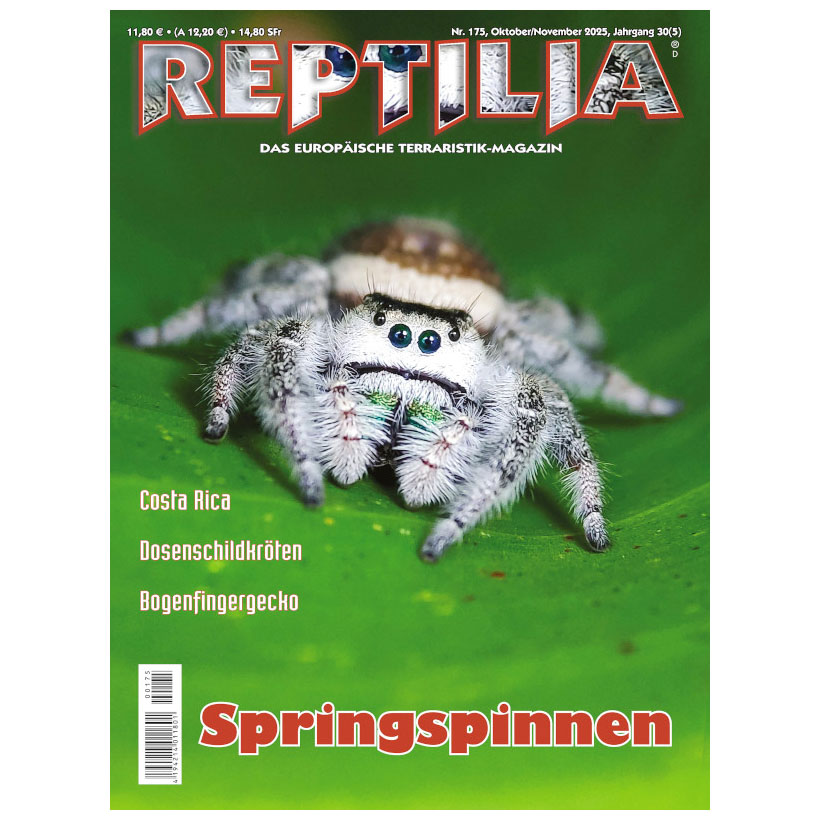
REPTILIA 175 Jumping spiders
11,80 € incl. VAT, plus shipping
In stock
REPTILIA 175 – The fascinating world of jumping spiders
The jumping spiders (Salticidae) are among the most fascinating spiders of all. Even people who are normally skeptical of spiders or even suffer from arachnophobia often have a completely different reaction to these little hunters. Their large pair of eyes, curious movements and typical “Childish scheme” regularly generate enthusiasm – especially on social media, where jumping spider photos are often rewarded with countless heart emojis.
But jumping spiders don’t just impress with their cute appearance. Many species have Intense colors, metallic shimmer or eye-catching patternswhich make them real eye-catchers. At the same time, they exhibit extremely interesting behavior. Their excellent eyesight, their purposeful leaps and their inquisitive nature make them particularly exciting terrarium inhabitants.
Especially the different local forms of Phidippus regius are among the most popular jumping spiders in terraristics today. This species impresses with its variety of colors, its active behavior and its comparatively uncomplicated keeping.
In the issue 175 of the terrarium magazine REPTILIA the cover story is devoted entirely to these extraordinary spiders. The editorial team presents the Keeping and breeding Phidippus regius in detail and at the same time sheds light on the entire family of Salticidae.
The article explains which terrarium conditions jumping spiders needhow to set up a suitable habitat and what keepers should look out for in terms of care and feeding. It also describes the requirements for a successful breeding are necessary and how the animals develop optimally in the terrarium.
With REPTILIA 175 gives you a comprehensive insight into the exciting world of jumping spiders. The edition is suitable for beginnerswho want to get to grips with these fascinating animals for the first time, as well as for experienced keepers who want to expand their knowledge.
Also in REPTILIA No. 175:
– Part 2 of the great Costa Rica travelogue by Heiko Werning
– Keeping and breeding a little-known bow-fingered gecko: Cyrtodactylus nebulosus
– The Carolina box turtle(Terrapene carolina carolina) in North Carolina
– A life with belt tails – Part 2: Smaug giganteus (giant belt tail)