Hogna radiata
14,50 € incl. VAT, plus shipping
Category: Other spiders
SKU:
927
More information
DifficultySimple
GenderFemale Male indeterminate
Animal Size (mm) < 25 mm
Temperature (°C)22°C – 27°C
g50

Simple

Turkey

< 25 mm

22°C – 27°C
Hogna radiata – a large wolf spider from the Mediterranean region
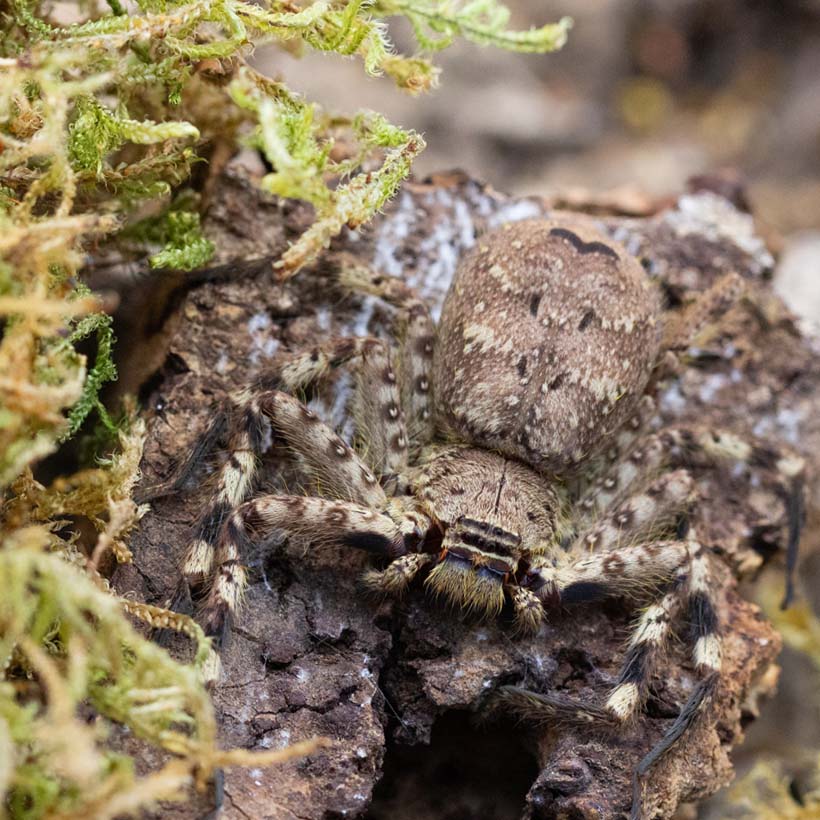
Hogna radiata is an impressive, robust wolf spider from the Lycosidae family. Unlike many tarantulas, it does not wait permanently in a fixed hiding place for passing prey. It is an active ground hunter and is therefore particularly interesting to observe.
The species was first described by Latreille in 1817 and was originally listed as Lycosa radiata. Today, it is recognized as Hogna radiata (Latreille, 1817). It is also the type species of the genus Hogna.
Its range is extremely wide. The current World Spider Catalog lists Europe, Turkey, the Caucasus, Russia as far south as Southern Siberia, the Middle East, Iran, Kazakhstan, and Central Asia. It is particularly well known in the Mediterranean region.
Up to 25 mm in body length
Hogna radiata is one of the larger European wolf spiders.
Males reach a body length of about 9–18 mm, while females can reach approximately 12–25 mm. This refers to body length alone, excluding the legs.
Due to their long legs, adult females naturally appear much larger. At the same time, the species has the robust build that many keepers associate with large wolf spiders.
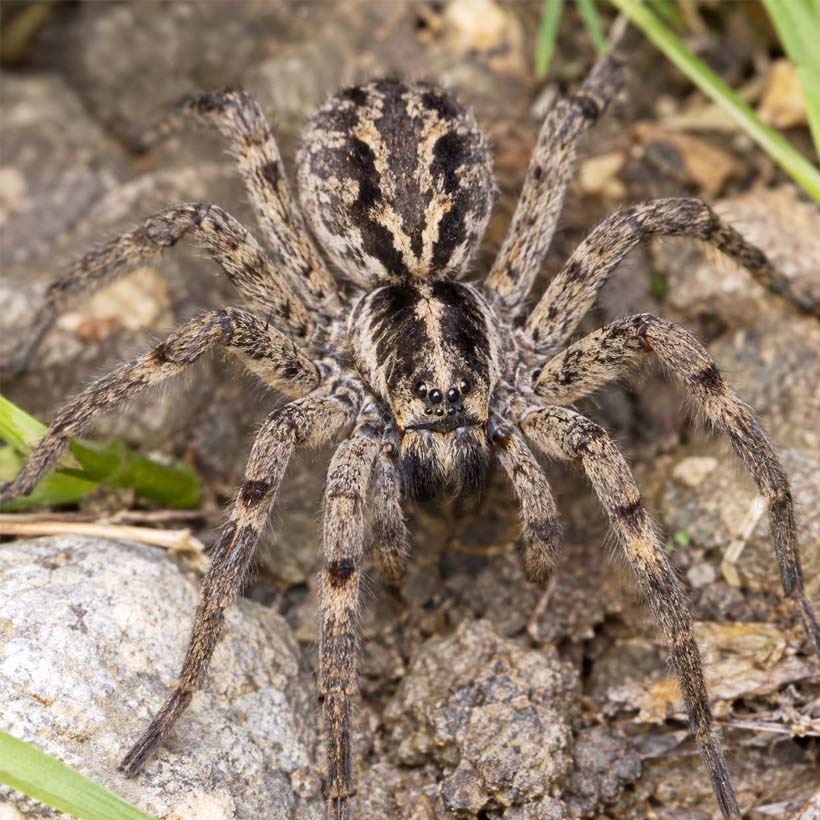
The coloration is dominated by various shades of brown, gray, and beige. This seemingly unremarkable coloring provides excellent camouflage among soil, dry grass, and plant debris.
A true ground hunter
Its behavior clearly distinguishes Hogna radiata from many other large spiders we keep in terrariums.
In the wild, this species lives primarily on the ground. There, it actively moves through its habitat in search of prey.
It does not typically build a permanent, deep burrow, as is common among some other large wolf spiders. However, it does construct temporary shelters, including for molting and in connection with reproduction.
For this reason, the terrarium should not consist solely of deep substrate with a single designated hiding place. A larger usable floor area with a variety of textures is much better suited to their lifestyle.
Open and relatively dry habitats
When it comes to the climate, it’s also worth taking a look at the natural habitat.
Hogna radiata is found in open habitats with low vegetation. These include grasslands, dry meadows, and dry grasslands.
The terrarium should therefore not be set up like a tropical rainforest terrarium.
A predominantly dry substrate with isolated areas that occasionally receive a little moisture is much more suitable. At the same time, a water source should always be available.
Good ventilation is also important to prevent the air from becoming permanently damp and stagnant.
Natural terrarium with plenty of floor space
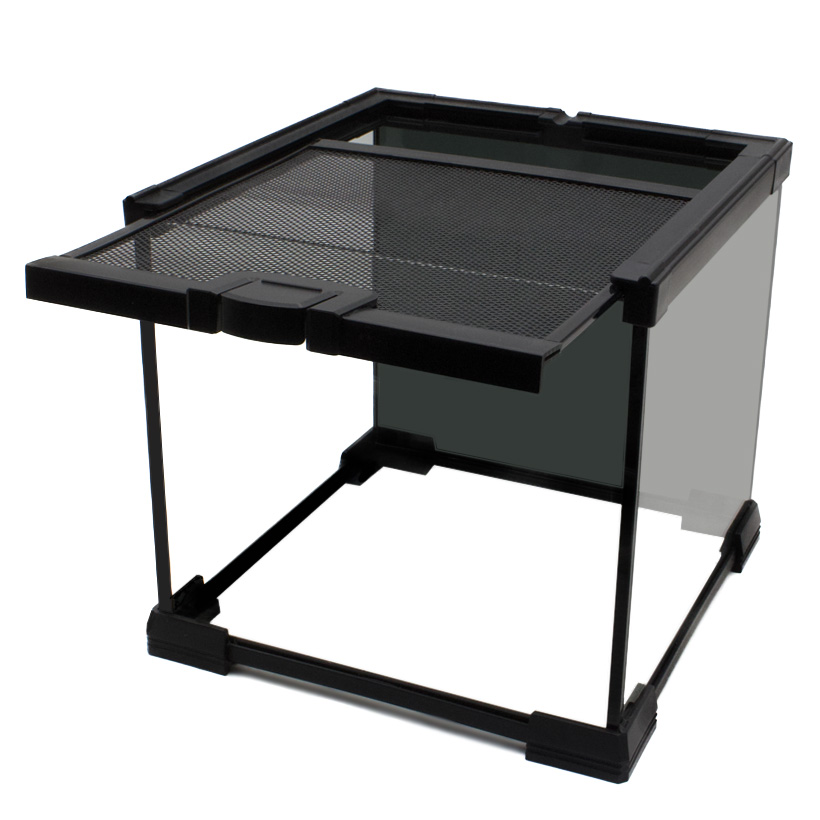
For an adult female, I would recommend a terrarium measuring at least 30 × 30 × 30 cm. A larger floor area is definitely a good idea, since Hogna radiata spends most of its time on the ground.
Unlike jumping spiders, additional height offers relatively little benefit. What matters most is a textured surface.
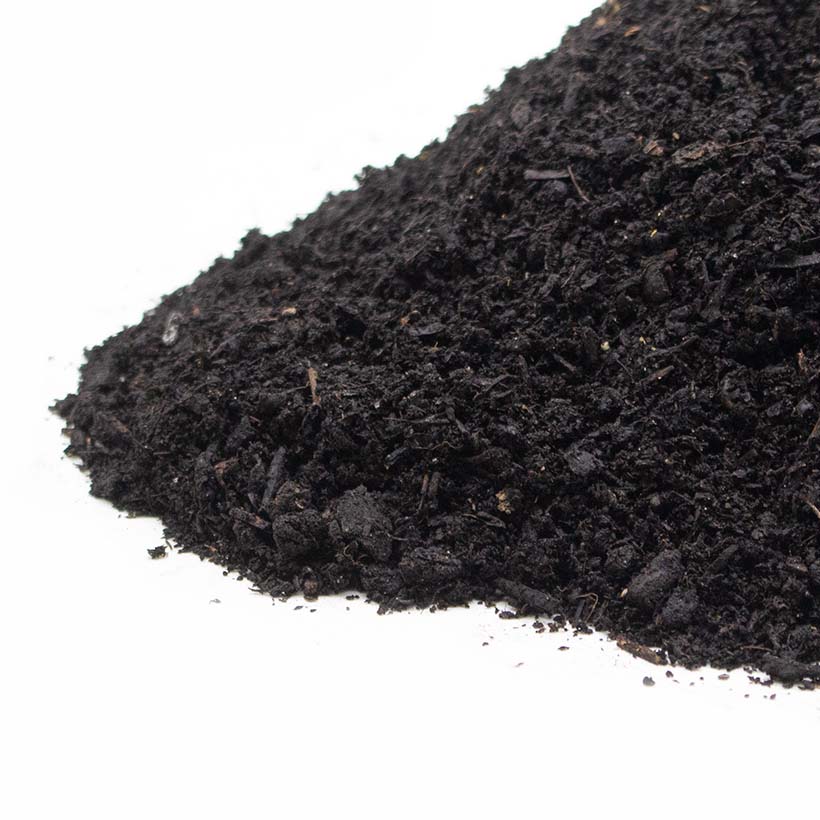
For example, forest humus can be mixed with a sandier substrate. This creates a natural, burrowable substrate without having to set up the terrarium like a moist forest terrarium.
Stones, pieces of cork, dry leaves, roots, and small branches can then be used to separate different areas from one another.
Still, a hiding place is a must
Although Hogna radiata is not a typical wolf spider that lives permanently in a burrow, you should provide it with places to hide.
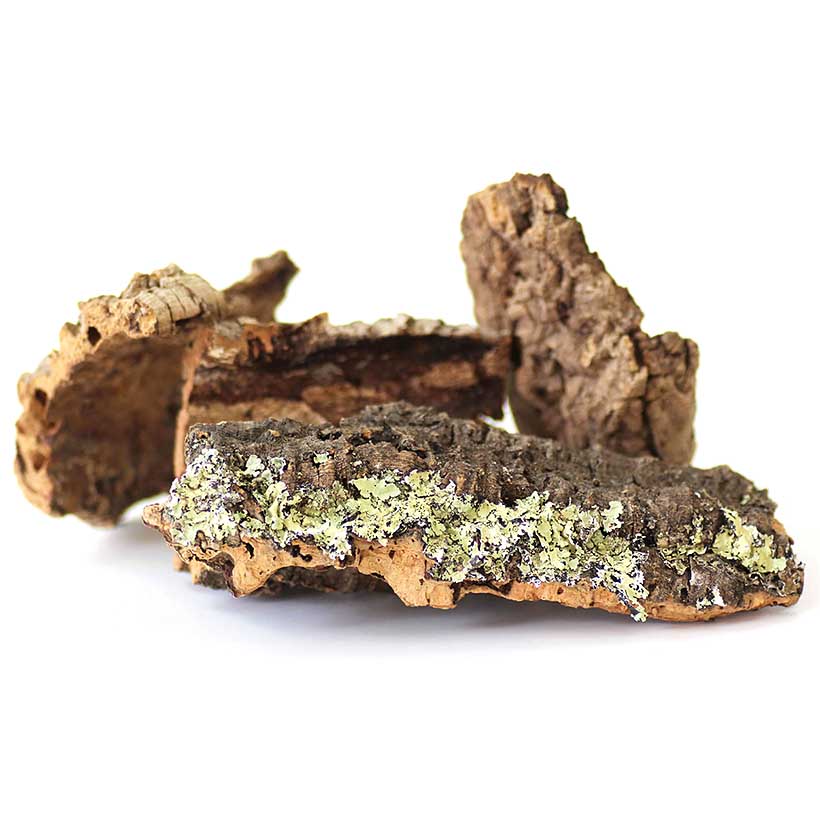
A flat piece of cork or a suitably shaped root, for example, works very well.
The spider can then decide for itself whether to use the provided shelter or to create its own protected area.
When doing so, you should never simply place heavy rocks or other decorations on loose substrate. Position heavy objects securely so they aren’t undermined and subsequently tip over onto the spider.
Temperature appropriate for its Mediterranean origin
Since Hogna radiata has a very large range, it would be irresponsible to specify a single scientifically proven optimal value for all populations.
For terrarium care, a range of approximately 22–27 °C during the day is a good guideline. At night, the temperature may drop significantly.
This is a general recommendation for care, not a scientifically determined optimal range for the entire species.
It’s helpful to have a slight temperature gradient in the terrarium. This allows the spider to move between warmer and cooler areas on its own.
Do not keep the environment constantly damp
When it comes to humidity, I would avoid giving a specific percentage.
The condition of the terrarium is much more important.
Most of the substrate should be dry to slightly moist. A small area can occasionally be moistened a bit more. Afterward, however, the surface should be allowed to dry out again.
Keeping the substrate permanently wet is inconsistent with the species’ documented open and dry habitats.
A small water dish, on the other hand, should be available at all times.
Exciting hunting behavior without a catch net
As a wolf spider, Hogna radiata does not spin a web to catch its prey.
Instead, it relies on its senses and speed. When it spots a suitable prey item, it can actively pursue and subdue it.
It is precisely this behavior that makes the species particularly interesting in a terrarium.
Suitable prey includes crickets, field crickets, or cockroaches of an appropriate size. The size of the prey should always match the size of the spider.
You should remove any uneaten prey, especially if a molt is imminent.
Molting requires peace and quiet
Before molting, Hogna radiata may reduce its activity and food intake.
During this phase, the spider should be disturbed as little as possible. Prey should not be placed in the terrarium at this time.
Precisely because this species occasionally uses a sheltered hiding place for molting, you should not try to constantly coax a reclusive spider out of its hiding spot.
After molting, the new exoskeleton needs some time to harden. Feeding should not resume until then.
Fascinating Brood Care in Hogna radiata
It gets particularly fascinating when it comes to reproduction.
As is typical for wolf spiders, the female carries her egg sac on her abdomen. After hatching, the young spiders climb onto their mother’s back.
They are transported there for a while before eventually dispersing on their own.
This behavior is one of the best-known characteristics of wolf spiders and can also be observed in *Hogna radiata*; documented photographs show females with both cocoons and newly hatched young.
Keeping pets as single pets is the safe choice
Hogna radiata should be kept alone.
It does not require the company of other spiders. At the same time, it is a predatory spider, so keeping it with other spiders on a long-term basis would pose unnecessary risks.
Males and females are brought together under controlled conditions only for selective breeding.
Hogna radiata is not a tarantula
Because of its size, Hogna radiata is sometimes compared to small tarantulas by beginners. However, their lifestyles differ significantly.
Wolf spiders belong to the family Lycosidae, while tarantulas belong to the family Theraphosidae.
Hogna radiata is also a fast, active ground hunter. It does not necessarily stay in a fixed hiding spot for long and can react very quickly when disturbed.
Therefore, when opening the terrarium, you should always know where the spider is.
Advantages at a Glance
- Large European Wolf Spider
- Females reach a body length of up to 25 mm
- Males are about 9–18 mm in body length
- Females are about 12–25 mm in body length
- Recognized as a species since 1817
- Type species of the genus Hogna
- Wide range extending from Europe to Central Asia
- Prefers open habitats such as grasslands and dry meadows
- Active ground hunter
- Does not normally build a permanent, deep burrow
- Interesting hunting behavior
- Fascinating brood care, with the young carried on the female’s back
- Keeping as a single specimen is recommended
Suitable accessories for your setup
Insektenliebe Terrarium – provides ample floor space to accommodate the active lifestyle of Hogna radiata.
Forest humus —provides a natural and burrowable base for the substrate.
Desert sand – can be mixed with forest humus to create a drier, more textured substrate.
Cork bark —creates a flat, sheltered hiding spot without forcing the spider into a deep burrow.
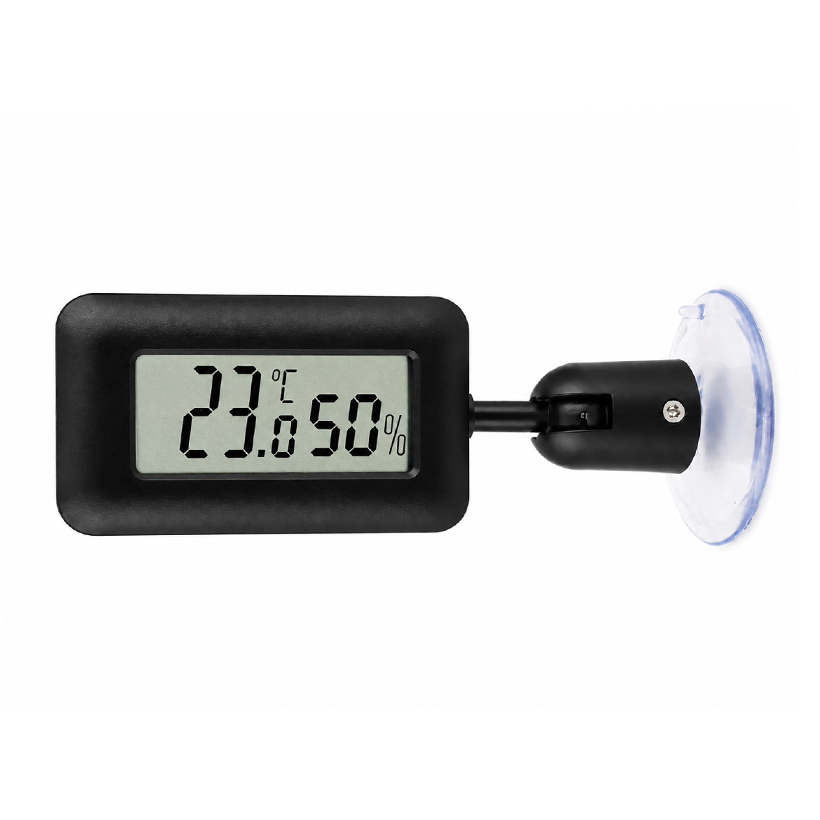
Insektenliebe Hygro-Therm – helps you keep track of the temperature and humidity in the terrarium.
Appropriate live prey – crickets, field crickets, or cockroaches can be selected to match the current size of your Hogna radiata.
Conclusion
Hogna radiata is an exciting alternative for anyone who wants to observe a larger spider without keeping a tarantula.
With adult females reaching up to 25 mm in body length, it is one of Europe’s largest wolf spiders. Even more interesting than its size, however, is its lifestyle: Instead of staying in a burrow all the time, it spends most of its time moving about on the ground, where it actively hunts for prey.
This is exactly what the setup should be based on. Plenty of usable floor space, a textured and mostly dry surface, a few sheltered hiding spots, good ventilation, and a water dish provide a solid foundation.
Another particularly fascinating aspect is the brood care typical of wolf spiders. The female first carries the egg sac and later the newly hatched spiderlings on her back.
As a result, Hogna radiata combines an impressive size with active hunting behavior and a lifestyle that differs significantly from that of many classic terrarium spiders.
Perfect combined with
-

Forest humus
2,00 € – 9,75 €Price range: 2,00 € through 9,75 € incl. VAT, plus shipping
Sales Unit: 1 liter -
Cork bark
3,50 € – 24,99 €Price range: 3,50 € through 24,99 € incl. VAT, plus shipping -
Insektenliebe Terrarium
34,99 € – 54,98 €Price range: 34,99 € through 54,98 € incl. VAT, plus shipping