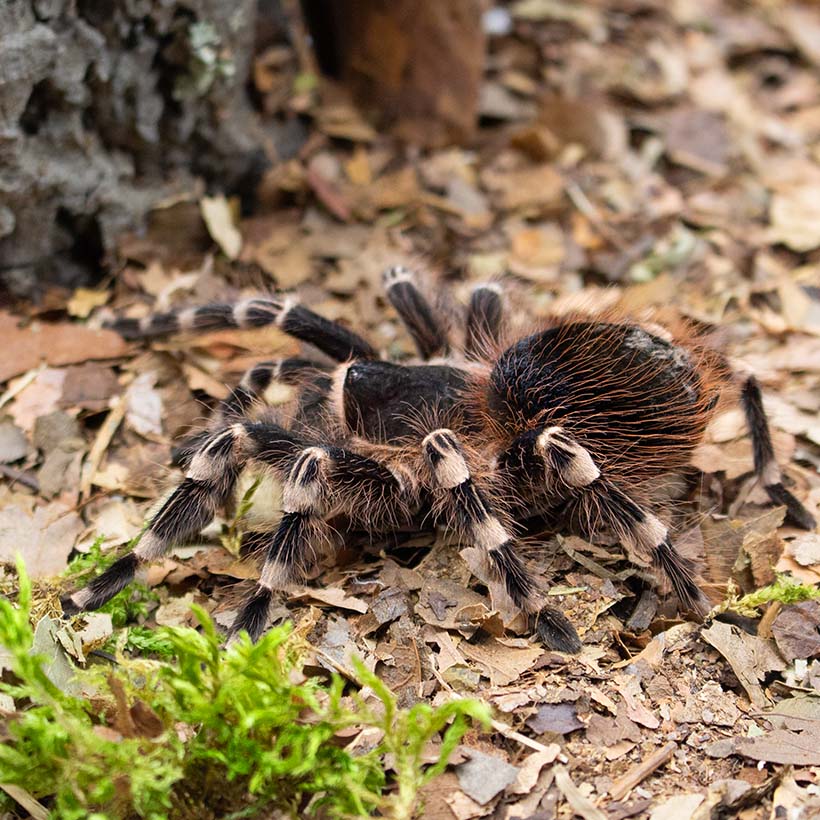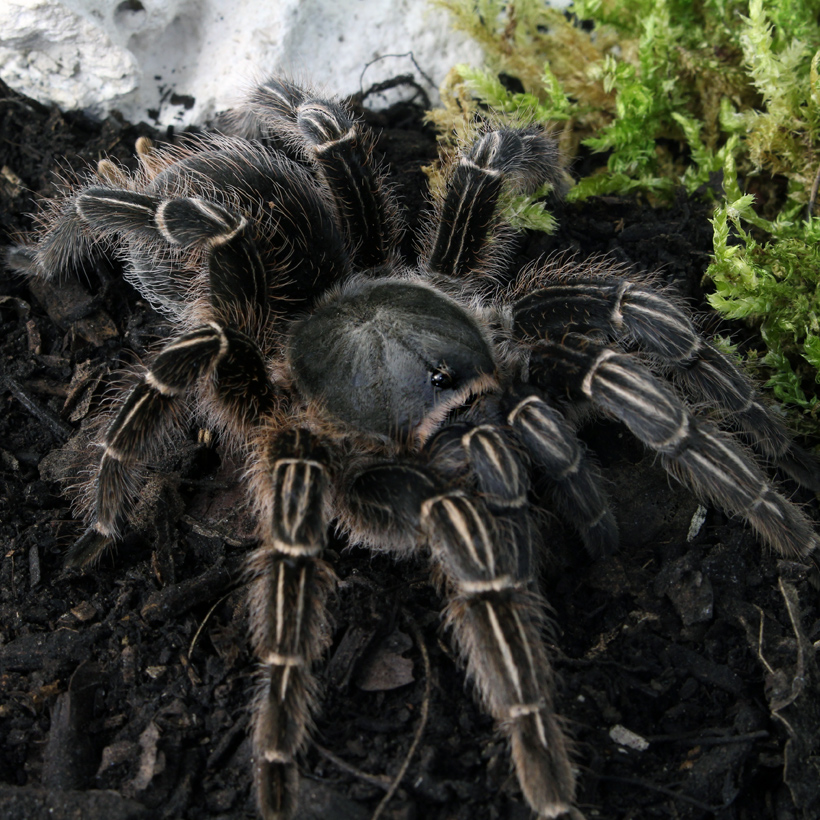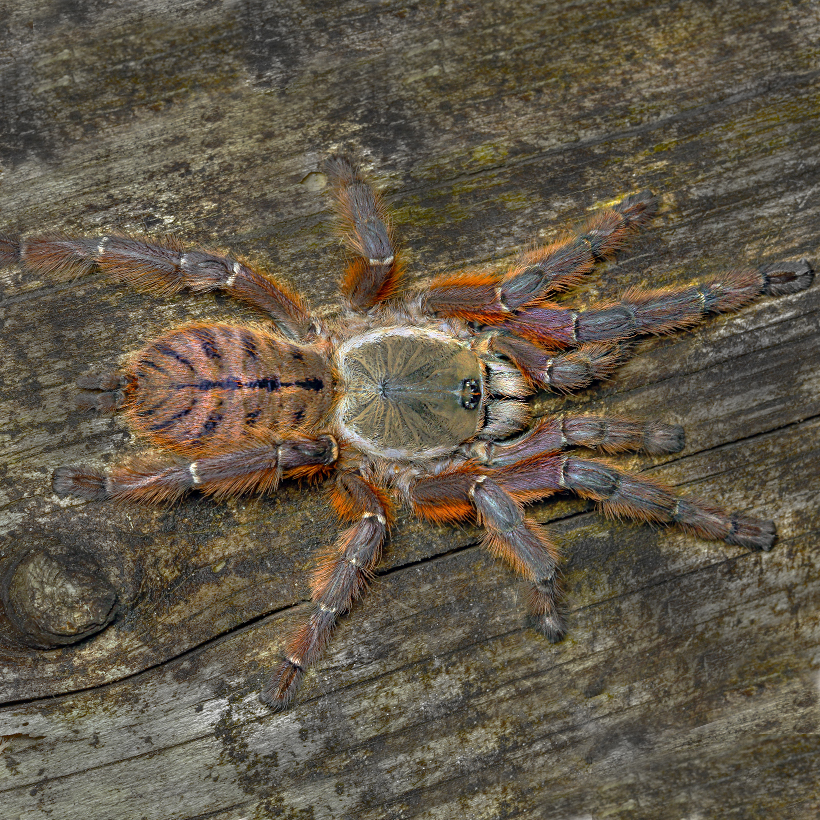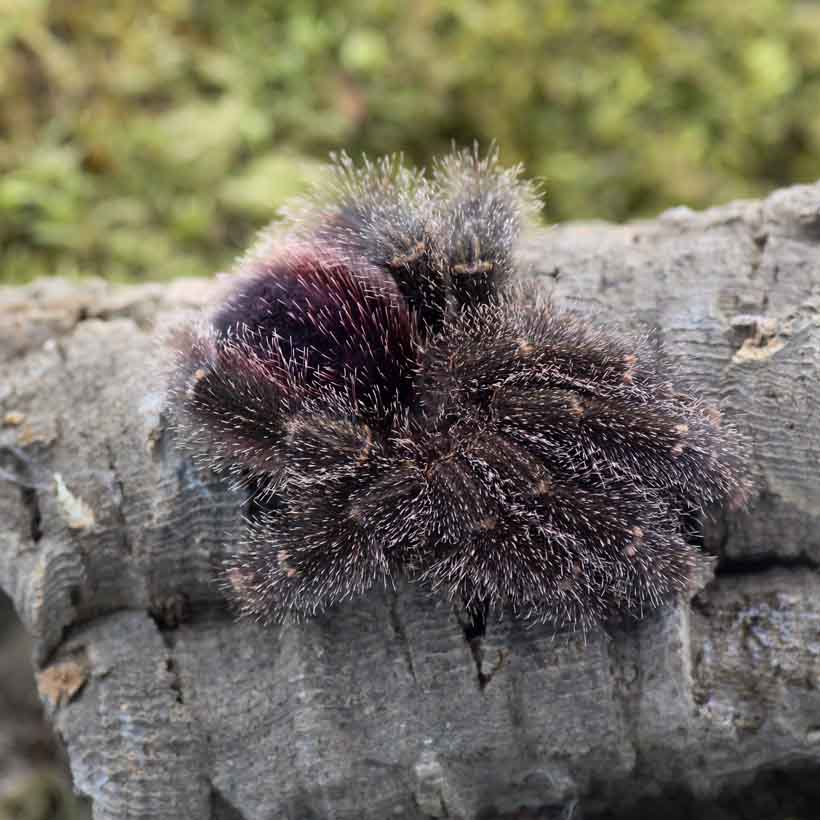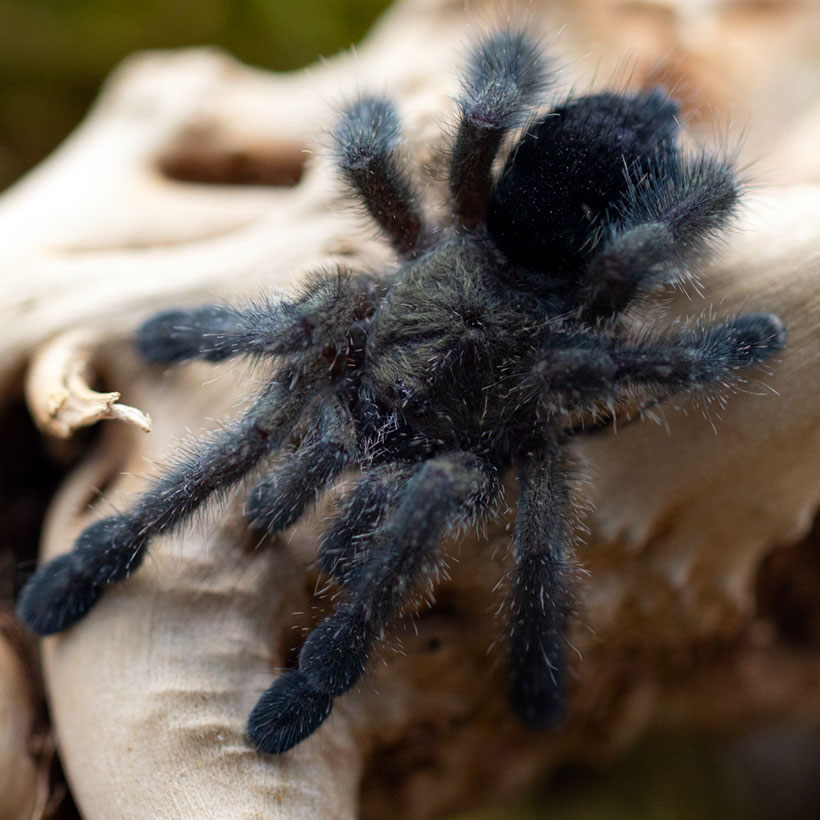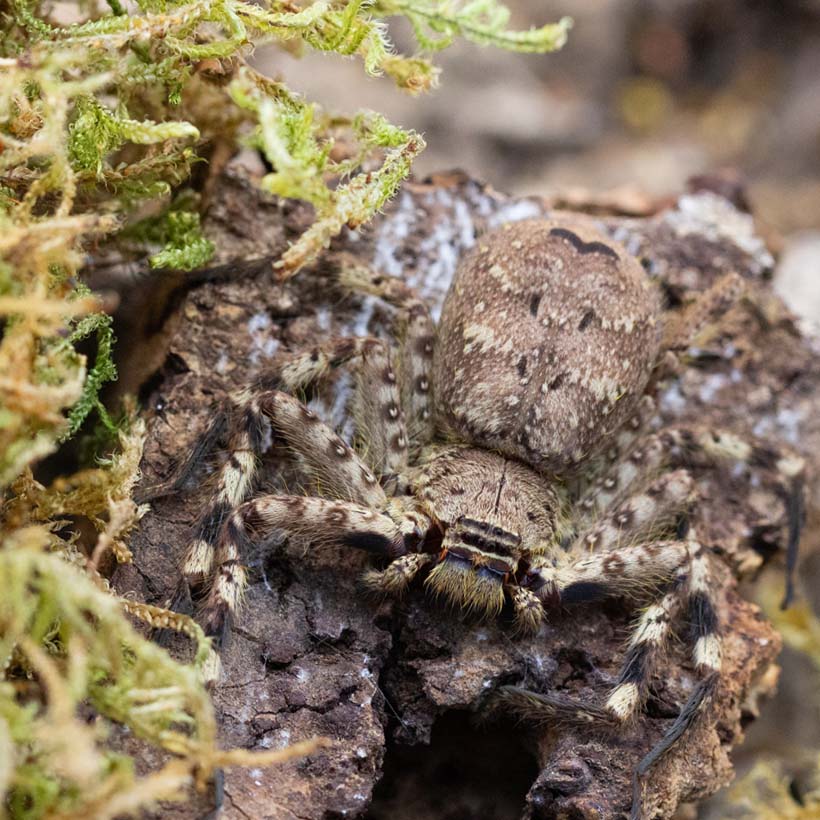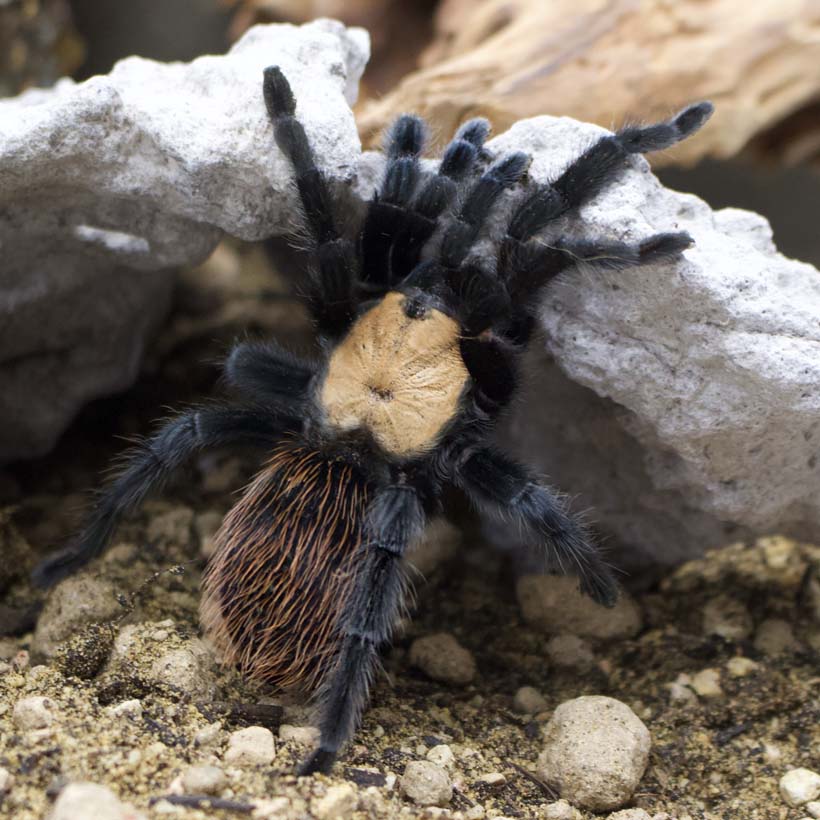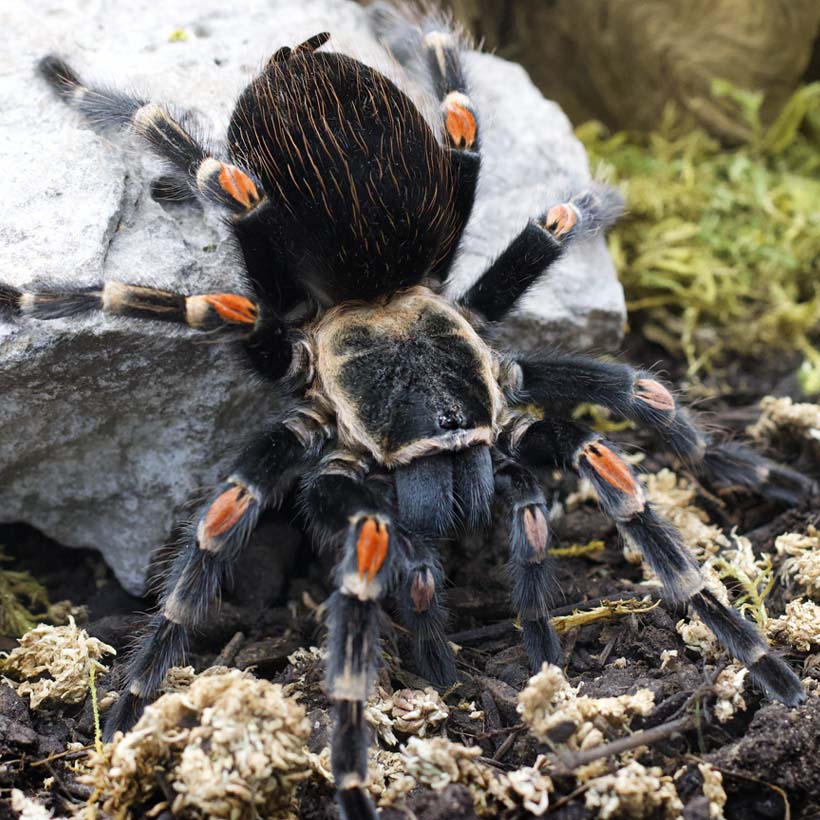
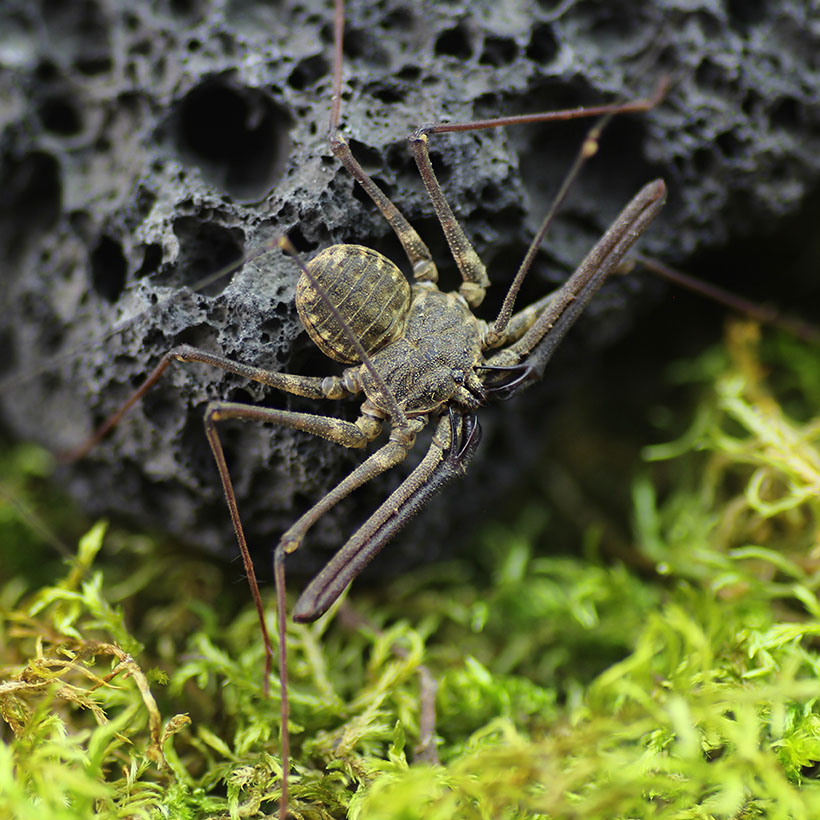
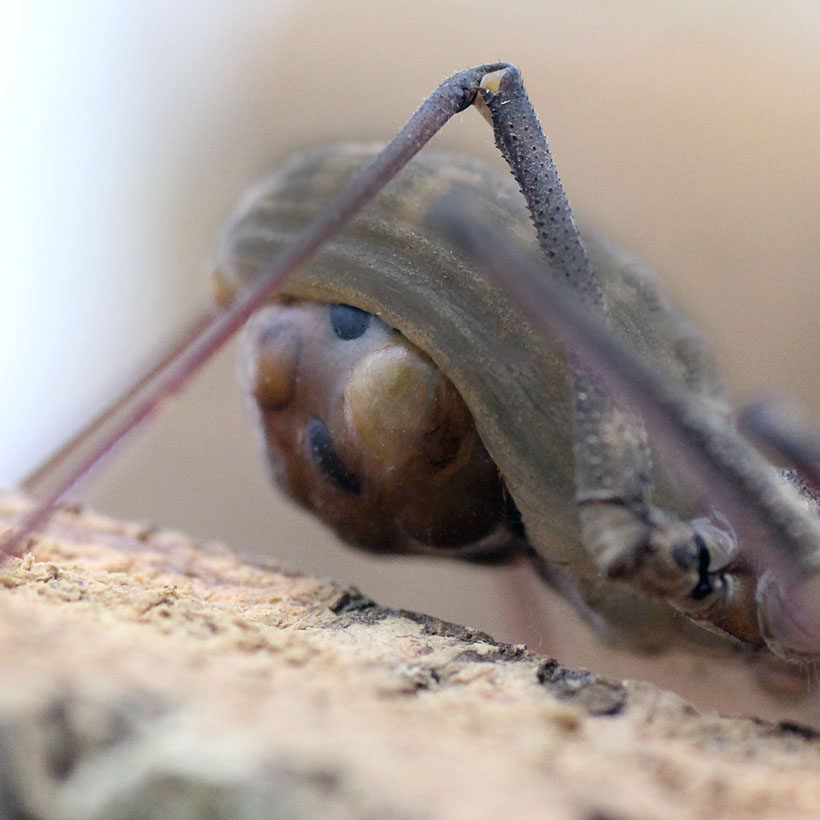

Euphrynichus bacillifer “scourge spider”
25,00 € incl. VAT, plus shipping

Simple

South Africa

< 50 mm

28°C – 30°C
Brief description Euphrynichus bacillifer “scourge spider”:
Euphrynichus bacillifer “scourge spider” originally comes from a relatively large distribution area between Central and South Africa. Large, somewhat different areas of origin also mean that the animals can adapt somewhat to the conditions in the terrarium. Of course, this does not mean a 90 degree turnaround in keeping requirements, but they can certainly tolerate certain fluctuations.
Typical for flagellate spiders, Euphrynichusbacillifer also has a relatively flat body. This allows it to fit into any crevice and that is exactly what it likes to do. It is fascinating to see this nocturnal species of flagellate spider scanning its surroundings with its flagella and moving sideways. You should also make sure that they have enough space in the terrarium so that they can move freely. The walking surface can be increased with layered cork bark or heaped lava stones. The latter also store moisture well and slowly release it back into the environment. The animals should be kept at 28-30 °C and a constantly high humidity (80-95%). It also makes sense to offer a shallow water dish with stones, as we have often observed that the animals actually accept these and drink from them.
We use a mixture of forest humus, white rotten wood and leaves as substrate. We have inoculated this with springtails and we use Porcellionides pruinosus (Cuban Isopods) as soil police and food source at the same time. This soft-shelled isopod species is very well accepted by the Euphrynichus bacillifer “scourge spider” and you have a kind of self-sufficient symbiosis in the terrarium.
Euphrynichus bacillifer “scourge spider” is very social and we have never seen a case of cannibalism, so the animals can be kept very well in groups. As soon as both sexes are kept, offspring are automatically produced. The young animals remain on the back of the females until their first moult. We then separate the offspring from the group and place them in a separate group.