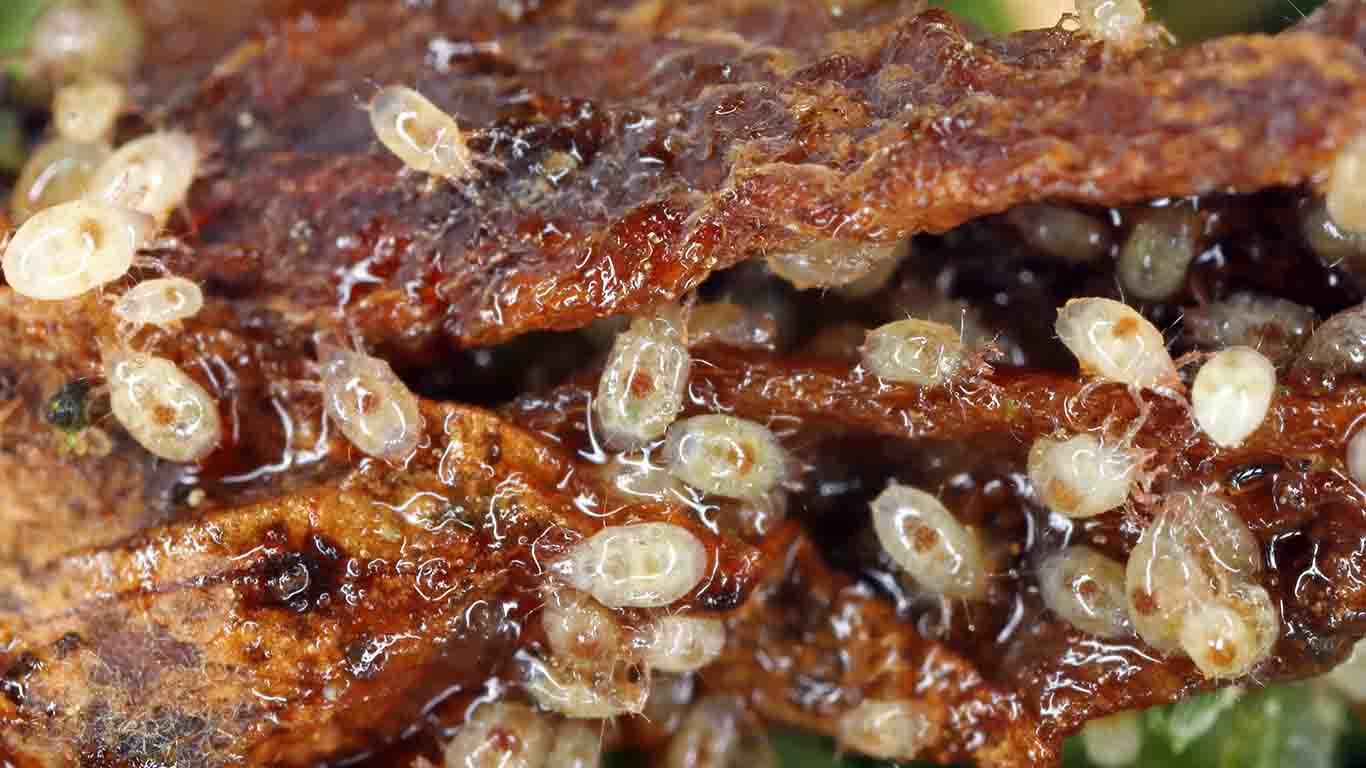


Discovering mites in the terrarium is a bit of a rollercoaster ride of emotions. From panic to horror to a mountain of work – we all know it only too well. The first thought is usually to dispose of everything organic in the terrarium immediately and flood the rest with disinfectant. But wait a minute, before we go completely crazy here, let’s calm down a bit and face the facts.
First of all, take a deep breath! Although mites are annoying, in most cases they are not really dangerous for our pets. So, before we clear out the whole terrarium and look forward to the next bulky waste date, let’s take a closer look at the problem.
First of all, let’s say goodbye to our old thoughts about mites in the terrarium. The times when we generally labeled them as annoying pests are over.
Mites are undoubtedly among the most fascinating creatures. Their function in the ecosystem is of great importance, as they decompose organic substances, for example, and thus make an important contribution to maintaining the balance in the terrarium.
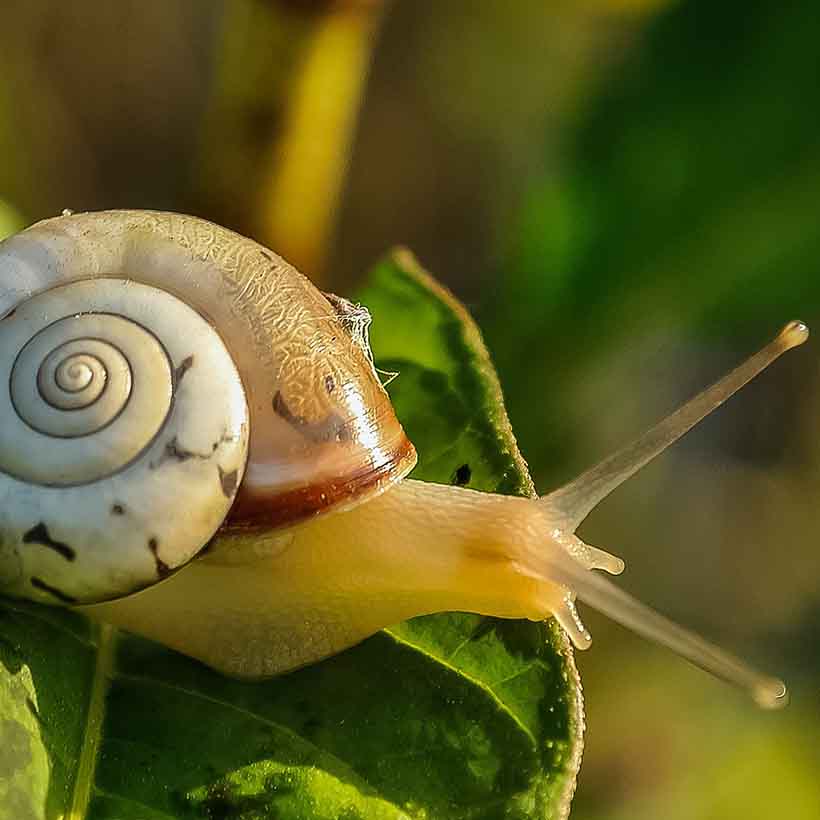
Snails are not only known for their preference for mosses, lichens and garden vegetables, but also for their unconscious relationship with tiny horned mites, which they often ingest with their food. Incredibly, most of the tiny arachnids survive the journey through the snail’s gut unscathed and are excreted elsewhere in the ecosystem. In this way, the mites can often continue to live undisturbed in other parts, contributing to the ecological balance. It is fascinating how every living creature in nature is connected in a unique way and how even the smallest inhabitants can play an important role in maintaining the ecosystem.
There are numerous species of mites, some of which are also useful for the terrarium. Nevertheless, excessive infestation can lead to health problems for the inhabitants of the terrarium, especially for sensitive species. It is advisable to take appropriate measures from the outset to prevent the occurrence of mites in the terrarium.
Mites in the terrarium: causes and prevention
Mites prefer warm and humid conditions! They feel right at home at a humidity of 80-90% and temperatures between 25 and 30°C. They are mainly active at dusk and avoid bright light and UV radiation. Mites can multiply and spread quickly, especially in small or densely populated terrariums. Suboptimal hygiene, such as infrequent cleaning of the terrarium, can encourage the growth and spread of mites. For this reason, leftover food and droppings should be removed regularly to prevent the spread of mites.
It is also advisable to check the ventilation of the terrarium regularly and improve it if necessary. It can happen that a lampshade or plants cover the ventilation in the terrarium and thus obstruct the air circulation. In this case, you should rectify the cause as quickly as possible and ensure that the ventilation works properly again. This is because sufficient air circulation can help to prevent waterlogging in the terrarium and thus inhibit the growth and spread of mites. Special fans can also be used for this purpose. Another option is the use of beneficial insects such as springtails and white Isopods. These little helpers pick up food scraps and droppings and turn them into nutrient-rich soil. This not only keeps the terrarium clean, but also supports the ecological balance in the terrarium.
Different types of mites
There are different types of mites, which should be considered in a differentiated way. Not all mites are parasitic and therefore cannot cause any damage to your animals. It doesn’t matter whether the mites are sitting on the animals, as they like to use means of transportation or can help to clean other animals, such as Archispirostreptus gigas, in places that they cannot reach themselves. It is therefore important to identify the type of mites and understand whether or not they are actually a problem for the health of your animals.
Mites generally move very slowly. If you see a rapid bustle in the terrarium, it is probably dust lice. These feed on grain and pose no danger to the terrarium. To reduce possible infestation, the humidity in the terrarium can be reduced to below 65% and food containing grain can be avoided for a few weeks.
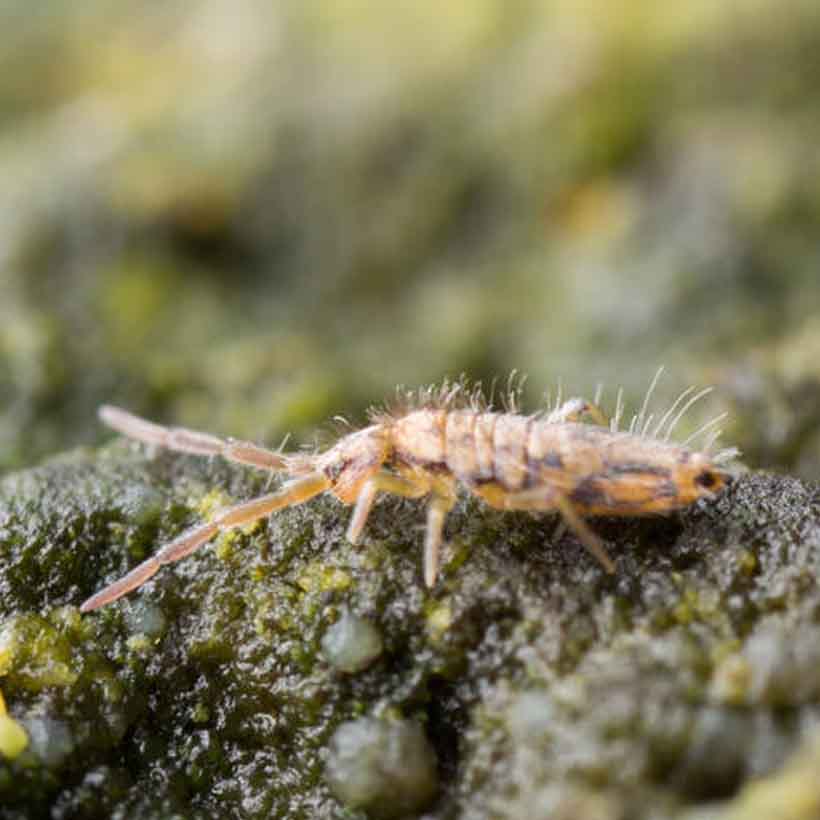
Springtails are another possibility. These move quickly and hop around lively. They can also come in different colors, but their fast movements and slender bodies give them away straight away. Springtails are a valuable addition to any terrarium and can be left in the habitat of terrarium animals without hesitation.

With over 50,000 species of mites, it is unfortunately not possible for me to go into every single species. However, I am happy to introduce you to the most common species:
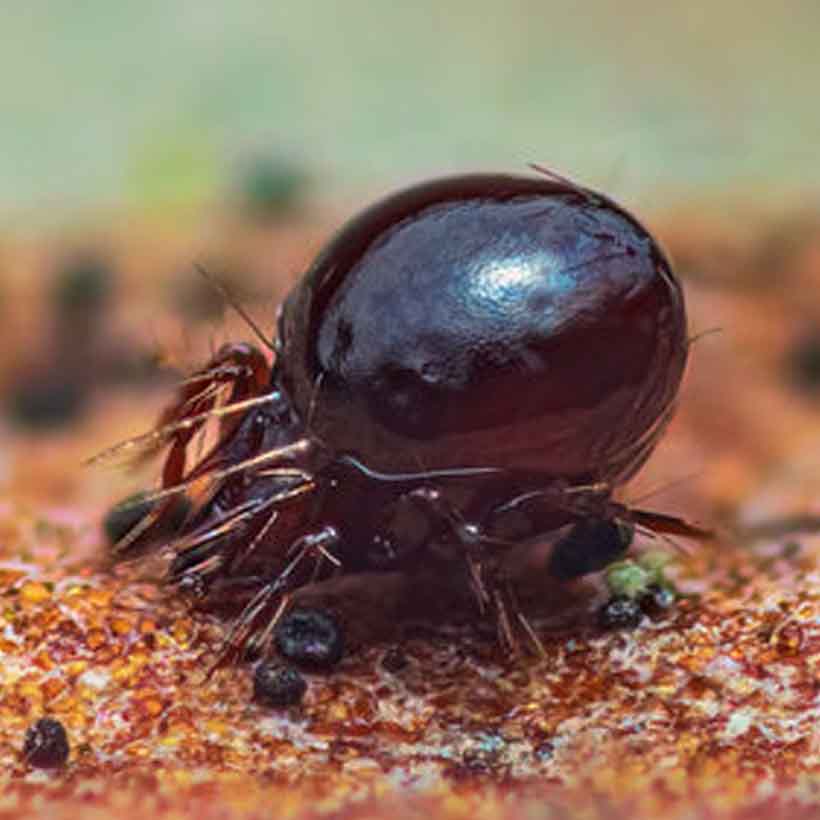
Oribatida (not a parasite)
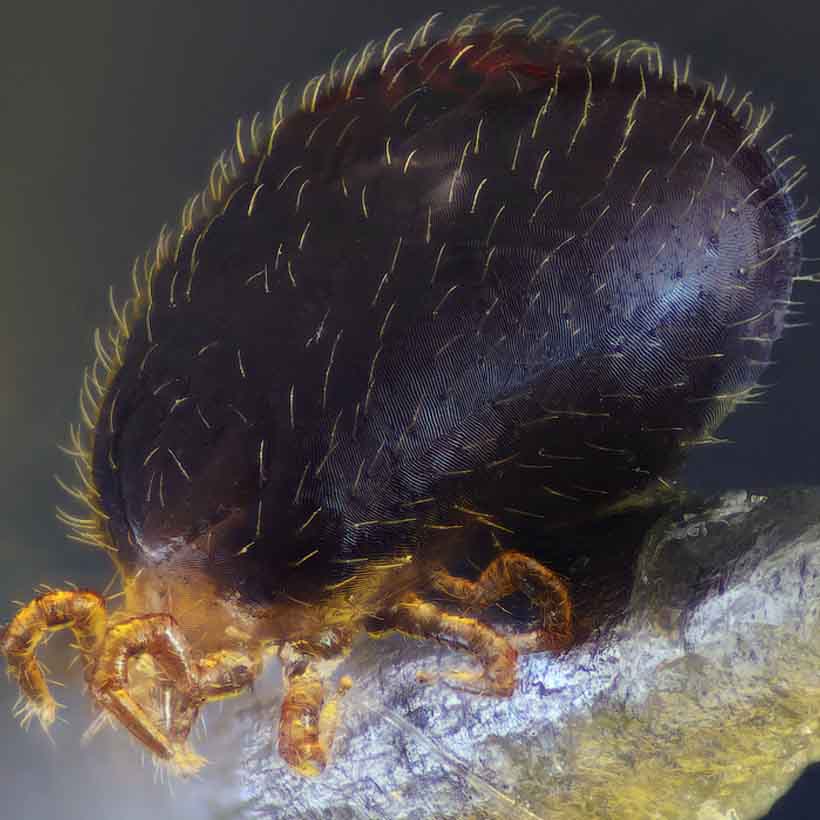
The Oribatida are a group of mites in which most species are characterized by strong armour and a spherical protective posture. This protective posture serves to protect the animals from enemies such as predators and parasites. In addition, the spherical protective position makes the animals less susceptible to dehydration and therefore able to survive in dry habitats. The horned mite mainly enters the terrarium via leaves and other materials collected in the forest.
Horned mites feed on different parts of the plant, depending on the species. There are three different groups of horn mites in terms of their diet. The macrophytophagous species feed exclusively on large plant debris, the microphytophagous species feed on microorganisms such as algae, bacteria and fungi, and the panphytophagous species feed on mixed food as non-specialists.
Acarus siro (not a parasite)
The males of the flour mite reach a size of only 0.3 to 0.4 millimeters, while the females are somewhat larger at up to 0.7 millimeters. The body color of the flour mite is greyish-white and almost transparent. The flour mite occurs as a storage pest mainly in Central Europe and North America. It can infest entire grain stores, grain silos, mills and bakeries and is one of the most common food pests worldwide.
Flour mites mainly enter the terrarium via food containing cereals. Flour mites feed on various types of grain and do not pose an immediate danger in the terrarium. However, you should avoid adding grain to the food for a few weeks to prevent the mites from multiplying in the terrarium.
Ophionyssus natricis (parasite)
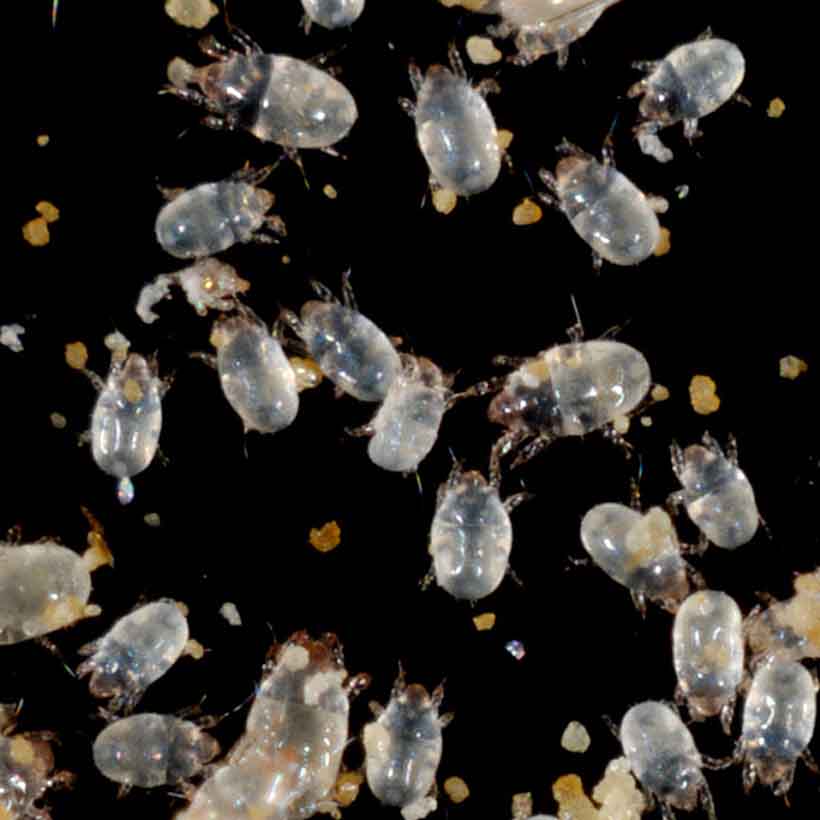
Ophionyssus natricis, also known as the blood mite, is a parasitic mite species from the Macronyssidae family that feeds on blood and occurs specifically in reptiles. This mite species has an elongated and oval shape, is between 0.6 mm and 1.3 mm in size and has a brown body. A heavy infestation of Ophionyssus natricis can lead to a weakening of the immune system of the affected animals and thus increase their susceptibility to other infections. In addition, the mites themselves can pose a risk to the health of the reptiles by transmitting pathogens.
In order to recognize an infection with Ophionyssus natricis, one should look out for clinical symptoms such as increased scratching or rubbing on objects, a longer time spent in the water basin and a general restlessness. In the advanced stage, reluctance to move, tiredness and refusal to eat may also occur.
Trombidium holosericeum (parasite)
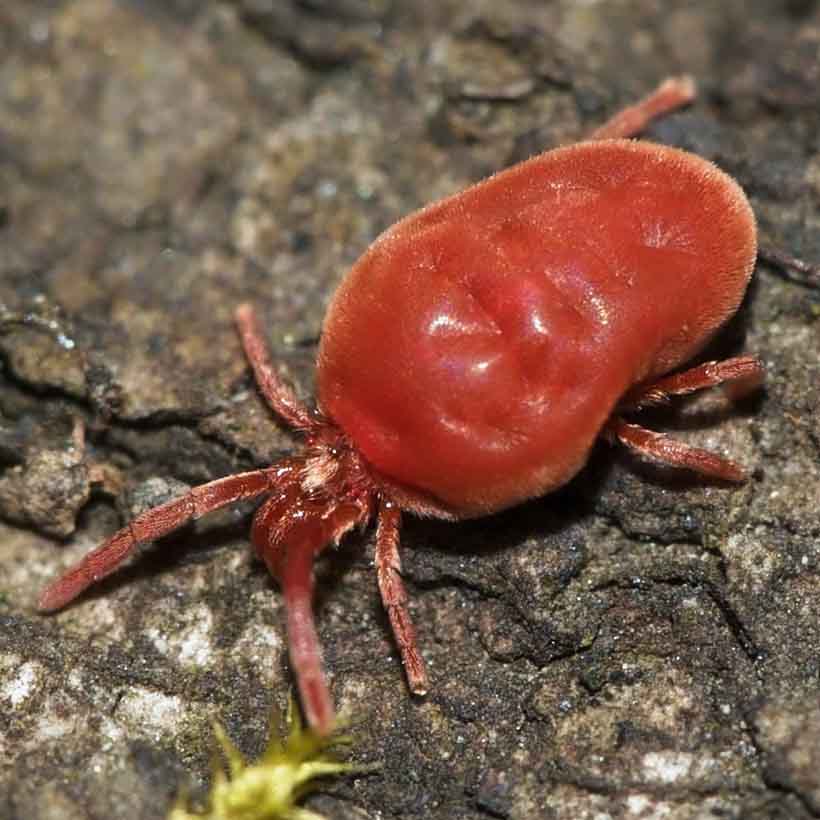
Trombidium holosericeum, also known as the red velvet mite, is a parasitic mite species that occurs in various animal species. The red velvet mite is mainly transmitted to terrarium animals via contact with infected food animals such as crickets or grasshoppers. The mites can develop on these host animals and enter the terrarium during feeding, where they can then settle on the inhabitants of the terrarium.
The larvae of Trombidium holosericeum, the red velvet mite, are known to develop parasitically on various insects such as butterflies, grasshoppers and weavers. They feed on the hemolymph (insect blood) of their hosts and form sac-like structures under the legs of the infected animals. After parasitization, the larvae develop into free-moving nymphs whose lifestyle is similar to that of the adult mites. The adult mites prefer to live on the ground and mainly suck insect eggs, but also hunt other small ground animals.
Neotrombicula autumnalis (parasite)
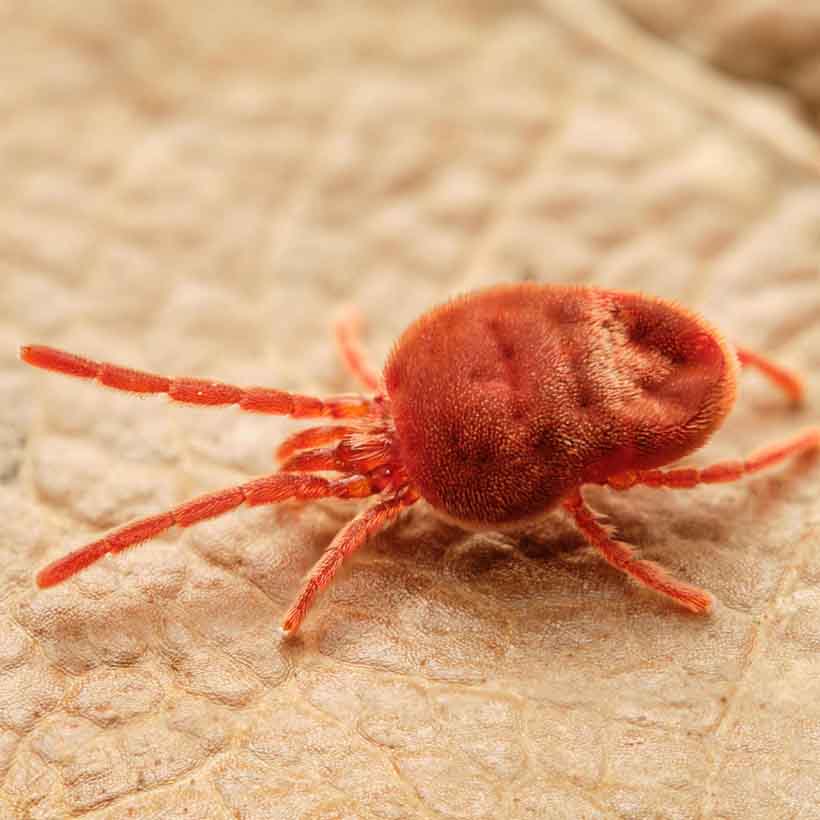
Neotrombicula autumnalis are arachnids about 2 mm in size that lay their eggs in grasses. The eggs of this mite species can therefore enter the terrarium by feeding on self-picked food plants. Incidentally, Neotrombicula autumnalis has many names: it is known as the autumn mite, autumn grass mite, hay mite or grass mite, although it is not related to the plant-sucking grass mites. The names grass louse, earth louse and peach louse are also misleading, as adult autumn mites are eight-legged and are not aphids.
The larvae of Neotrombicula autumnalis parasitize as ectoparasites (live on other organisms) mainly on small mammals such as mice, hedgehogs and rabbits, but also occasionally on birds. Pets such as dogs, cats and humans can also be affected.
Predatory mites as a natural and safe solution against mites in the terrarium
It is important to note that the use of pesticides or other chemical agents to control mites in the terrarium is not an option. The use of such agents can harm not only the mites in the terrarium, but also other inhabitants of the terrarium. For this reason, it is essential to find alternative methods of controlling mites in the terrarium. However, there are natural and safe methods of controlling mites in the terrarium that have no harmful effects on other inhabitants. The best option is to use predatory mites. Predatory mites are excellent mite eaters and help to completely eliminate the mite population in the terrarium. There are various types of predatory mites that are suitable for use in terrariums. We opted for the Hypoaspis miles for several reasons:
Hypoaspis miles are slightly larger than Amblyseius predatory mites, measuring up to 1 mm. They also have a long life expectancy, with an average lifespan of around 7 months for males and 3-5 months for females. Hypoaspis miles can survive in a wide temperature range of 15-30°C and are also active on the surface during daylight hours.
Hypoaspis miles can survive for long periods without food, up to 7 months in males and 9 weeks in females. Even if the eggs of the mite species you want to control have a long incubation period, they will be eliminated by using the Hypoaspis miles predatory mite. Hypoaspis miles can also be used against fungus gnat larvae in the terrarium.
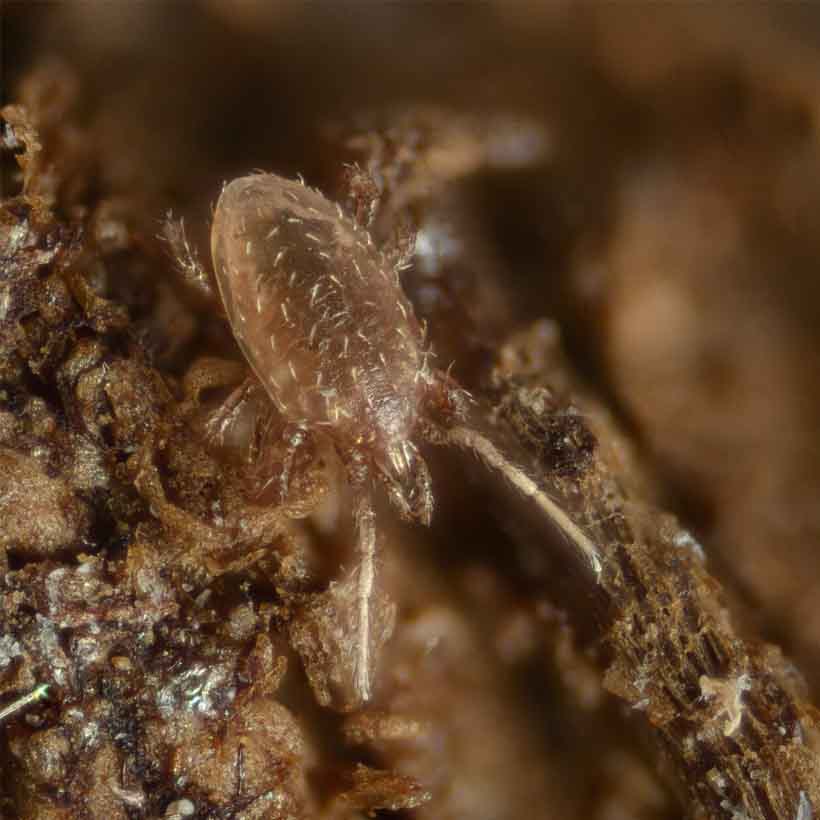
Hypoaspis miles are excellent hunters and beneficial insects in the terrarium, as they are able to control all larval stages of fungus gnats. They not only attack the visible larvae, but also those in cracks and crevices or in the hiding places of the terrarium furniture. They search the entire terrarium in search of prey and eat the fungus gnat larvae before they can develop into pupae. However, it is important to note that the Hypoaspis miles do not attack pupae and are therefore unable to control fungus gnats that have already hatched. For this reason, additional yellow panels should be used to catch adult fungus gnats and thus reduce the population.
Hypoaspis miles can also hunt springtails as prey, but these are more difficult to capture due to their speed and defensiveness. Hypoaspis do not pose a threat to larger species such as white Isopods, as the young Isopods are already too large for the predatory mites.
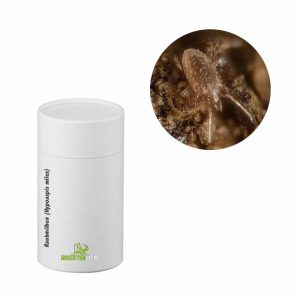
Predatory mites (Hypoaspis miles)
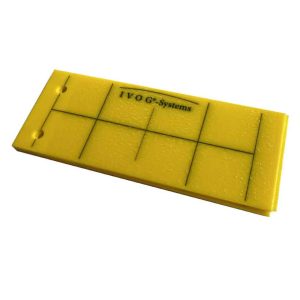
Yellow boards
We know how worrying it can be to discover mites in your terrarium. You can effectively control the mite population in the terrarium by taking various measures such as reducing the humidity, not feeding grain and using beneficial insects such as springtails and, above all, predatory mites.
Overall, it is advisable to carry out regular inspections of the terrarium to enable early detection of mite infestation and to be able to act quickly if necessary. With the right measures and tools, it is possible to successfully combat mites in the terrarium and keep the terrarium in a healthy condition in the long term.
If you have any further questions, please leave them in the comments below the article.
Leave a Reply
You must be logged in to post a comment.