

Oh dear, what are those tiny flies buzzing around in my terrarium? Fungus gnats! A shiver runs down my spine, my hand trembles in horror. Panic breaks out in me! What am I supposed to do? I rush to a social media platform and write in panic: “Help, help, my terrarium is being invaded by fungus gnats! What am I supposed to do? My whole life is ruined!” But all you get is the reply: “Don’t worry, it’s nothing serious, it’s definitely much less annoying than your panic attacks!”
It is quite understandable that the first reaction to discovering fungus gnats in the terrarium can be one of panic. After all, you want to maintain the terrarium as a healthy and harmonious habitat for its inhabitants. However, instead of panicking, it is advisable to approach the issue calmly and objectively.
Fungus gnats can multiply rapidly in terrariums, especially if certain conditions are present. The moist soil, organic matter and food scraps provide ideal living conditions for fungus gnats. It is important to understand that their presence is not in itself unusual or a cause for concern. As a rule, they do not pose a direct threat to the inhabitants of the terrarium, but they do pose a threat to the terrarium plants. Even fungus gnats that have escaped from the terrarium can settle on houseplants and open up a new building site there. It is therefore advisable to tackle and eliminate the problem.
A look at the lifestyle of fungus gnats in the terrarium
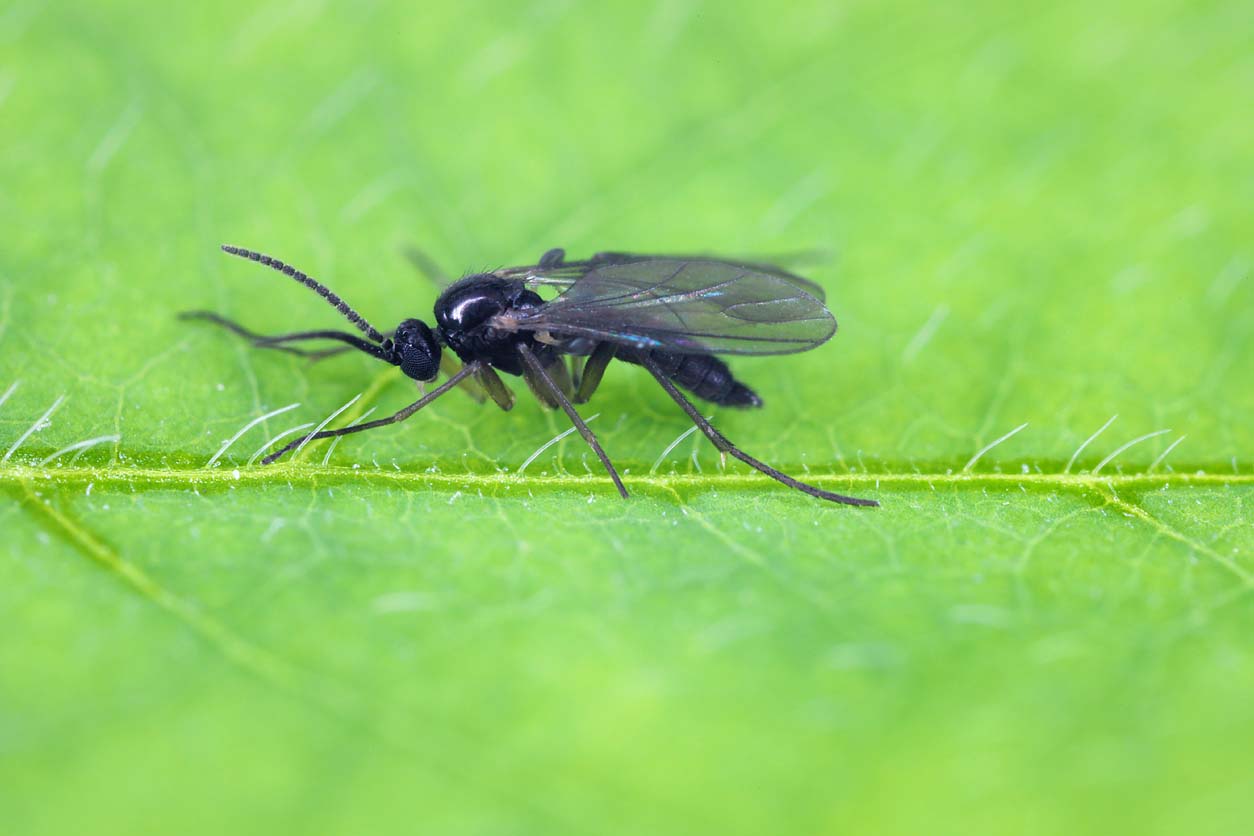
The family of fungus gnats, scientifically known as Sciaridae, also known colloquially as mourning flies, can be found in nature mainly in damp habitats such as forests, moors and wet meadows. These small flies are black in color and can reach a size of up to seven millimeters. They are able to lay their eggs preferably in moist soil. In the field, this typically occurs during the months of May to June, while in terrariums it can occur all year round. A single female is capable of laying up to 200 translucent eggs, which can lead to rapid reproduction.
About a week after the eggs hatch, the fungus gnat larvae emerge. These larvae are about two millimeters long and have a white glassy appearance with a dark head. They live mainly in the soil and feed on organic material such as dead leaves, fungal mycelium and roots. Due to their feeding behavior, they belong to the first decomposers and play an important role in the decomposition process of dead plant material. They therefore feel particularly at home in terrariums where springtails, Isopods and millipedes also find their place.
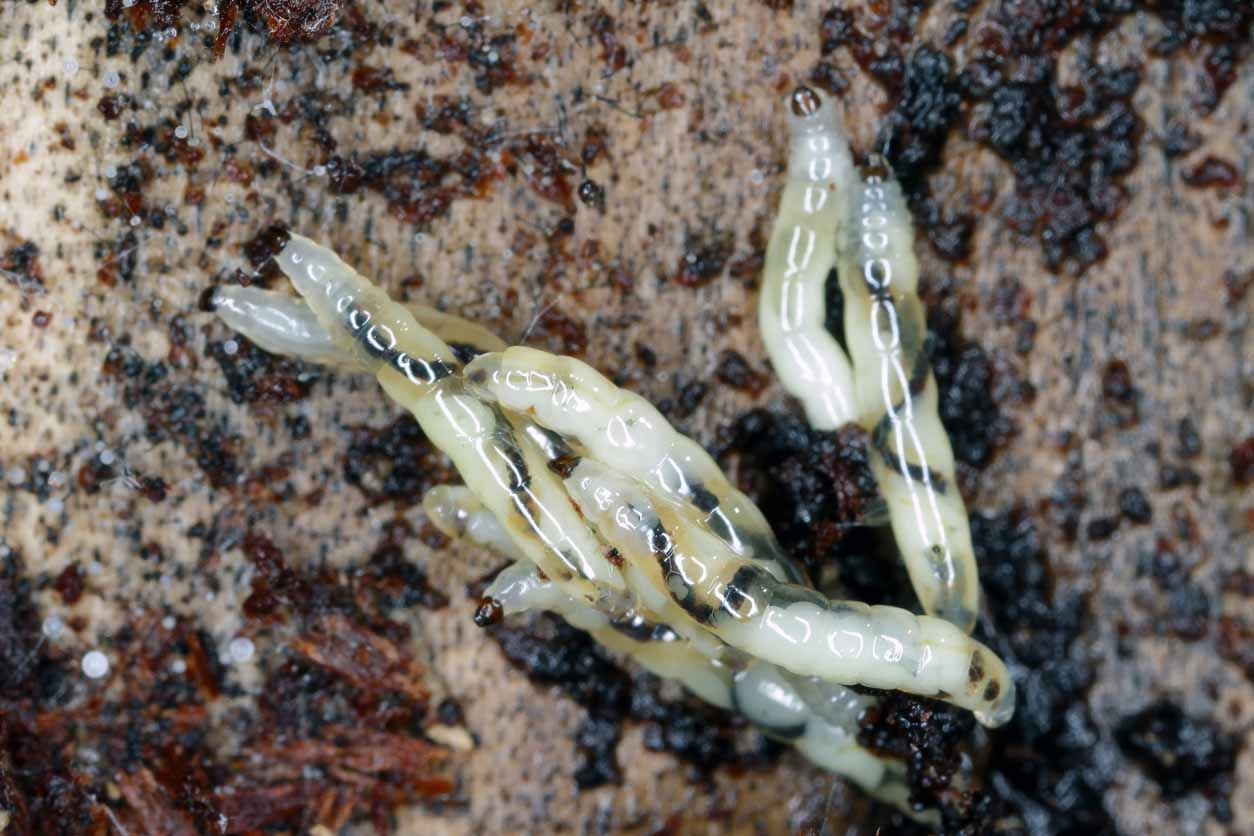
The larvae of fungus gnats can become a problem. If there is a lack of dead plant material and fungal mycelium in the terrarium, the hungry larvae will attack living plant roots. This can cause considerable damage to the beloved terrarium plants. The damaged roots can impair the growth of the plants, lead to a stunted appearance and even cause the plants to die.
It is therefore important to keep an eye on the population of fungus gnats and their larvae in the terrarium and take measures to control them if necessary.
Safety first: Use yellow boards in the terrarium against fungus gnats with caution
Yellow boards: A possible solution for controlling fungus gnats in the terrarium, but only if there is no danger to the animals living in it.
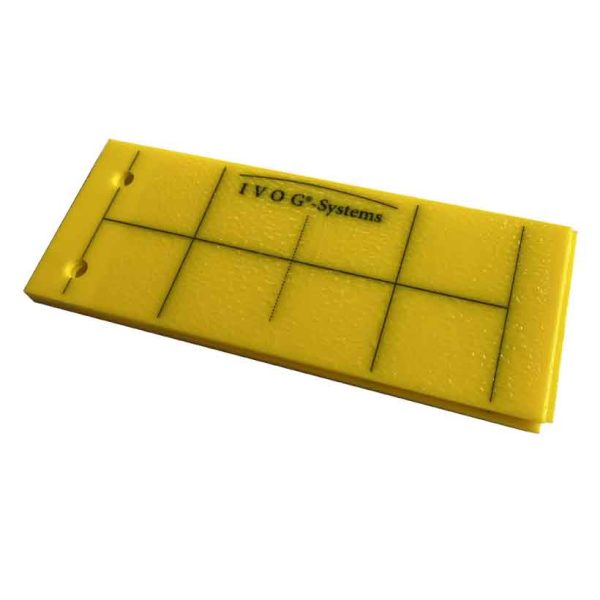
If you are struggling with fungus gnats in your terrarium and are looking for a suitable solution, yellow boards could be an option. Yellow boards are yellow cards with a sticky surface that can attract and hold on to adult fungus gnats. Due to their eye-catching color and sticky material, the flies are attracted to the yellow boards and stick to them so that they can no longer fly freely around the terrarium. This can help to reduce the number of flies in the terrarium and thus reduce the nuisance caused by fungus gnats.
However, before using yellow boards in the terrarium, it is extremely important to consider the safety of the animals living in it. Some terrarium animals, especially those that like to climb, could accidentally land on the yellow boards and stick to them. This can result in injury or even death to the animals. It is therefore of the utmost importance that you carefully weigh up the risk to your terrarium animals and use alternative control methods if necessary.
Yellow boards
To minimize the risk to your animals, there are a few precautions you can take. Make sure that the yellow plates are placed out of reach of the animals, for example in the middle of the terrarium lid or in places where the animals cannot normally reach. This will prevent them from accidentally coming into contact with the yellow plates. Also make sure to check the yellow boards regularly and replace them if necessary as soon as they are covered with fungus gnats to maintain their effectiveness.
If you have any doubts about whether yellow boards are suitable for your terrarium or concerns about the safety of your animals, it is advisable to consider alternative methods of controlling fungus gnats.
Predatory mites against fungus gnat larvae: a natural control method
If you are struggling with an infestation of fungus gnat larvae in your terrarium, the use of predatory mites could be an extremely effective and natural control method.
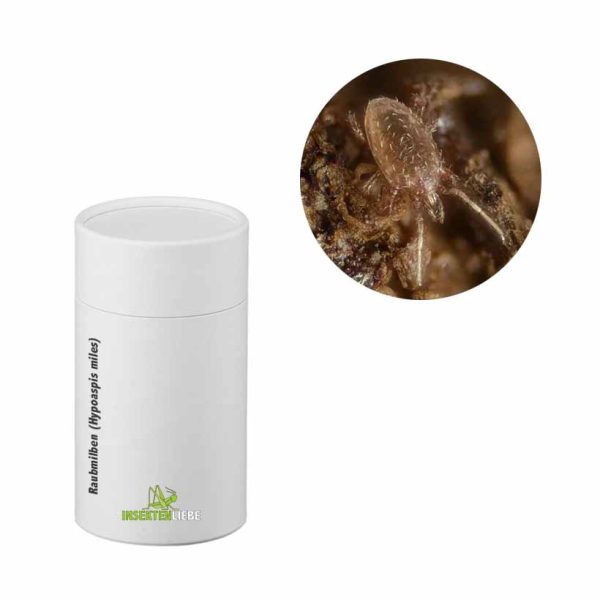
Predatory mites are tiny, predatory mites that feed on various insects and their larvae, including fungus gnat larvae. They can be considered natural enemies of fungus gnat larvae and play a crucial role in reducing the population of these pests. The great advantage of this method is that the predatory mites attack the fungus gnat larvae at an early stage of development and thus prevent them from reproducing. They practically get to the root of the problem and enable a rapid reduction in the fungus gnat population.
To use predatory mites against fungus gnat larvae, they can be introduced into the terrarium in a targeted manner. As soon as they are there, they immediately get to work by actively searching for the larvae and using them as a food source. The predatory mites go on the hunt and gradually decimate the population of fungus gnat larvae.
Predatory mites (Hypoaspis miles)
The use of predatory mites to control fungus gnat larvae in the terrarium is not only extremely effective, but also extremely environmentally friendly. It is a natural method that restores the ecological balance in the terrarium, naturally without the use of chemical insecticides. Through the targeted use of predatory mites, the pest population can be controlled, thereby maintaining the health of the plants in the terrarium.
It is important to note that the success of predatory mites as natural enemies of fungus gnat larvae depends on various factors, such as the right type of predatory mite, the environmental conditions in the terrarium and the size of the fungus gnat larvae population. Predatory mites come in different species and subspecies, each with their own preferences and specific prey. While some species of predatory mites specialize on certain mites and are therefore effective against them, others may be less suitable for controlling fungus gnat larvae.
Successful control of fungus gnats in terrariums: patience and the right measures are the key
An infestation of fungus gnat larvae in the terrarium can be worrying at first, but with the right measures and a sound approach, the problem can be successfully controlled. Yellow boards are an effective method of trapping the adult fungus gnats in the terrarium and reducing their population. An alternative to controlling fungus gnat larvae are predatory mites, which act as natural enemies of the larvae and help to control the pest population in the terrarium. These tiny predatory mites feed on various insects and their larvae, including fungus gnat larvae. They can be introduced specifically into the terrarium to control the larvae and thus reduce the infestation. With patience, the right approach and careful implementation of the measures, you can successfully combat fungus gnat larvae and create a healthy terrarium in which your plants and animals can thrive.
If you have any further questions, please leave them in the comments below the article.
Leave a Reply
You must be logged in to post a comment.