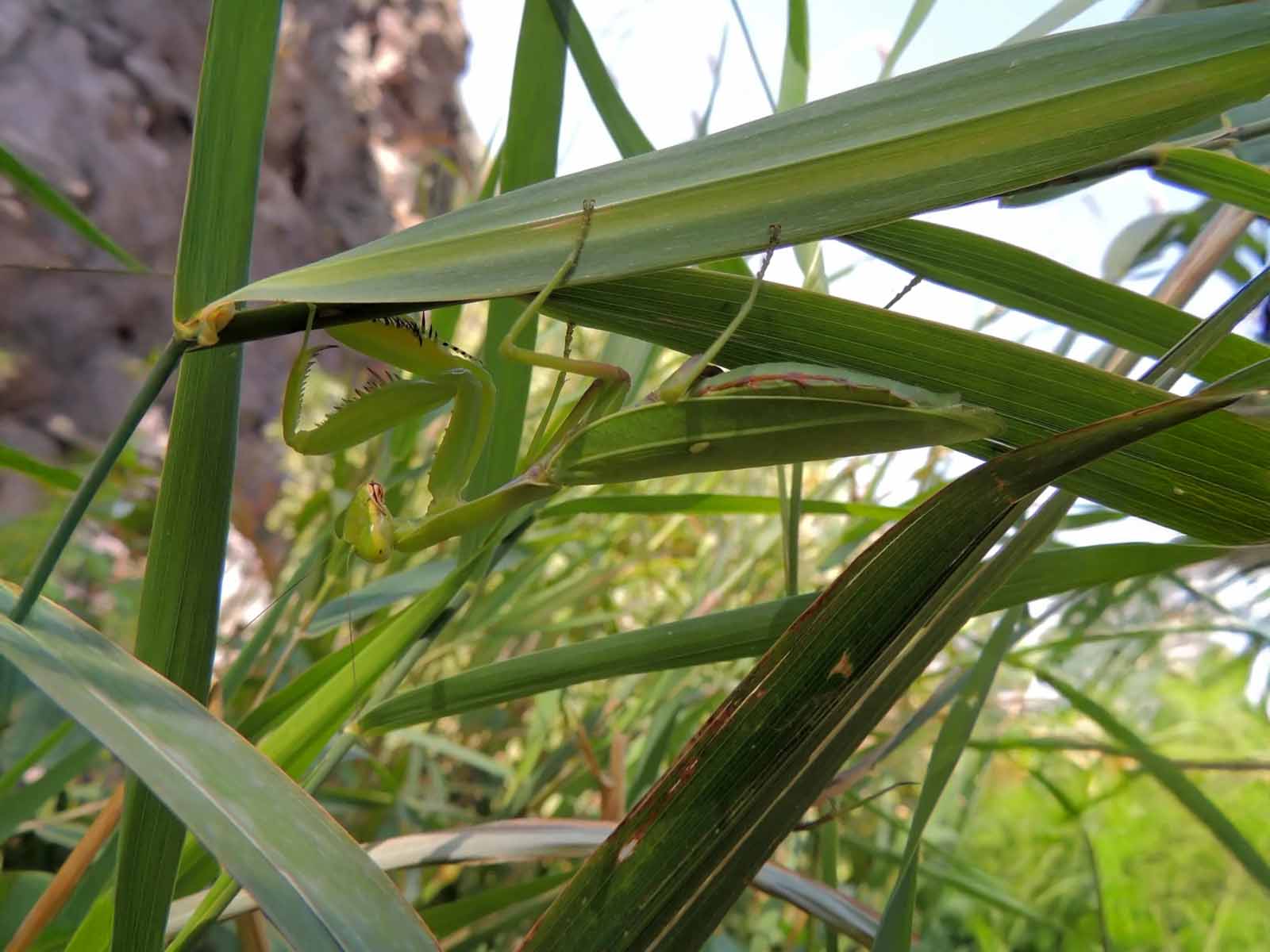


The release of insects is often underestimated. Particularly in the case of invertebrates, the idea persists that a single animal cannot cause any damage outdoors. However, research has clearly shown in recent years that this assumption is deceptive. The example of invasive mantids, which have become established in various regions of Europe, illustrates this particularly well.
Invasive mantids in human-dominated habitats
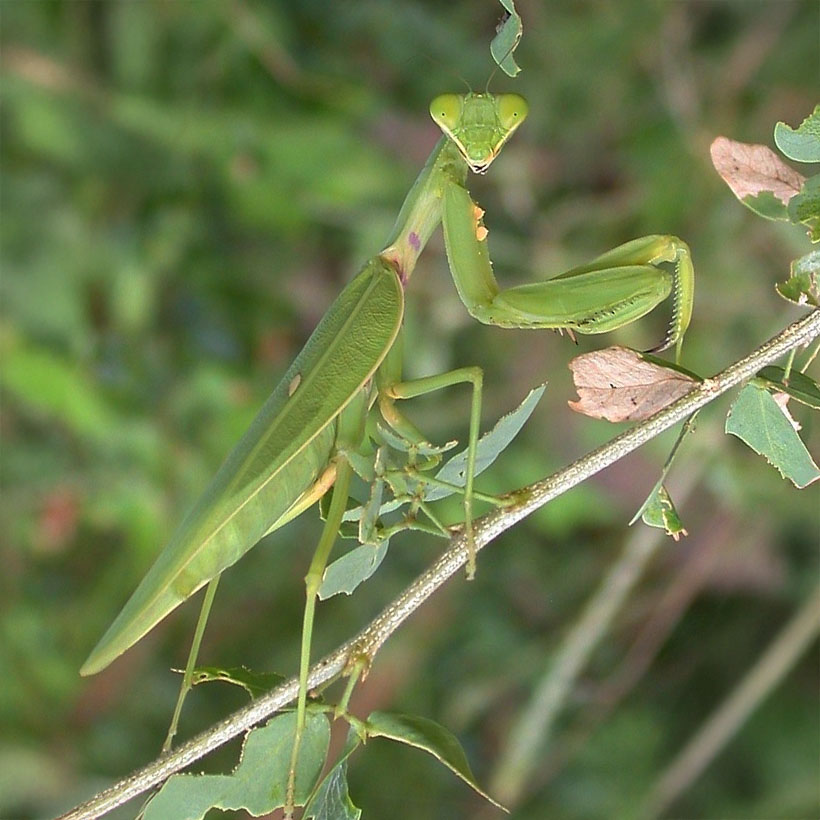
Asian mantis of the genus Hierodula (Hierodula tenuidentata / patellifera) have now been recorded in many parts of Europe, especially in cities and suburban areas. They benefit from heat islands, structurally rich gardens and a constant supply of insects. The decisive factor here is not just their size or their hunting behavior, but a combination of biological characteristics that are particularly effective in new habitats.
In such environments, invasive mantids encounter conditions that favor their spread without the existing ecosystem being prepared for them.
Reproduction and population dynamics
Studies show that invasive mantids have a high reproductive output. On average, significantly more young hatch from a single ootheca than in the native Mantis religiosa. At the same time, early mortality due to cannibalism is lower than was long assumed.
This combination means that populations can expand rapidly within a short period of time, especially where human structures create favorable conditions.
Mismatches as an underestimated displacement mechanism
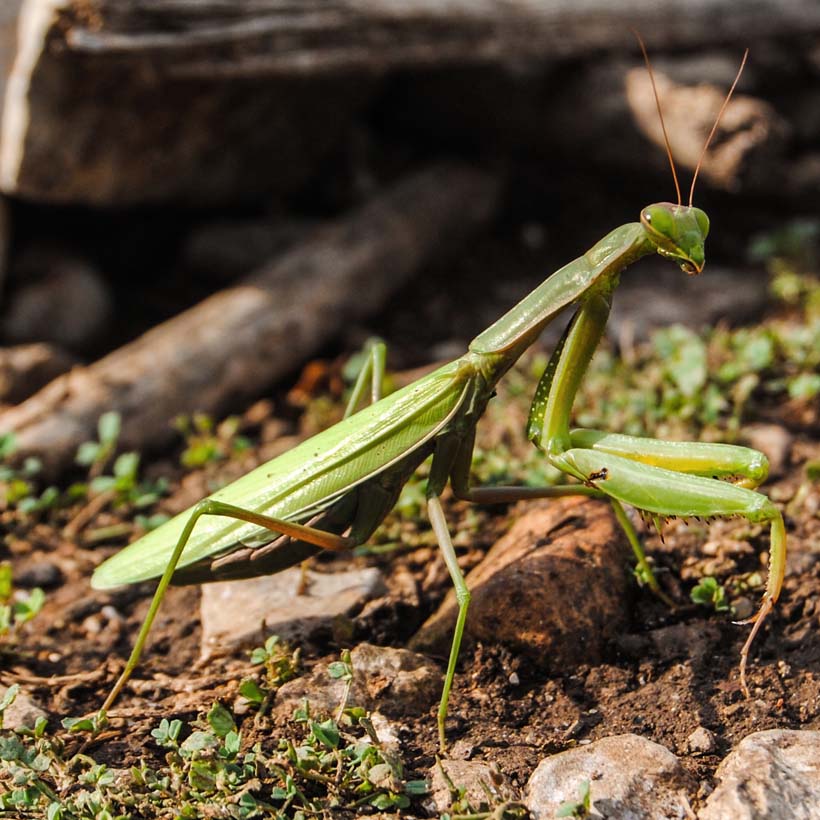
One aspect that has long received little attention concerns reproductive biology. In controlled experiments, males of the native Mantis religiosa reacted not only to females of their own species, but also to females of Hierodula. The chemical signals are apparently not strictly species-specific.
This misorientation is fatal for the males. They are eaten on approach. Such processes are not just a laboratory phenomenon, but a biologically plausible mechanism that can occur in mixed populations.
Effects on native species
For the native praying mantis, this effect is more than just a spectacular detail. Males represent the most mobile life phase of the species. If they are lost in significant numbers due to such mismatches, this can affect the reproduction of the population.
Displacement does not occur here through open competition, but through subtle disturbances in the reproductive system. It is precisely such mechanisms that make invasive mantids ecologically effective without being immediately visible.
Hunting behavior and ecological range
In addition, Hierodula have a generalist hunting behavior. The animals use a wide range of prey, from small flying insects to large, defensive species. In individual cases, even small vertebrates have been documented as prey.
Such observations are rare, but show the ecological potential of invasive mantids once they have become established. This can be particularly relevant in fragmented habitats or limited areas.
Why releases work immediately
None of these effects arise because invasive mantids are more aggressive or more problematic than native species. They arise because these animals enter systems that are not adapted to them. Evolution works slowly. Releases have an immediate effect.
Once an animal has been released, it cannot be brought back. An established population is almost impossible to control.
Responsibility in terraristics
This is where responsibility becomes concrete. Anyone who keeps, breeds or passes on animals decides whether such processes are triggered at all. This applies not only to large, conspicuous species, but also to egg packs, young animals or supposedly harmless insects that freeze to death in winter anyway.
Releasing animals is not a solution, but a risk. For the animal itself, which often has poor chances of survival outside, and for the environment into which it is uncontrollably introduced.
Reception centers as a sensible alternative
This is exactly where rescue centers come in. At Insektenliebe there is a collection station for insectswhich is intended as a practical alternative to abandonment. Animals can be handed in, professionally classified and rehomed or placed in a controlled manner.
The result is a solution that does justice to both animal welfare and the protection of native ecosystems.
The example of invasive mantids shows how quickly well-intentioned decisions can have real ecological consequences. But it also shows that responsibility does not have to be complicated. It starts with not simply releasing animals and continues by accepting help before an individual solution becomes a collective problem.
Terraristics and insect keeping only have a future if they are taken seriously. This also includes acknowledging uncomfortable consequences and acting accordingly.
(Source: https://jor.pensoft.net/article/165233/)
If you have any further questions, please leave them in the comments below the article.
Leave a Reply
You must be logged in to post a comment.