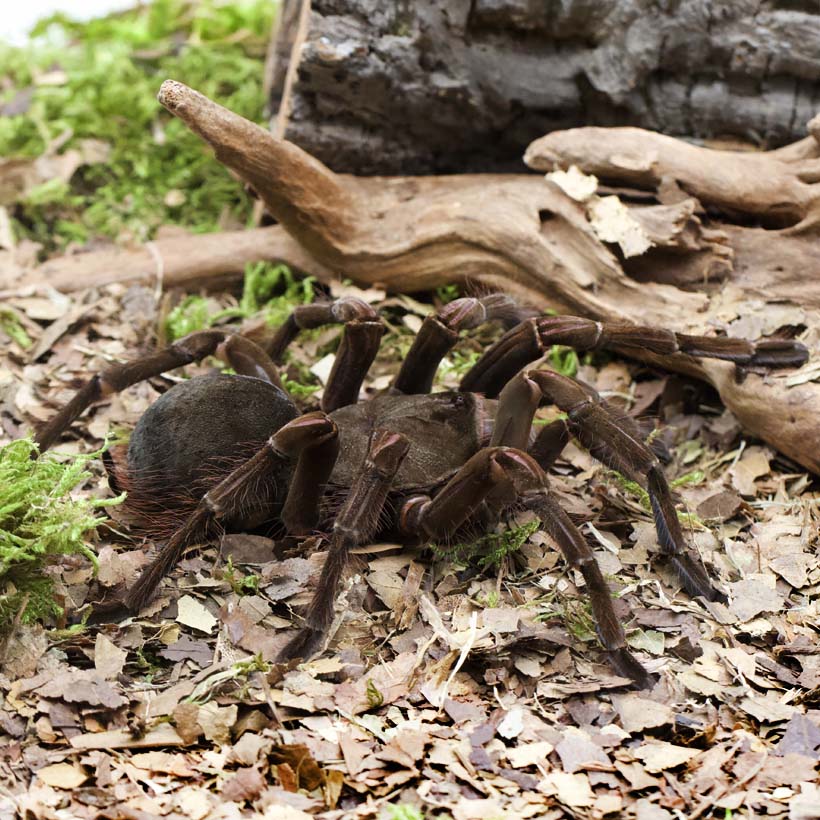


When we talk about the largest tarantula in the world, we usually mean animals with an extraordinary body size and leg span. In tarantulas of the Theraphosidae family, size is usually indicated by the leg span. It describes the distance between the tips of opposite legs when they are stretched out. This measurement gives a good impression of the total space an animal occupies and is the most common standard of comparison for large species in the literature. In this article, we work our way from 5th to 1st place along various species that are among the largest known representatives of their family.
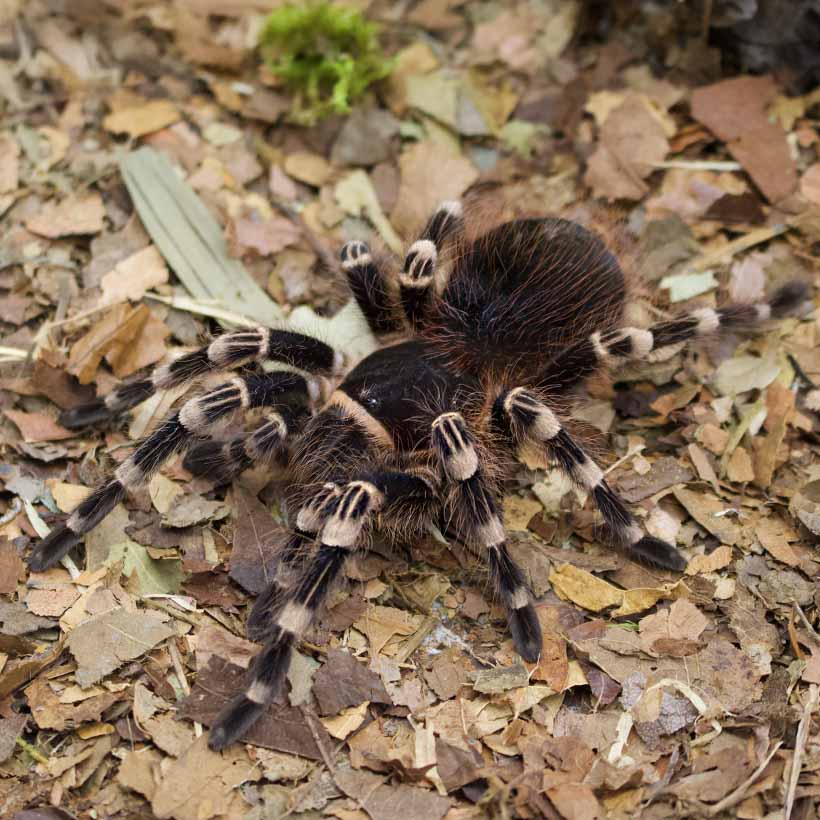
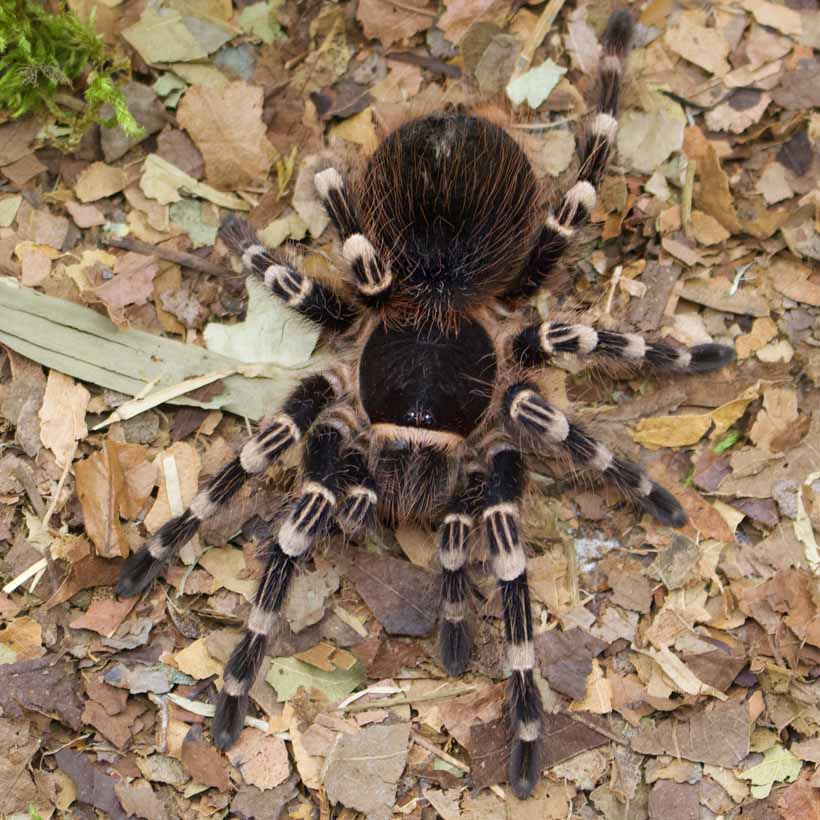
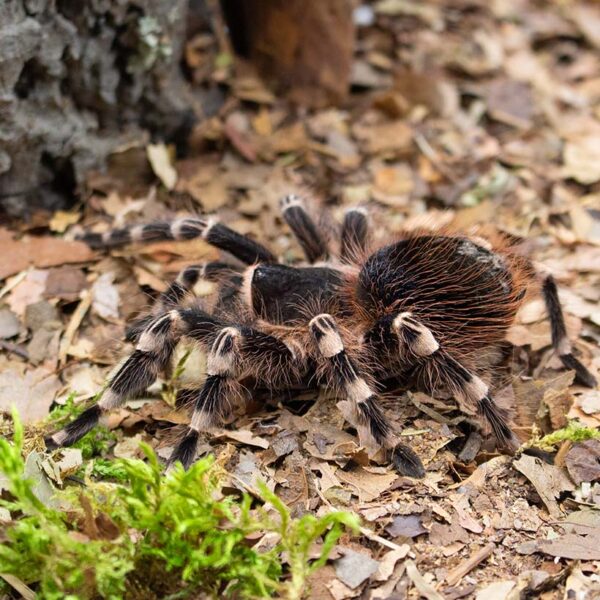
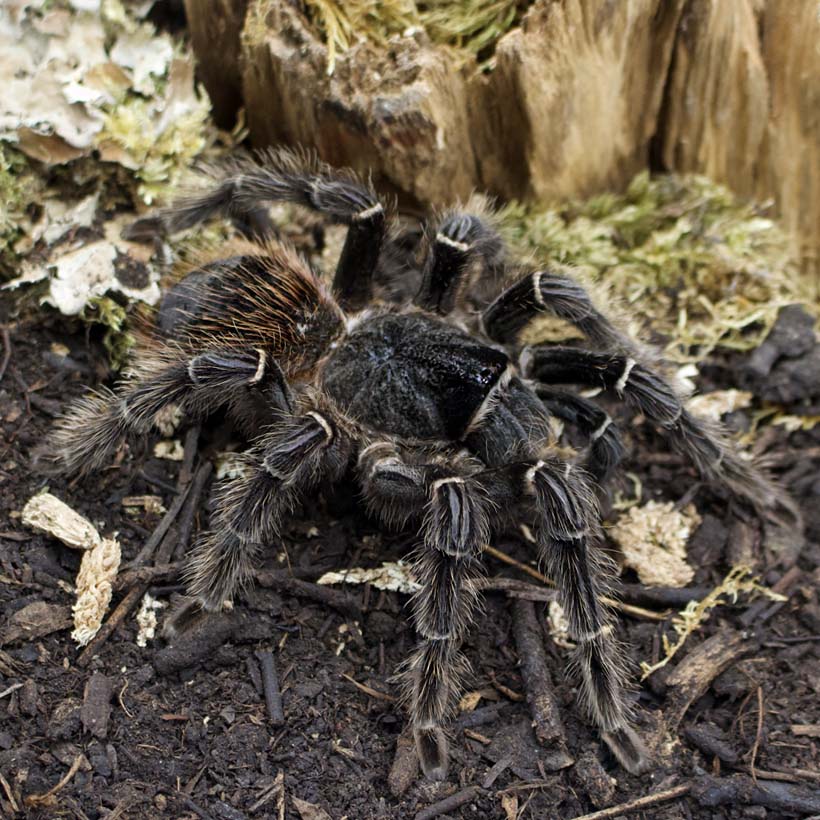
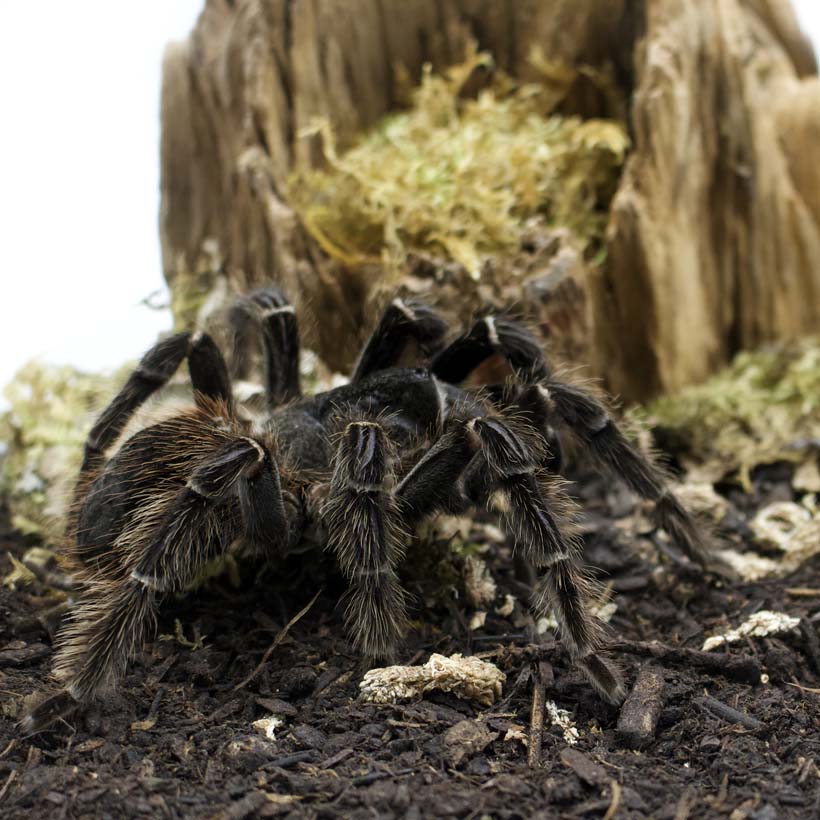
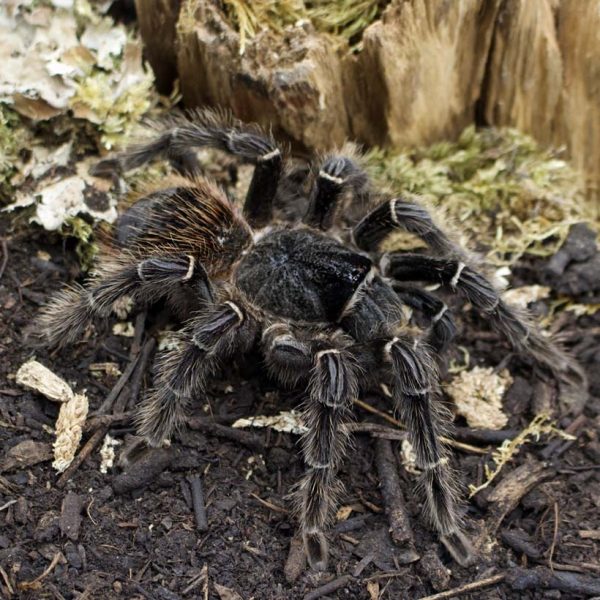
5th place: Acanthoscurria geniculata – Brazilian “white-kneed tarantula”
Acanthoscurria geniculata is one of the larger tarantulas in South America and is very well known and popular in the terrarium hobby. It originates from the tropical rainforest of northern Brazil, where it lives as a ground-dwelling hunter in leaf litter, under wood and stones. Typical adult specimens reach a leg span of up to around 20 cm. This makes it one of the largest species, even if it does not reach the extremes of the genus Theraphosa.
Biologically, A. geniculata is a typical terrestrial tarantula. It uses ground structures for burrowing and hiding and regulates local invertebrate populations. In terms of husbandry, this means that a terraced, structured terrarium floor with burrows and retreats is conducive to their natural way of life – an example of how natural husbandry can be implemented responsibly.
4th place: Lasiodora parahybana – “Brazilian giant tarantula”
Lasiodora parahybana is one of the largest tarantulas known and is often referred to in the hobby as the “Brazilian giant tarantula”. It is endemic to north-eastern Brazil and reaches leg spans of up to around 28 cm – a size that puts it well above many large species in the New World.
Ecologically, L. parahybana is a ground-dwelling hunter with a high level of activity. Large females can use a particularly large number of prey species in the wild and hold their own against competition. In terraristics, their size means that this species requires sufficient floor space and cover. A species-appropriate husbandry reduces stress and allows individual behavior from digging to skinning.
3rd place: Theraphosa apophysis – large Goliath tarantula with impressive size
Theraphosa apophysis belongs to the well-known group of “Goliath tarantulas” and is one of the largest species in the world alongside T. blondi and T. stirmi. Adult specimens also reach leg spans in the range of large Theraphosa species and are considered imposing in the hobby – often with body lengths of around 10 cm and a correspondingly massive build. Within the genus Theraphosa, apophysis is the only species in which sexually mature males develop tibial apophyses.
In their natural habitat of tropical rainforests in South America, these animals live on the ground and are opportunistic in their choice of food. They use hiding places, but also dig in loose substrates. For keepers, this means A large terrarium surface area, deep substrate for burrowing behavior and stable climatic conditions are important. Large bodies and strong legs correspond to a lifestyle that needs space and structure – not just a “show terrarium”.
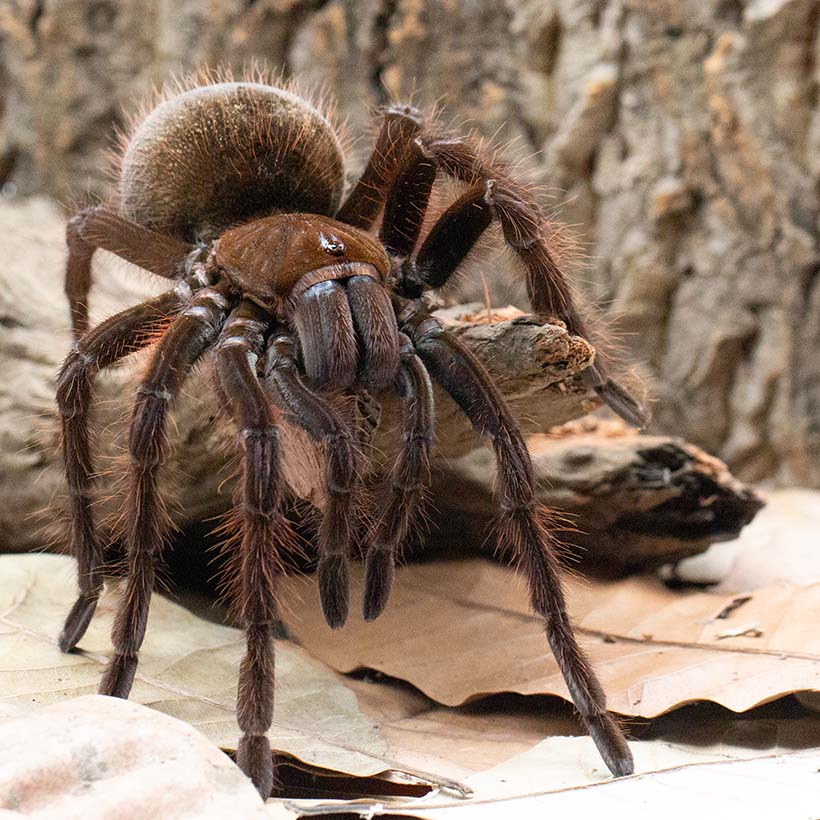
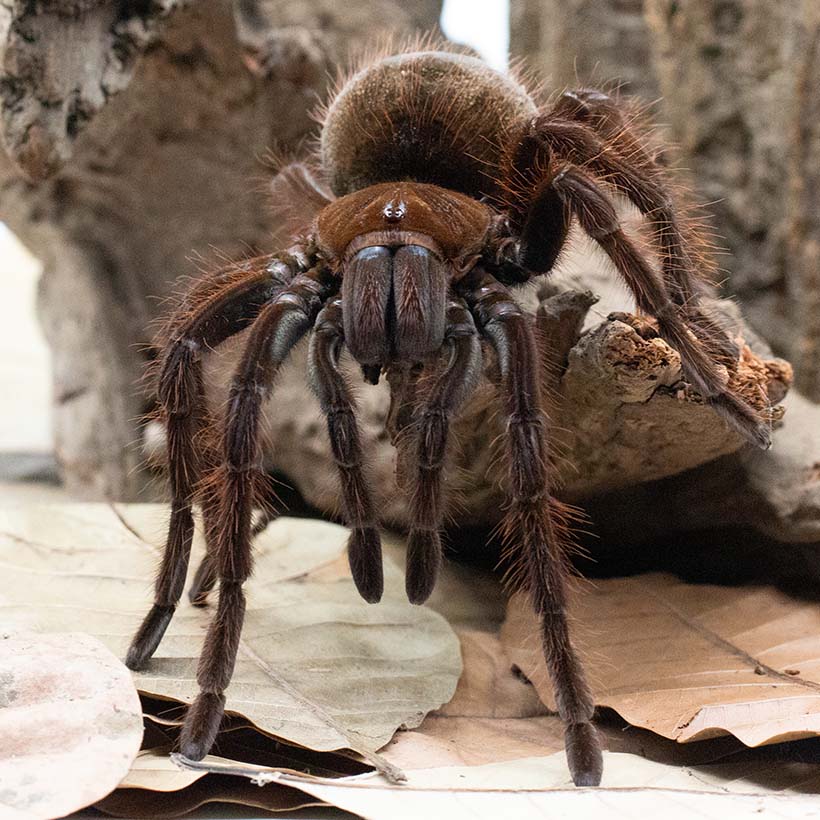
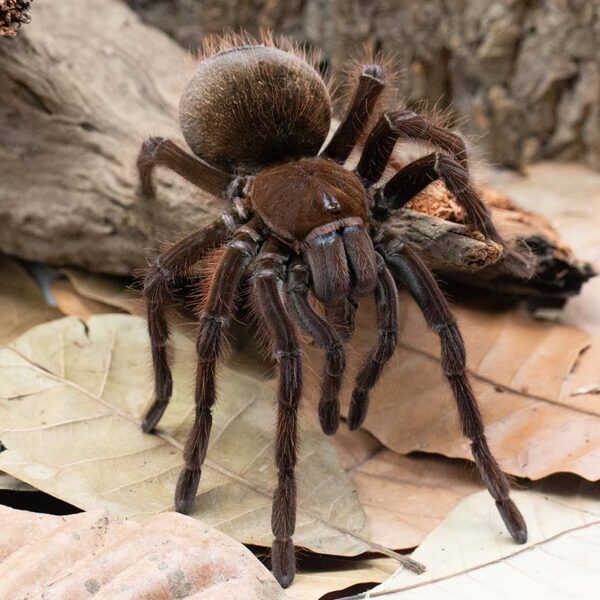
Theraphosa apophysis “Venezuela giant tarantula”
2nd place: Theraphosa blondi – the world-famous Goliath tarantula
Theraphosa blondi is widely regarded as one of the largest spiders in the world in terms of body mass and length. In popular literature, it is often referred to as the classic “Goliath tarantula”, producing adults with very massive bodies. It is found in the tropical rainforests of northern South America.
In rankings for leg span, T. blondi is close to other large species. However, it is best known for its high weight and body mass. Ecologically, such large theraphosids are bottom dwellers with a diverse prey spectrum of invertebrates and small vertebrates. When kept, T. blondi requires a lot of space, peace and quiet and a stable, humid climate – aspects that make the difference between simply “having” and responsible terraristics.
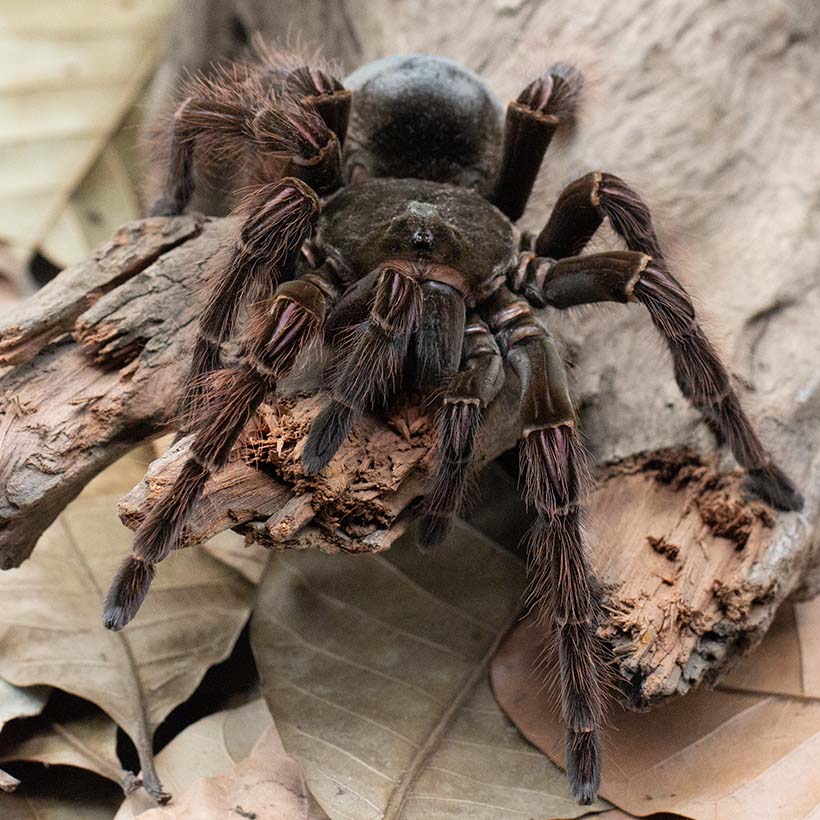
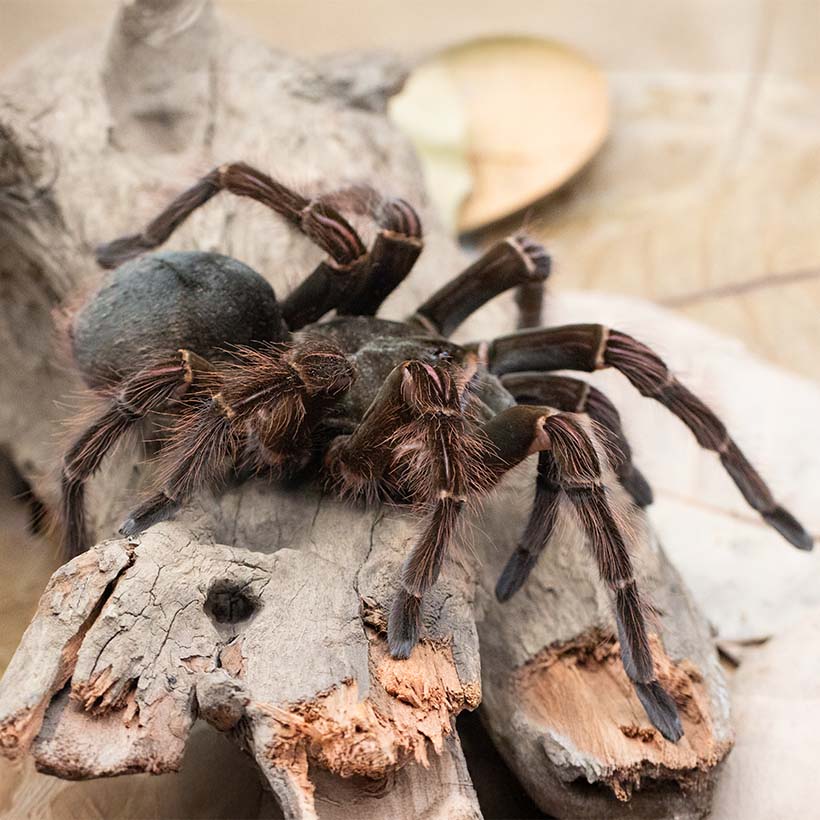
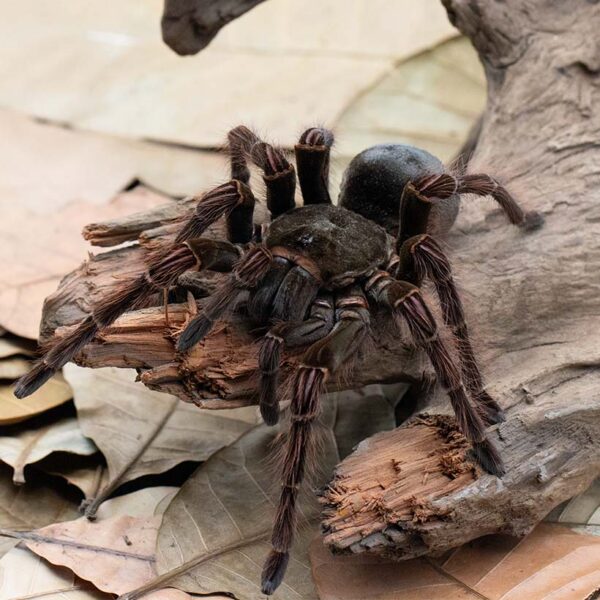
1st place: Theraphosa stirmi – largest tarantula in the world
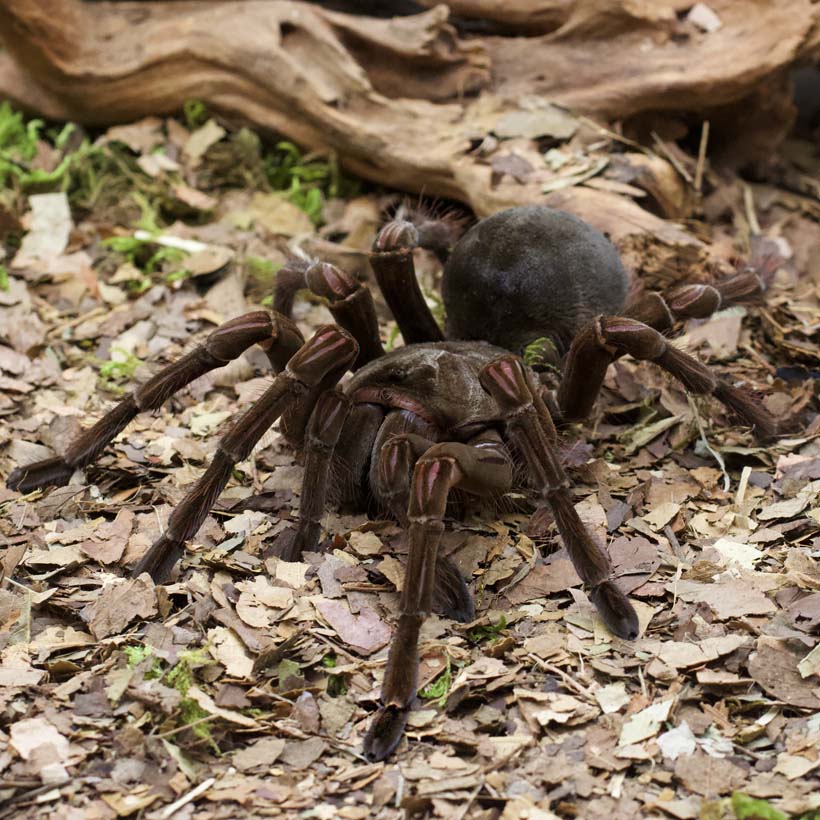
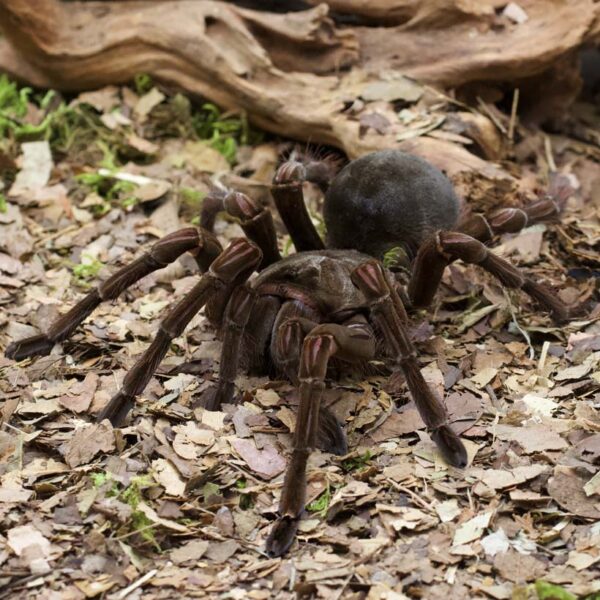
Theraphosa stirmi – often referred to as the “Burgundy Goliath tarantula” – reaches the largest overall dimensions within its genus according to recent reports and measurements, placing it at the top of our ranking of the world’s largest tarantulas. Females can reach leg spans that regularly rival or slightly exceed those of other large Theraphosa species, especially in large individuals (sometimes around 30 cm at the upper end).
This species is an impressive example of how closely size, habitat and ecological function are linked: It is at home in humid, warm rainforest regions of South America, where close to the ground, hiding places and microhabitats form its niche. For terrariums, this means more floor space, deeper substrates and a sensitive approach to their space and climate requirements.
Biological and ecological perspectives
Tarantulas of this size class are not “record objects”, but concrete components of ecological systems. Their role as predators of insects and other soil animals influences local food webs. At the same time, these spiders are habitat indicators: the loss of structurally rich rainforest areas through deforestation and fragmentation has a direct impact on their populations.
In terraristics, this results in a responsibility that goes beyond mere keeping: professional care, consideration of natural needs and a critical examination of the origin and legal situation break with romanticized ideas and instead create a factual basis.
Responsibility in attitude
Large tarantulas not only require space, but also an understanding of their natural way of life. Species-appropriate husbandry means:
- Terrarium design with sufficient floor space and structures,
- stable temperature and humidity values,
- Opportunities for natural behavior (digging, hiding),
- objective consideration of handling and stress avoidance.
A look at the world’s largest tarantula thus leads from mere numbers to a holistic understanding: size is a fascinating biological characteristic, but it also entails responsibility.
From Acanthoscurria geniculata in 5th place to Lasiodora parahybana and Theraphosa apophysis to Theraphosa blondi and Theraphosa stirmi, this is a group of spiders that reach impressive dimensions both in the wild and in the hobby. The largest tarantula in the world is not an abstract record, but a starting point for sound knowledge, respectful husbandry and an awareness of how animal size, ecology and human responsibility are connected.
If you have any further questions, please leave them in the comments below the article.
Leave a Reply
You must be logged in to post a comment.