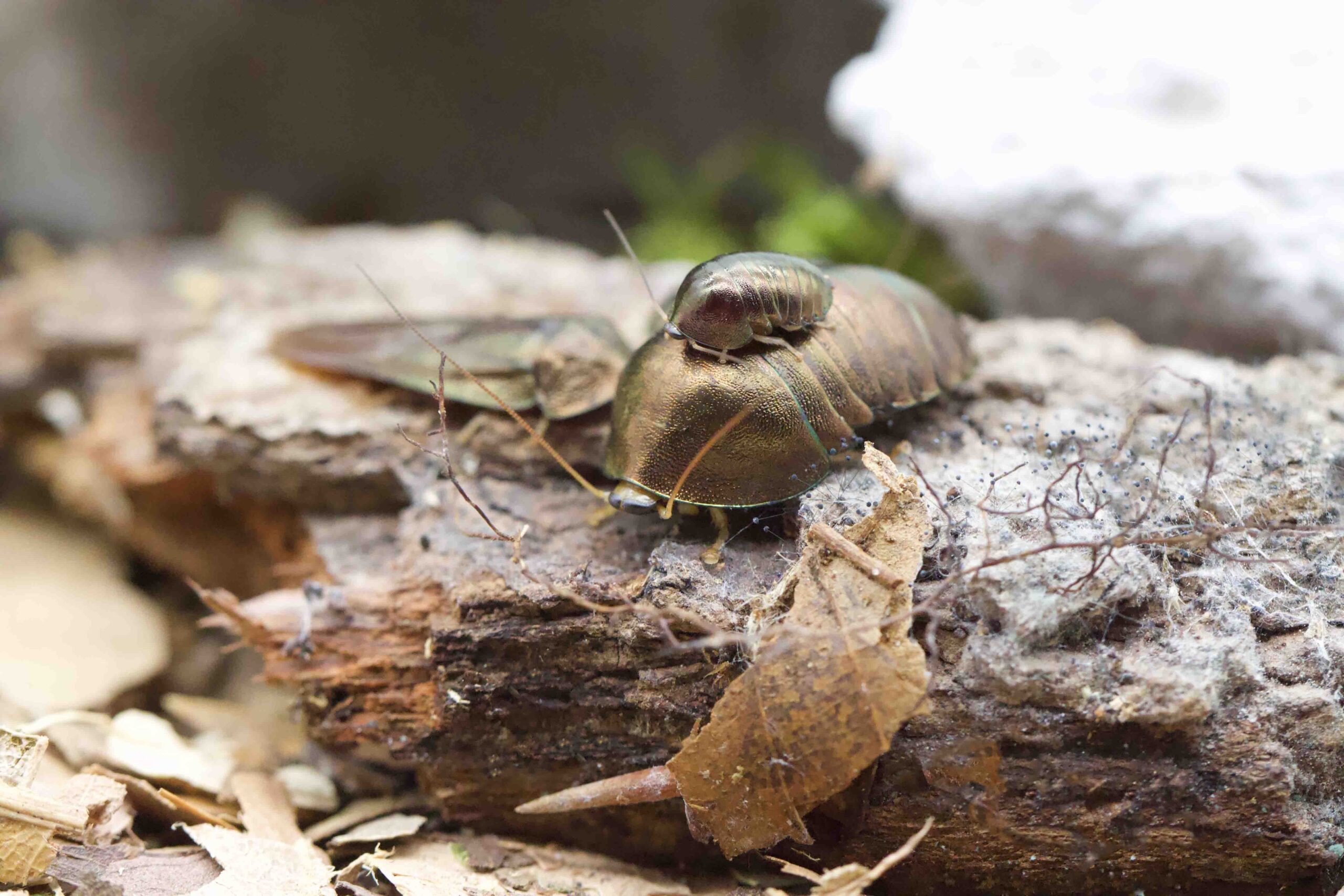


Cockroaches are considered loners. As animals that live for themselves, hide and show as little interaction as possible. This image is widespread – and biologically incomplete. For many species, social proximity is no coincidence, but a decisive factor for survival, development and long-term success.
Social cockroaches are no exception. They exhibit behavior that goes far beyond occasional aggregations. Proximity has a measurable effect on them – on growth, stress levels and resilience. Sociality is not an accessory for cockroaches, but part of their survival strategy.
Proximity is not comfort, but protection
Dehydration is one of the greatest dangers for small insects living close to the ground. Cockroaches constantly lose moisture through their body surface. Hiding places divided into groups offer a decisive advantage here. Fluctuations in temperature and humidity are buffered and the water loss of individual animals is reduced.
These effects are not theoretical. Studies show that cockroaches specifically seek out places where conspecifics are already present. Even if alternative hiding places are available, they prefer social locations. Proximity creates a more stable microclimate – and therefore better chances of survival.
Isolation leaves its mark
The importance of social proximity becomes particularly clear when it is withdrawn. Cockroaches kept in isolation develop more slowly, react more sensitively to stress and show altered activity behavior. Animals kept in groups grow more evenly and stably.
In cockroaches, social contact not only affects behavior, but also the entire organism. It influences development, metabolism and resistance. For many social cockroaches, proximity is not a bonus, but a biological necessity.
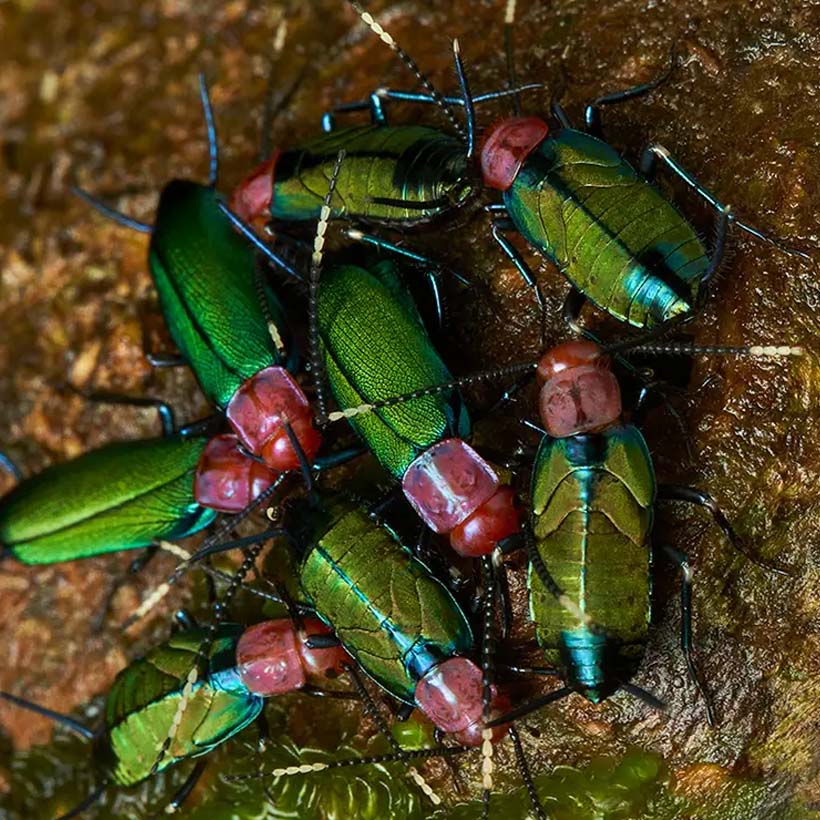
Chemical communication keeps groups together
The fact that social cockroaches form specific groups is due to their pronounced chemical communication. They use scents to mark suitable locations. These so-called aggregation pheromones signal safety and attract other animals.
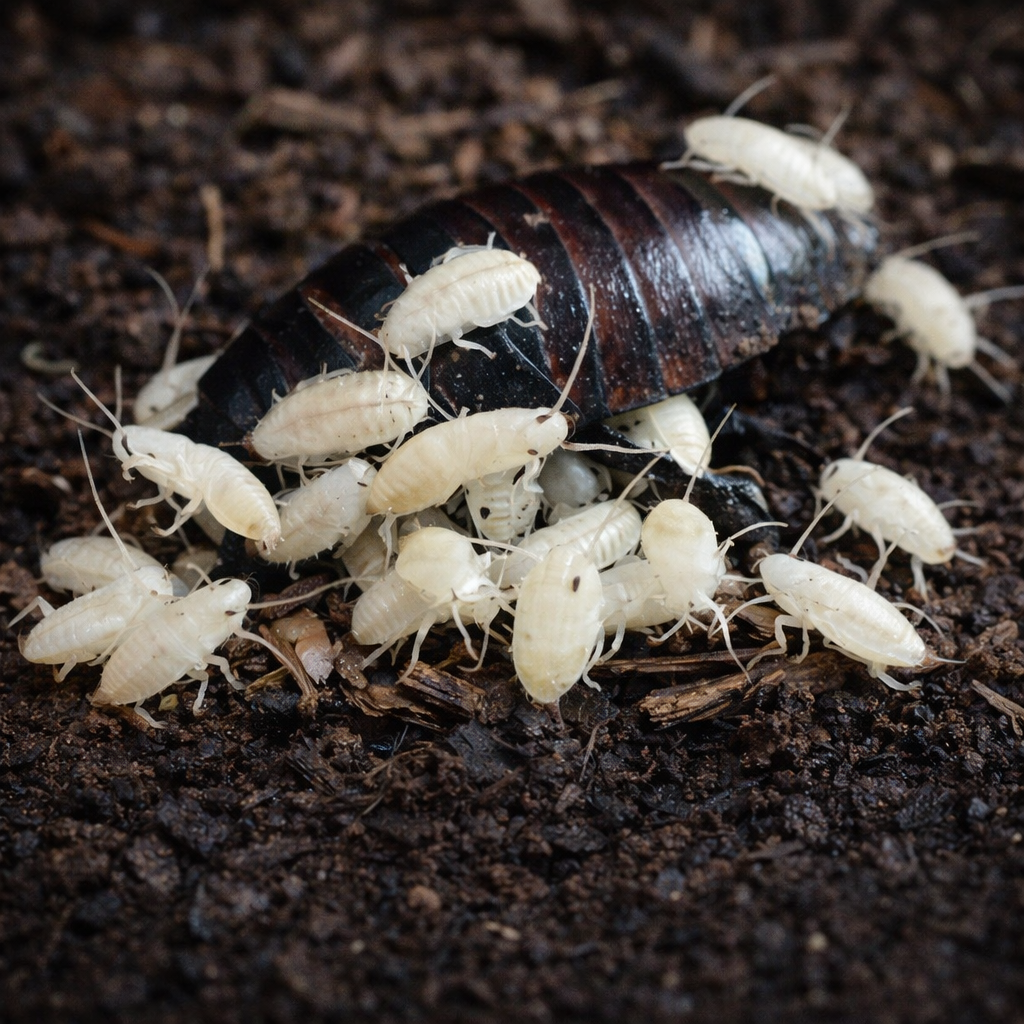
Young animals in particular react strongly to these signals. Proximity to conspecifics provides protection and orientation, but also access to important microorganisms. Sociality begins early in the life cycle of cockroaches and remains relevant throughout their lives.
Flexible groups instead of fixed states
In contrast to termites, which have developed highly complex states with fixed castes within the cockroach lineage, most other cockroach species do not form rigid social systems. Nevertheless, their groups are not disorganized.
There are clear patterns within aggregations. Certain hiding places are preferred by juveniles, others by adults. Activity times differ and stable but flexible social structures develop. This openness allows social cockroaches to adapt quickly to changing environmental conditions.
Sociality as the basis of evolutionary biology
From an evolutionary perspective, this form of sociality is particularly significant. Group proximity, chemical communication and breeding proximity are considered to be prerequisites for the subsequent development of highly social systems within the cockroach lineage.
Termites did not develop their complex states out of nothing. They are based on social mechanisms that were already present in cockroaches. Without this foundation, the later development of division of labor, castes and collective brood care would hardly be conceivable.
Why social cockroaches are so successful
Cockroaches are one of the oldest and most resilient insect groups on earth. Their social flexibility is a central part of this success. It allows them to survive both individually and in groups, depending on the species, habitat and environmental conditions.
Social cockroaches are successful not because they allow proximity, but because they use it. Proximity reduces risks, stabilizes development and creates the basis for adaptability – a decisive advantage in a constantly changing environment.
A new look at an underestimated behavior
Anyone who considers cockroaches only as individual animals overlooks an essential part of their biology. Their social behavior is functional, quiet and extremely effective. It not only explains their long-term success, but also their role as the starting point for one of the most complex social developments in the insect kingdom.
Sociality in cockroaches is not a spectacular spectacle. It is a silent mechanism – and therein lies its significance.
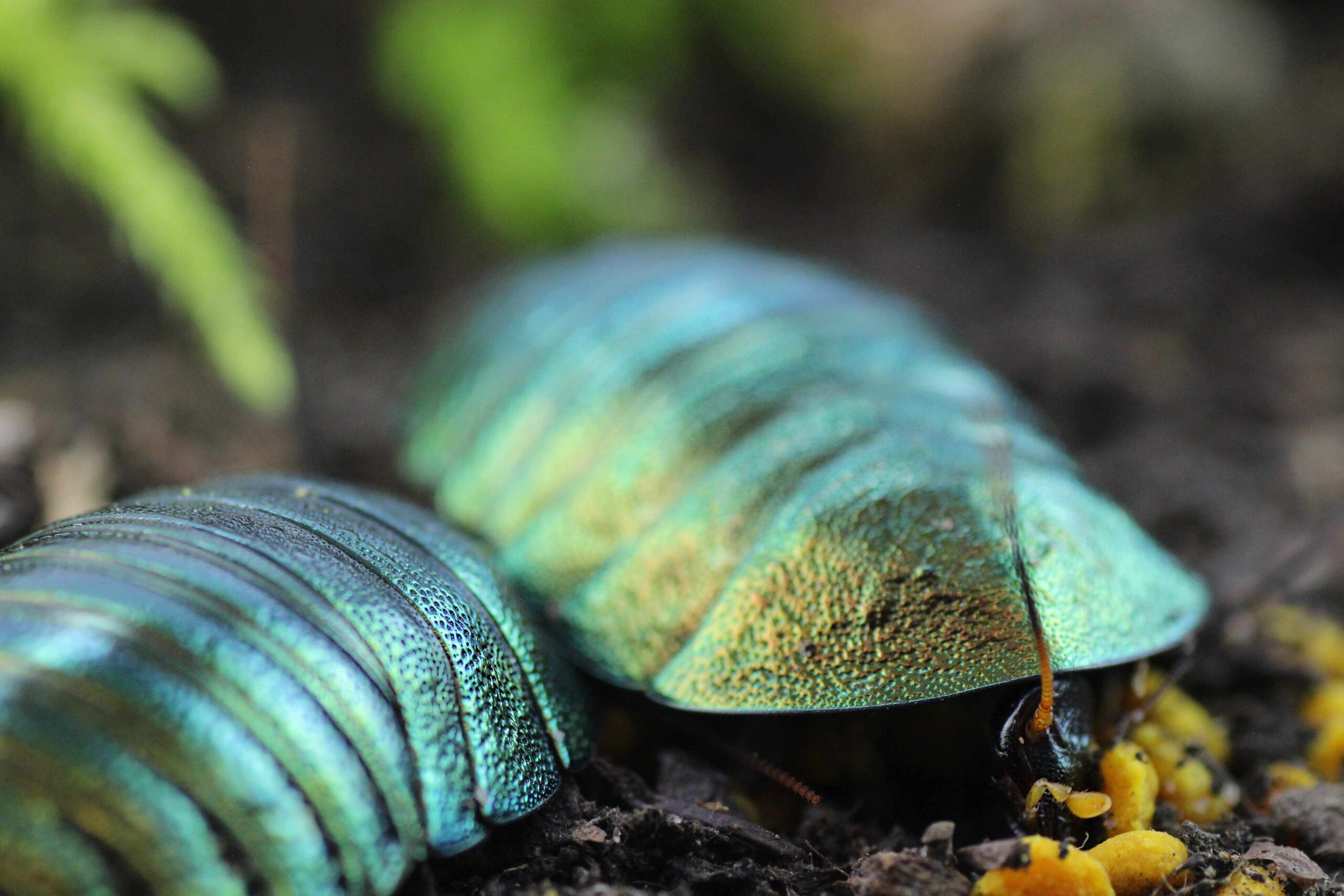
Sociality as a silent success factor
Cockroaches do not demand admiration. But they deserve attention. Anyone who observes them will recognize a finely tuned interplay of behaviour, physiology and environmental adaptation.
Their sociality is not a spectacular spectacle. It is quiet, functional and extremely effective. And this is precisely where its importance lies – not only for cockroaches themselves, but for the understanding of social evolution as a whole.
If you have any further questions, please leave them in the comments below the article.

Leave a Reply
You must be logged in to post a comment.