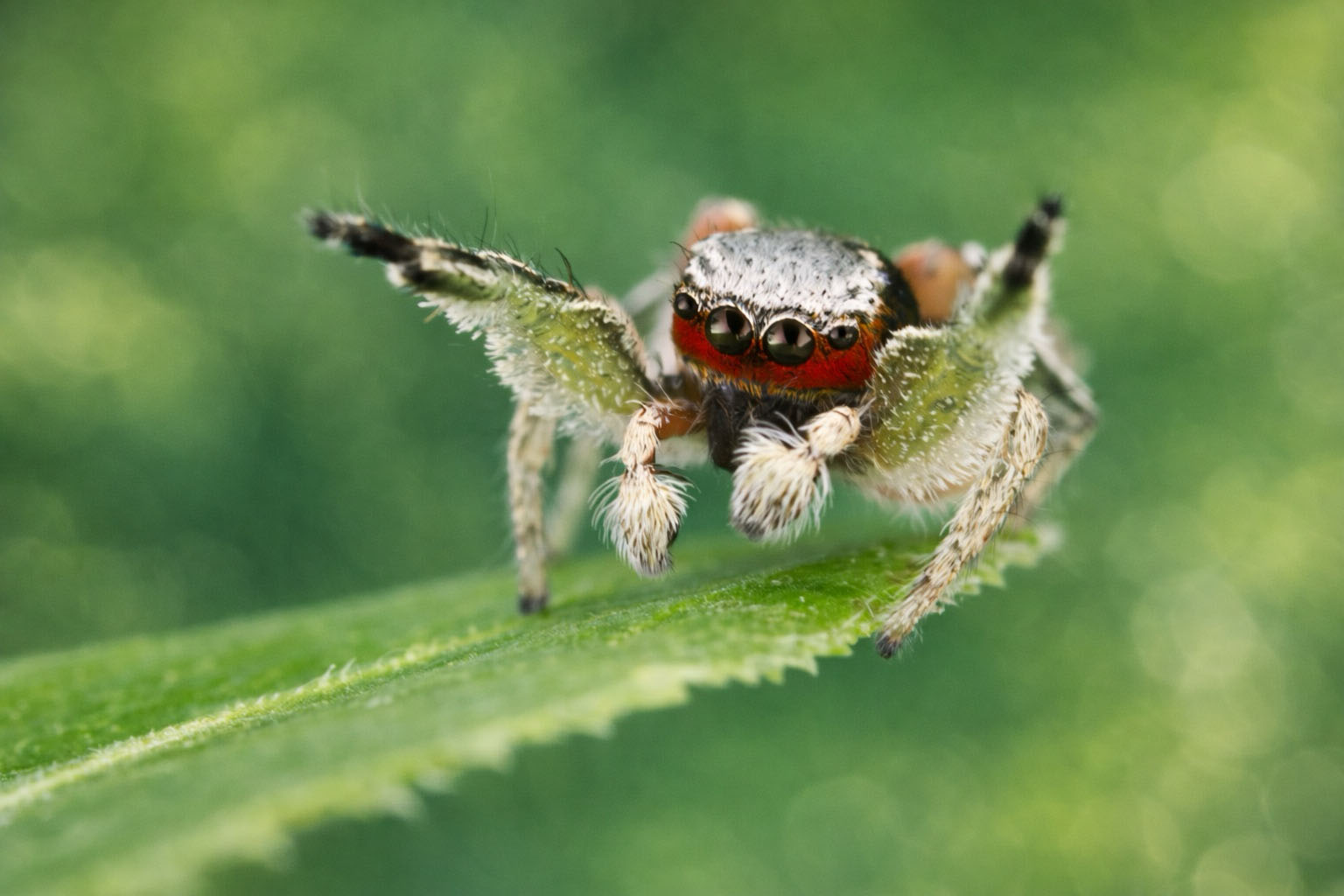


Jumping spider communication is more complex than it appears at first glance. If you watch jumping spiders mating, you only see half the story.
Because while legs are lifted, pedipalps are swung and postures are changed, something happens that remains invisible to the human eye. The floor begins to “speak”.
Jumping spiders don’t just dance. They generate vibrations. Fine vibrations that spread over wood, stone or earth and are precisely perceived by the female. This interplay of movement and vibration is a central component of jumping spiders’ courtship behavior – and one of the most complex communication systems among invertebrates.
Jumping spiders Communication beyond the audible
Spiders have no ears. And yet they “hear”. Not via airborne sound like us, but via substrate vibrations. Every movement a jumping spider makes is transmitted to the substrate. The female perceives these vibrations via highly sensitive sensory hairs on her legs.
What is silence for us is a stream of information for a jumping spider. The frequency, rhythm and intensity of the vibrations provide data on species affiliation, distance and activity of the male. Jumping spider communication makes targeted use of this form of perception.
How jumping spiders generate vibrations
The vibrations do not occur by chance. Jumping spiders use their bodies in a targeted manner. The abdomen in particular plays an important role. Rapid muscle contractions generate vibrations that propagate through the ground like a signal.
Leg movements also enhance this effect. Some species literally drum. Others produce continuous, pulsating patterns. Modern research methods, such as laser vibrometry, make these vibrations visible and show how precisely they are coordinated with the visible dance movements.
Movement and vibration do not exist side by side. They belong together.
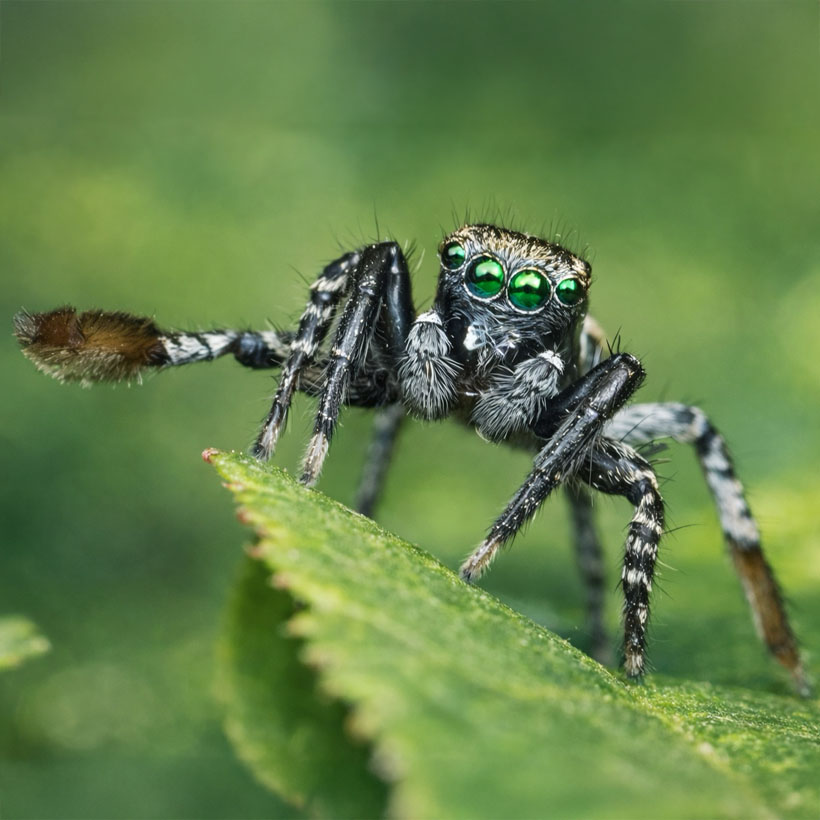
Multimodal jumping spider communication as an evolutionary advantage
Biologists refer to this as multimodal communication – a central principle of jumping spider communication. This means that several sensory channels are addressed simultaneously. In jumping spider courtship behavior, these are primarily sight and touch.
This dual channel is no coincidence. In natural habitats, visual signals are susceptible to interference. Light conditions change. Plants move in the wind. Shadows move. Vibrations, on the other hand, remain reliable – as long as there is direct contact via the ground.
By combining both types of signal, jumping spiders increase the probability of being correctly understood. An evolutionary advantage that has been selected for over generations.
Rhythm instead of volume
The interesting thing is that it’s not about strength. Louder is not better. Rhythm is the decisive factor. Females react sensitively to regular, recognizable patterns. Irregular or interrupted vibrations can be interpreted as a sign of weakness or insecurity.
The dance appears playful on the outside. In fact, it follows a strict biological protocol. The jumping spiders’ courtship behaviour is organized rhythmically – comparable to a piece of music that is only convincing if the timing and structure are right.
Perception via the legs
The sensory hairs with which jumping spiders perceive vibrations are extremely finely tuned. They react to even the slightest movement of the ground. This gives the female a detailed picture of what the male is doing – even if it is partially out of her direct field of vision.
This explains why courtship functions even when visual signals are limited. The vibrations carry information about distance, speed and endurance. They supplement what the eyes provide.
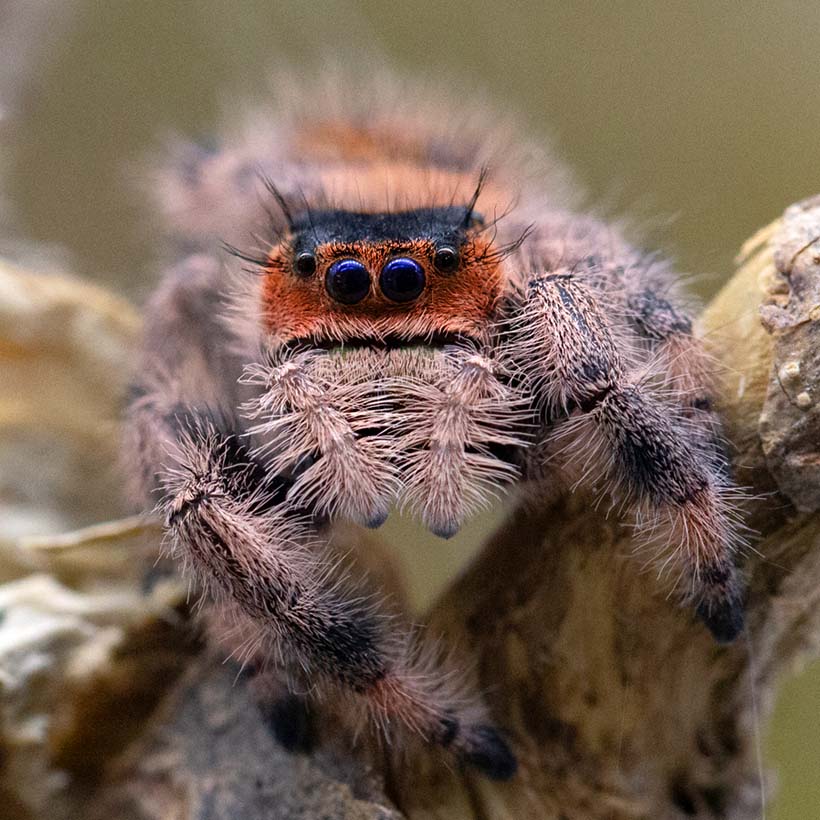
Living spaces as resonating bodies
Not every surface transmits vibrations equally well. Bark, wood, dry earth or stone have different resonance characteristics. Jumping spiders adapt their behavior accordingly. This form of communication is particularly effective in structured habitats with many contact surfaces.
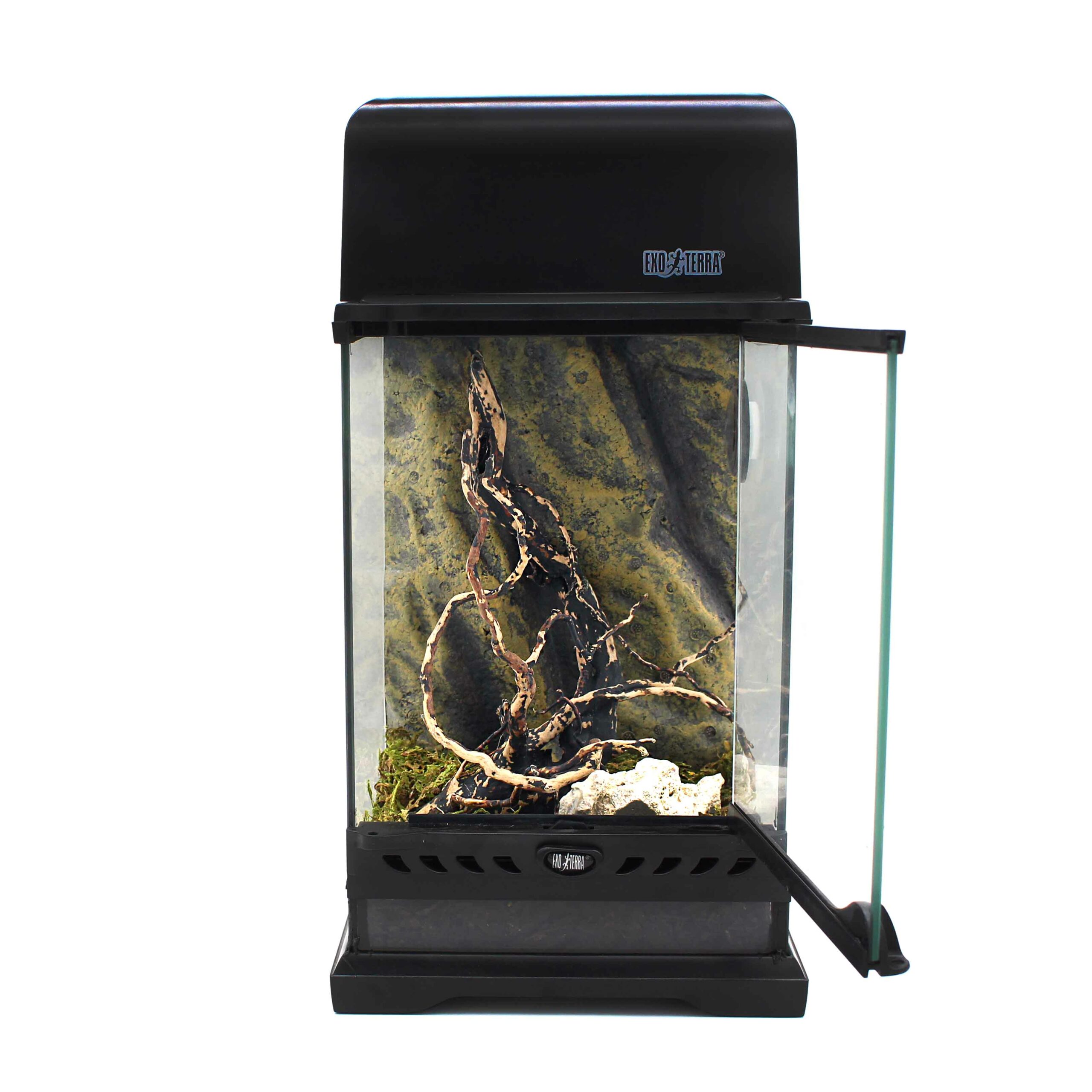
This also plays a role in the terrarium. Smooth glass surfaces hardly transmit any vibrations. Natural materials such as wood, cork or stone, on the other hand, enable behavior that is closer to the natural courtship behavior of jumping spiders. If you look closely, you can observe these differences.

Avoid misinterpretations
A common misconception is that jumping spiders “only dance”. This view ignores an essential part of their behavior. Without the vibrations, the dance is incomplete. Visible movements alone do not explain mate choice or termination of courtship.
Jumping spider courtship behavior is not a visual spectacle for observers. It is a finely tuned communication system for spiders.
Significance for research and understanding
Jumping spiders are now regarded as model organisms for research into animal communication. Their combination of good vision, precise vibration perception and clearly structured behavior makes them ideal for answering fundamental questions: How are signals generated? How are they interpreted? And how honest are they?
The answers go far beyond spiders. They help us to better understand communication in the animal kingdom in general.
More than just a dance
Jumping spider communication shows how limited our human perception is. What we see is only a fragment. Beneath the surface – literally – there is a second level of communication.
Anyone who observes jumping spiders learns to look more closely. And sometimes also to listen more closely. Not with your ears, but with the knowledge that even silence can be full of signals.
If you have any further questions, please leave them in the comments below the article.
Leave a Reply
You must be logged in to post a comment.