Medium
Vietnam
4-5 CM
23-25 °C
Ornithoctoninae sp. Hon-Sej: showpiece of every collection from Vietnam
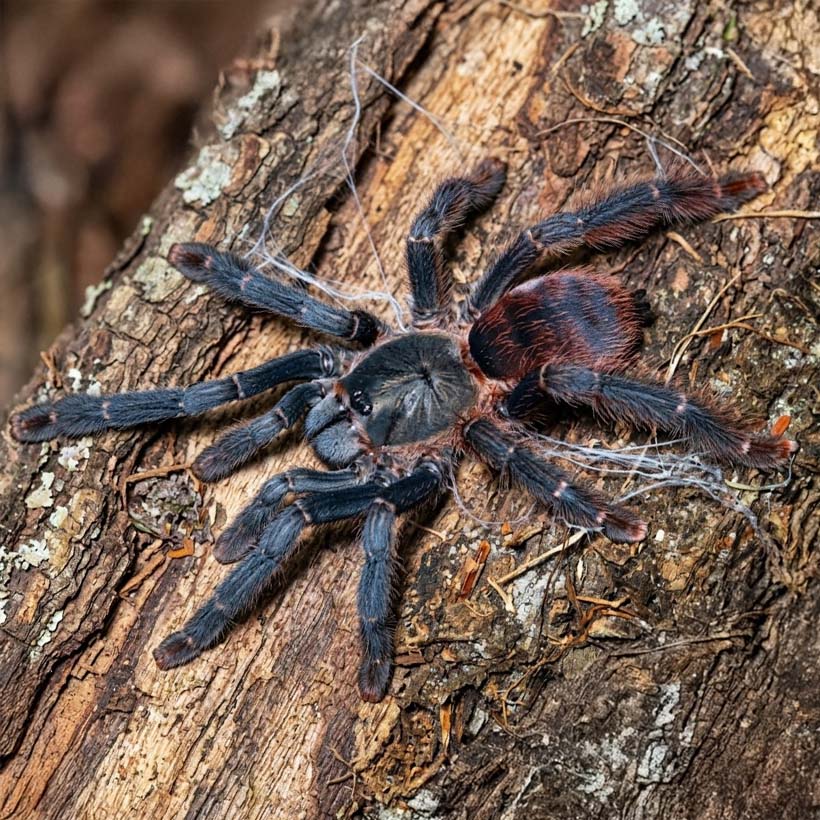
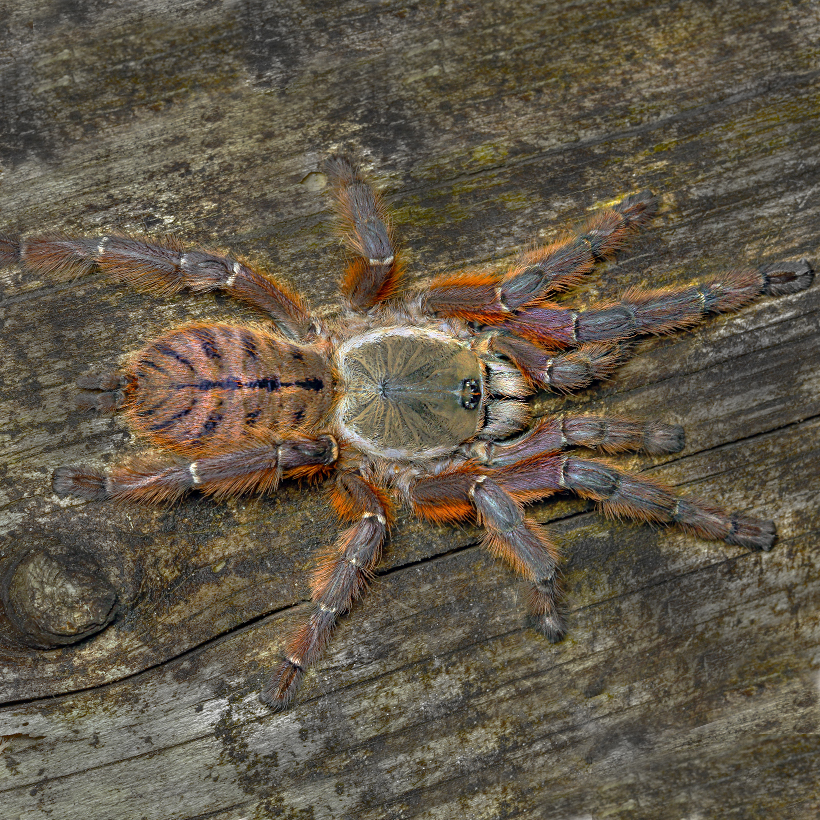
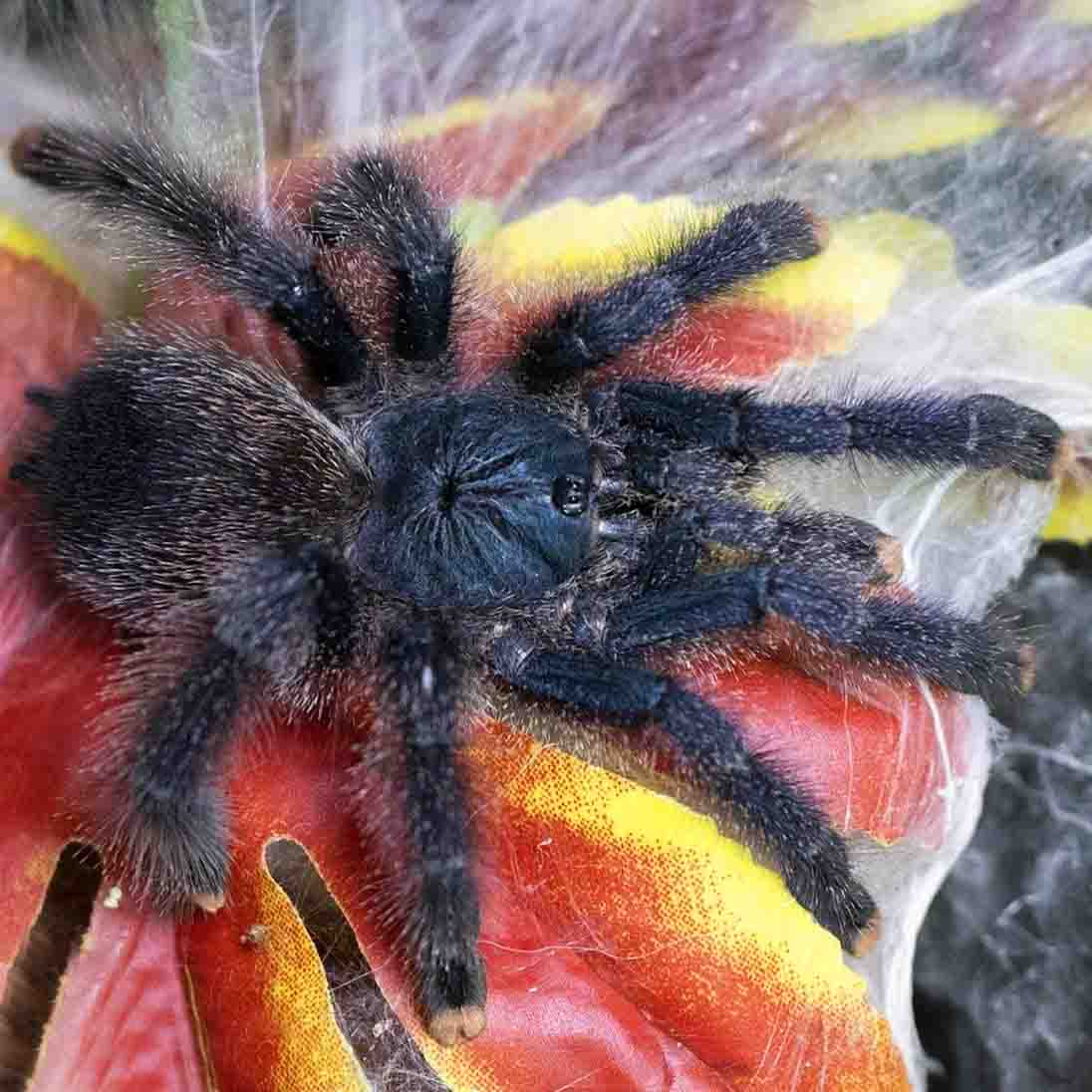
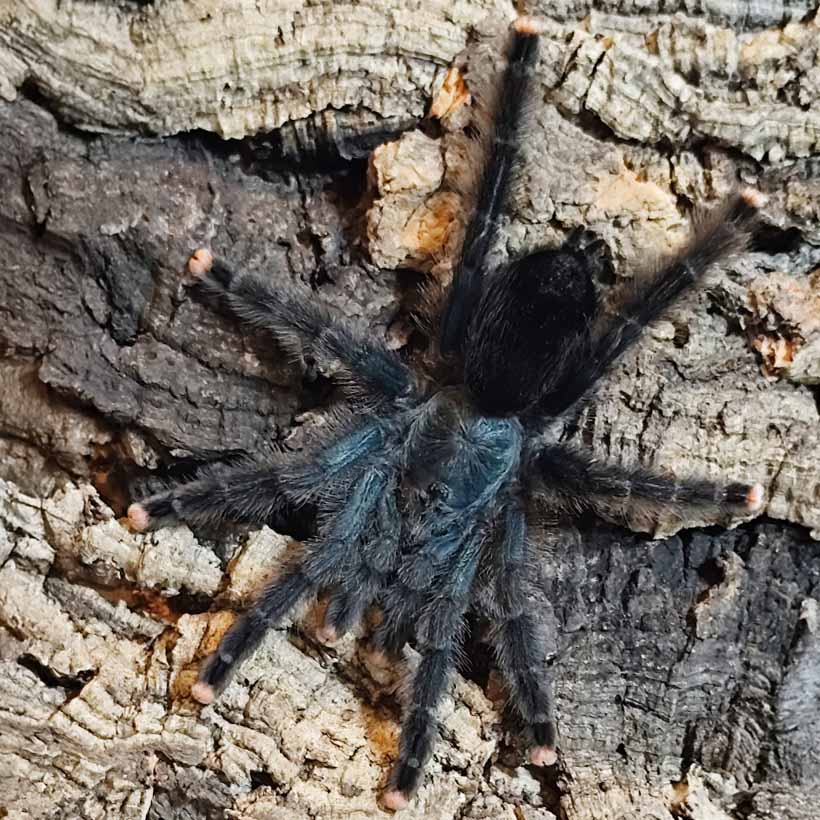
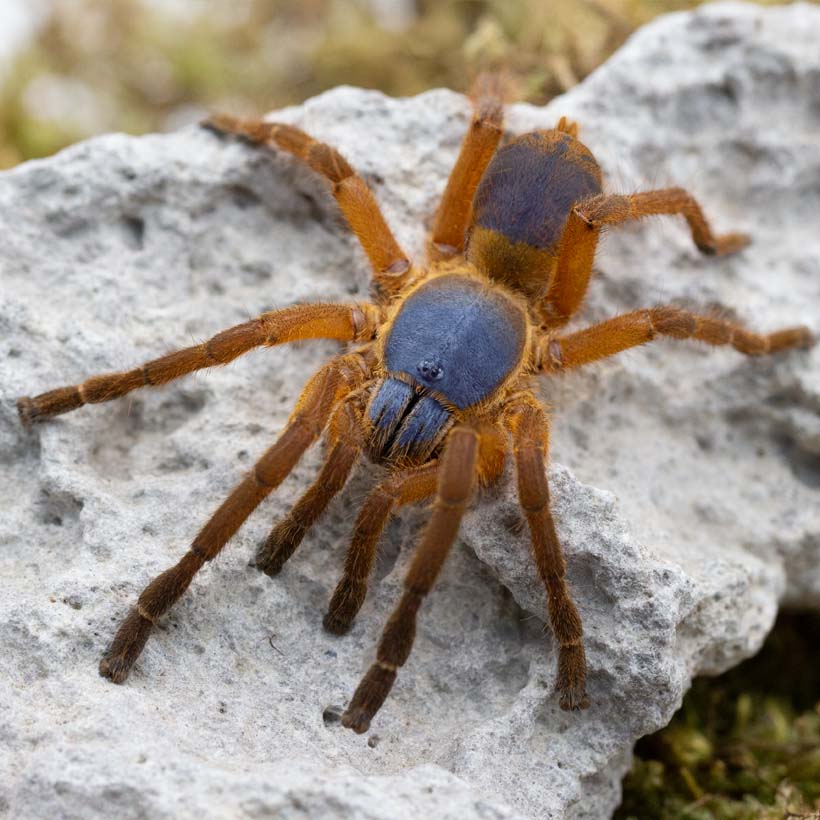
Ornithoctoninae spec. “Hon-Sej” is a very rare, stunning and not yet fully described tarantula species from the lush forests of Vietnam. This jewel among exotic pets is characterized by a captivating blaze of color that can vary from vivid orange and yellow on legs to deep blue and purple on prosoma and opisthosoma, depending on lighting conditions.
The Ornithoctoninae are a subfamily of tarantulas that is widespread in Southeast Asia and was described by Reginald Innes Pocock in 1895. This subfamily includes various genera such as Citharognathus, Cyriopagopus, Haplopelma, Lampropelma, Ornithoctonus and Phormingochilus, which are mainly found in Myanmar, China, Thailand, Vietnam, Malaysia, Singapore, Indonesia and the Philippines. The spiders in this subfamily mostly live underground in burrows they have dug themselves, but some species also live in trees.
The Ornithoctoninae spec. “Hon-Sej” It is native to the dense, humid forests of Vietnam, where it leads a reclusive, burrowing lifestyle. It digs complex tunnel systems with multiple entrances that provide shelter and access to food. It prefers a terrestrial lifestyle in a well-structured terrarium that mimics its natural habitat. The Ornithoctoninae spec. “Hon-Sej” like to use branches, leaves and moss to line their entrance and build them upwards until they resemble small chimneys. A temperature of 23-25°C and a humidity of over 80% create optimal conditions for their well-being.
In a custom-made terrarium measuring 20 x 20 x 30 cm and equipped with a substrate height of 10-15 cm, the Ornithoctoninae spec. “Hon-Sej” an ideal home. This special accommodation allows her to experience a natural and comfortable habitat that is closely based on her habitat in the wild.
This 4 to 5 cm beauty has a quick and defensive nature, which makes it a species for experienced keepers. If kept correctly, they can be observed in full splendor at the entrance to their cave in the evenings and mornings, sometimes even during the day.