MiteEx for Drosophila hydei
Price range: 5,99 € through 14,99 € incl. VAT, plus shipping
Simple and safe: MiteEx for healthy Drosophila breeding
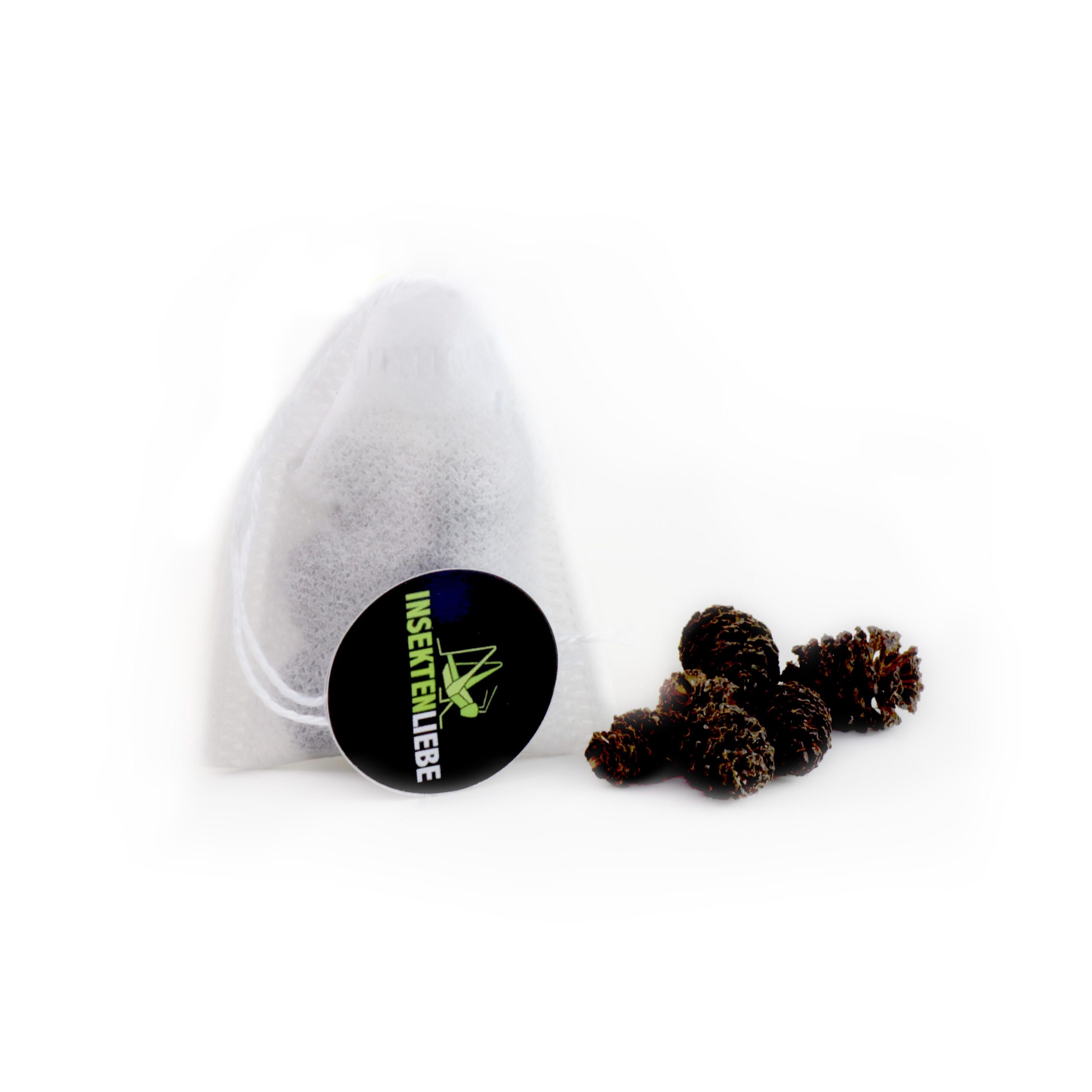
MiteEx is the ideal solution to protect your Drosophila hydei breeding from infestation by harmful mites. This completely natural powder has been specially developed to effectively repel mites without harming the sensitive fruit flies or their breeding process.
The simple application ensures the health of your breeding stock and avoids the risk of a breeding collapse, which can be caused by mite infestation. It also ensures that no mites get into your terrarium, which is particularly important before you use the Drosophilas as food.
With MiteEx you can rely on a safe and environmentally friendly method to protect your breeding and other terrarium inhabitants.
Here is a simple guide to using our MiteEx powder, specially developed to effectively remove mites from Drosophila hydei:
Step 1: Preparation
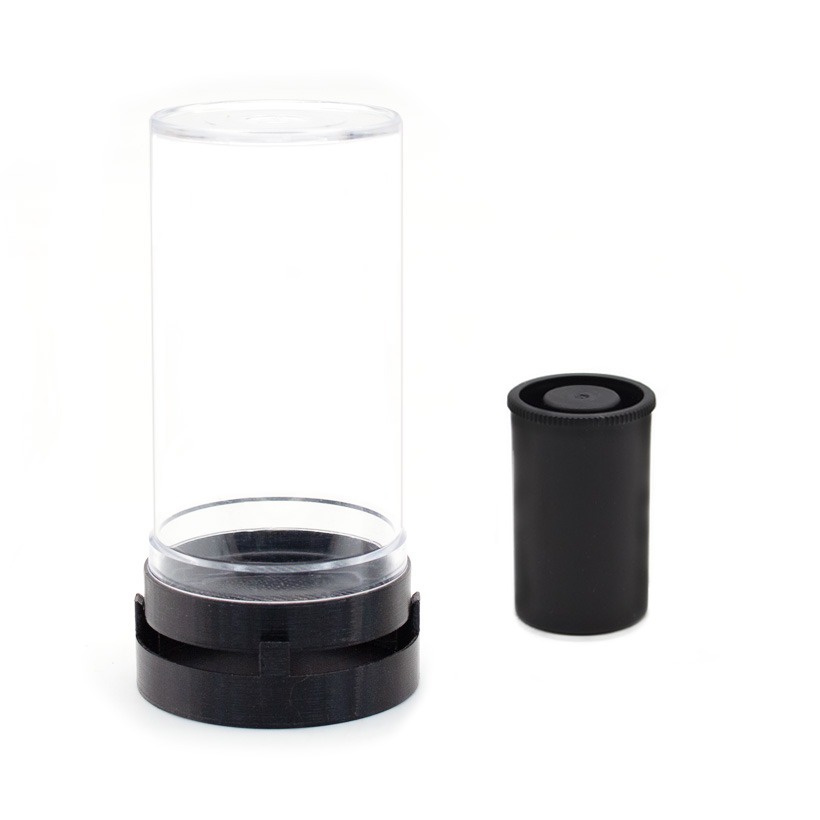
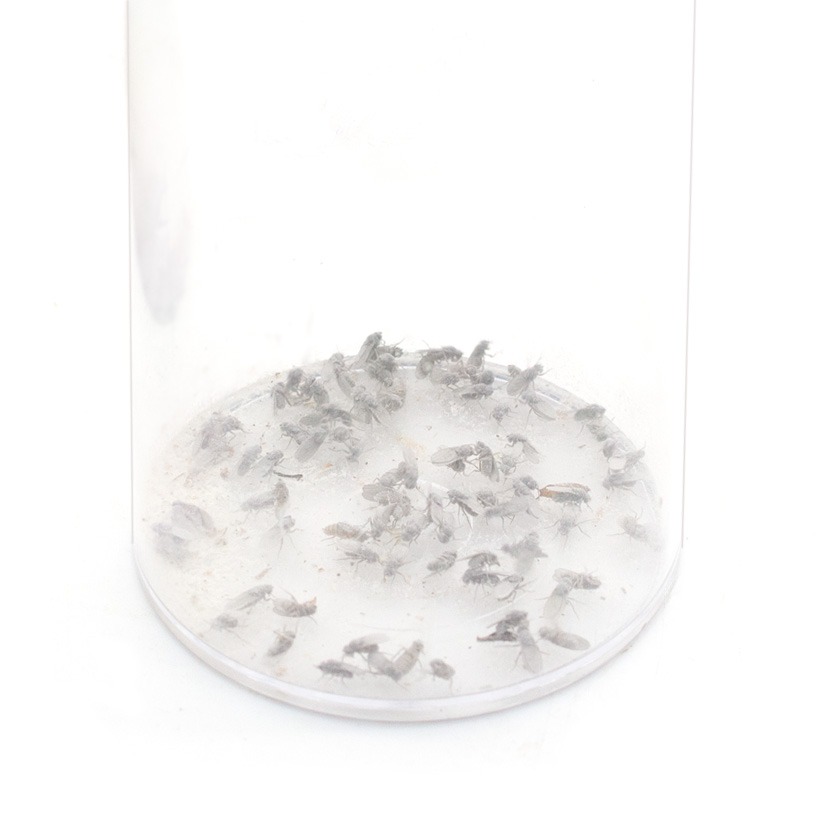
Start by thoroughly dusting your Drosophila hydei in the MiteEx can with the MiteEx powder. This natural powder is safe for your breeding and free from harmful toxins.
Our product deliberately does not contain diatomaceous earth, as its sharp edges can injure the abdomens of the Drosophilas, which in turn would lead to delayed development of the breeding stock.
After you have dusted the fruit flies, close the container with the gauze lid provided to keep the fruit flies safe and allow air circulation at the same time.
Step 2: Remove mites
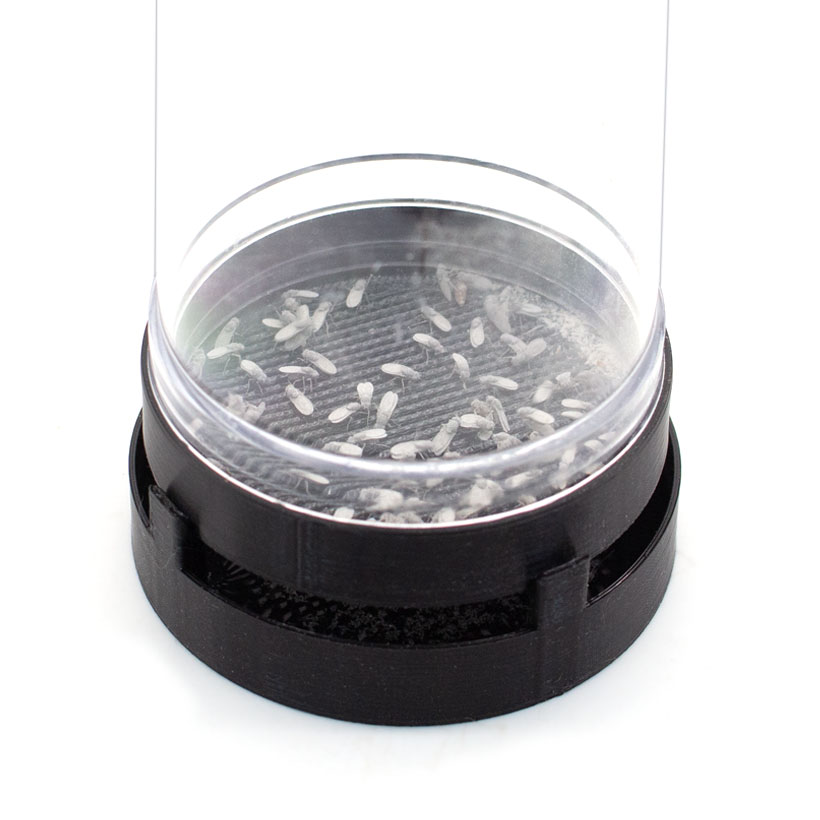
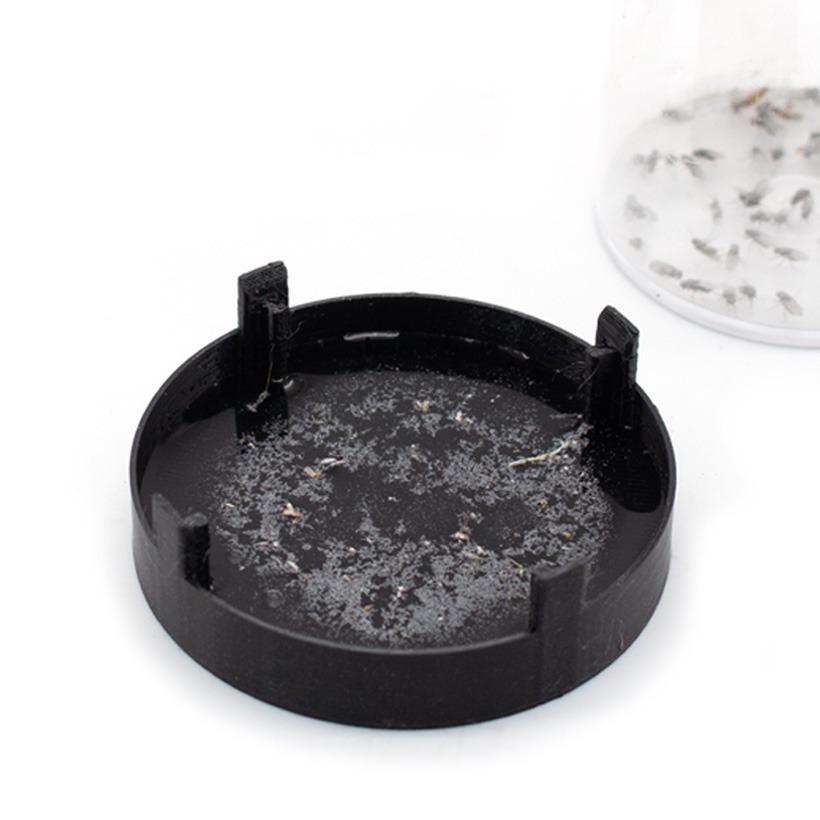
First fill the saucer of the MiteEx set with water. Then place the can containing the Drosophila hydei dusted with MiteEx powder upside down on this saucer. Now leave the set to rest for about 30 minutes.
During this time, the repellent odor of the powder, which has spread on the fruit flies, takes effect. The mites, which are repelled by this specific odor, begin to actively crawl off the fruit flies. As they move, they reach the fine-mesh sieve in the gauze lid and eventually fall into the water below.
This process ensures that the Drosophilas are effectively freed from mites without harming them or impairing their breeding.
Step 3: Use Drosophilas